Families and Professional Caregivers Working Side-by-Side
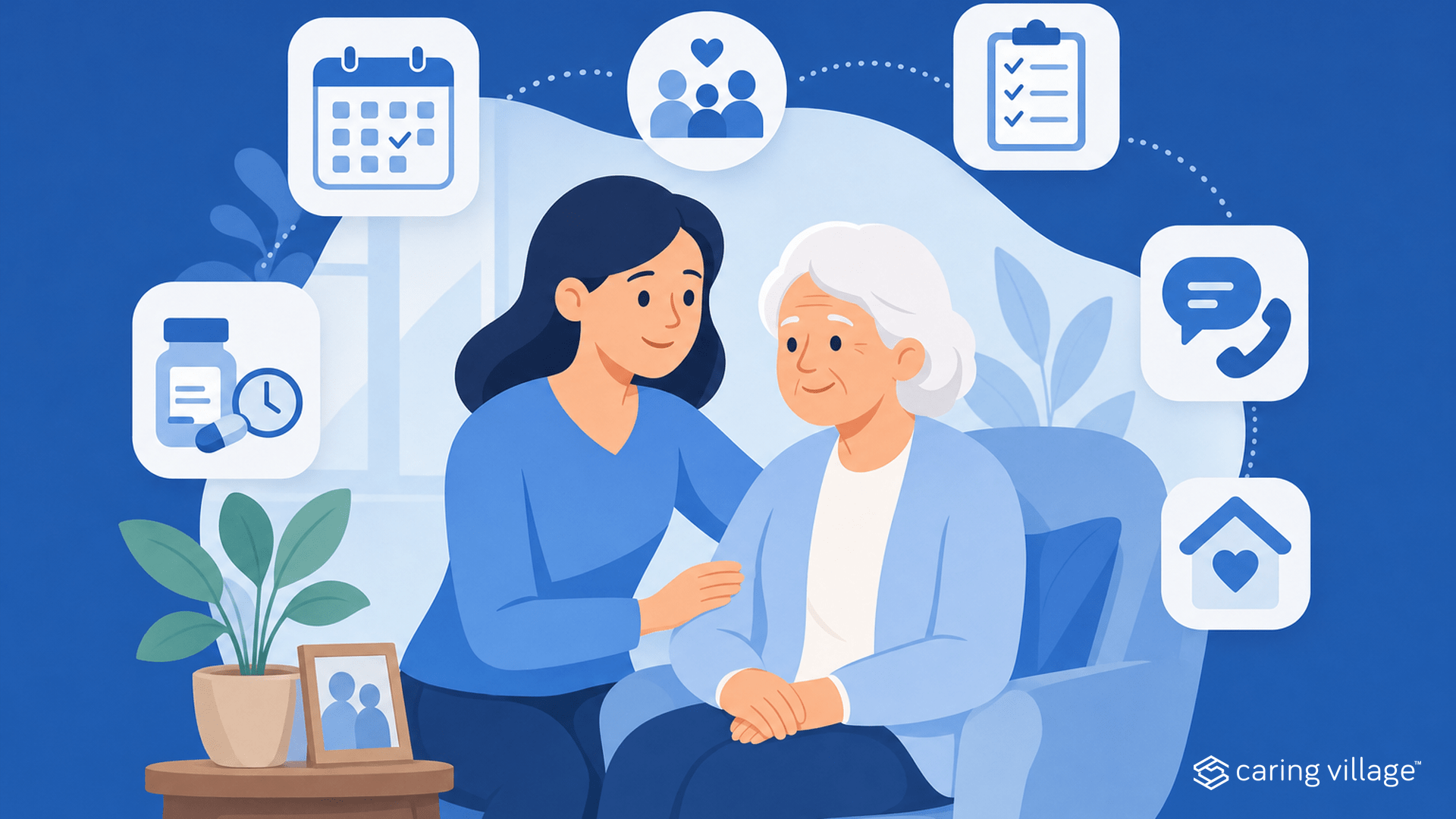
If you are coordinating a loved one’s care with a paid aide, the hard part is rarely the caregiving. It is the handoff. Here is how to turn a group of well-meaning helpers into one care team, with clear roles, a printable handoff checklist, and a short weekly rhythm.

Last verified · 9 min read
If you are coordinating Mom’s care at home, you probably have more helpers than a system.
A sibling handles rides, a hired aide covers mornings, a nurse visits on Tuesdays, and you are still the one re-explaining the same medication change to three different people. The wider process for how to coordinate care for an aging parent helps the family define roles before the first professional shift begins.
About 28% of adults 65 and older live alone, so as needs grow, most families end up blending their own care with paid help. When family and professional caregivers work from the same plan, care gets safer and the mental load gets lighter.
This guide covers who does what, the paperwork that lets everyone share information legally, a handoff checklist you can use today, and a 10-minute weekly rhythm that keeps missed doses and double-booked appointments from slipping through.
Key Takeaways
- Shared plan beats more effort. When family and professional caregivers follow one plan, home care stays consistent and no single person carries all of it.
- Clear roles cut the friction. Knowing who handles medications, meals, rides, and skilled tasks prevents both gaps and burnout.
- A handoff checklist does the heavy lifting. Six fields and a 10-minute weekly check-in keep everyone aligned without endless texts.
- Paperwork unlocks information. A signed HIPAA release lets providers legally share updates with the caregivers you name.
- Demand for home care is climbing.75% of adults 50 and older want to stay in their homes as they age, so more families are building teams around aging in place.
This article is general information for caregivers, not medical, legal, tax, or financial advice. Confirm anything about scope of practice, medications, HIPAA, or Medicare with the relevant provider, agency, or your state’s rules.
Why Collaboration Matters
Caring for an aging loved one usually takes more than one person. For the full practical, legal, and wellbeing picture, begin with the guide to caring for elderly parents, then use this page to design the mixed team. The goal is not just adding hands, it is getting those hands working from the same page.
More Older Adults Want to Stay at Home
In AARP’s 2024 Home and Community Preferences Survey, 75% of adults 50 and older said they want to remain in their current homes as they age.
That preference is powerful, but it rarely lasts on family effort alone. As needs grow, many households bring in a paid caregiver for tasks the family cannot safely cover.
Family caregivers know the routines, habits, and preferences. Professional caregivers bring training and hands-on skill. Together they can keep a loved one home longer, and safer.
Miscommunication Creates Real Risks
When several people share caregiving, it is easy to assume someone else already handled the important thing. Think missed medications, a skipped meal, or a double-booked ride.
The fix is not more meetings, it is one place everyone can see. Documented, shared updates cut the guessing and keep small misses from becoming emergencies.
Role Confusion Leads to Burnout
When responsibilities blur, stress climbs on both sides. Family members feel pressured to be on call around the clock even after hiring help.
Aides get pulled into tasks outside their scope, or feel expected to make calls that belong to the family. The result is wasted energy, strained relationships, and eventually caregiver burnout. If exhaustion is already affecting health or relationships, use these caregiver burnout solutions while the team resets roles and coverage. When everyone knows their lane, there is far less second-guessing.
Who Does What in Home Care
Collaboration only works when each person knows their role. Family caregivers stay the emotional anchor and the primary decision-makers.
Aides handle personal care and daily support. Nurses cover skilled clinical tasks, and a coordinator or agency keeps the schedule, billing, and paperwork moving. Families using an agency portal can compare elderly care apps with professional integration to see whether one system can connect family and paid care.
Here is how the common tasks usually split. Titles and scope vary by state and agency, so treat this as a starting map, not a rulebook. When caring for a disabled family member, include disability services, equipment, benefits, and respite funding in the role map.
Home Care Role and Boundary Map
Who usually owns each part of home care across family, aide, nurse, and agency. Titles and scope vary by state and agency, so treat it as a starting map, not a rulebook.
| Task | Family Caregiver | Home Care Aide (HHA / PCA / CNA) | Nurse (RN / LPN) | Care Coordinator / Agency |
|---|---|---|---|---|
| Bathing, dressing, grooming | Helps or oversees | Core role | Rarely | Assigns and supervises |
| Medications | Reminders, refills, keeping the list | Reminders, per agency policy | Administers and adjusts | Confirms orders on file |
| Meals and light housekeeping | Often | Yes, if in the plan | No | Sets the scope |
| Rides and appointments | Usually books them | Sometimes escorts | No | Can arrange transport |
| Skilled tasks (wound care, injections) | No | No | Yes | Schedules the visit |
| Watching for health changes | Yes | Yes, reports up | Assesses and acts | Routes the concern |
| Decisions on care changes | Final say, with the loved one | No | Advises | Advises and documents |
| Scheduling, billing, insurance | Oversees | No | No | Handles it |
A common misread on cost: Medicare pays for a part-time home health aide only when the person is also getting skilled care such as nursing or therapy, up to 8 hours a day and 28 hours a week combined. It does not cover custodial or personal care on its own. Families planning for that gap can compare current long-term care insurance options.
Aides also cannot perform skilled tasks or administer medications outside their state scope and their agency’s policy, so confirm both before you assume a task is covered.
If skilled help is what you actually need, the next useful read is how to hire a nurse or home care provider, since it walks through screening and supervision. If budget is the real question, start with what in-home care typically costs.
Show Family and Paid Caregivers Who Owns Each Task
Assign bathing, medications, rides, and skilled care to the right person. Caring Village gives family, aides, and nurses one current task plan without duplicated work.
- Assign each task to a family member or aide
- Roles and boundaries stay visible to the whole team
- Handoff notes sit right beside the plan
Build One Shared Plan Everyone Can Follow
Multiple people caring for one person gets chaotic without a plan that spells out tasks and hands off cleanly.
The National Institute on Aging offers a free worksheet for splitting caregiving responsibilities, and the three tools below turn that idea into something a busy family can run every day.
Use the Handoff Checklist
A common source of caregiving mistakes is information that lived in one person’s head. If you become a caregiver unexpectedly, write down the current routine before recruiting help so the first handoff starts from facts rather than memory. A handoff checklist reduces that risk by capturing the same six fields at every shift change, so the next caregiver starts informed instead of guessing.
| Handoff Field | What to Pass On | Dementia Morning-Shift Example |
|---|---|---|
| Tasks and boundaries | Who does what this shift, and what is out of scope | Aide does bathing and breakfast; daughter handles the 11am neurologist call |
| Events and schedule | Appointments, rides, and who is covering | PT at 2pm; son drives; aide stays until he arrives |
| Access and authorizations | HIPAA release on file, portal logins, door or lockbox code | Release signed; lockbox code shared; patient portal access granted |
| Medications and measures | Dose changes, refills due, and where the logs live | New donepezil dose started; blood pressure logged each morning |
| Updates and red flags | What changed, what triggers a call, and who to call first | More confusion before breakfast; call daughter, then the nurse if it worsens |
| People and preferences | Routines, comfort items, and what calms or upsets | Coffee first, calm music, no TV news; gets agitated when rushed |
Set this up once and it becomes muscle memory.
A caregiver app for families lets you keep these fields in one shared place so the morning aide and the evening sibling see the same notes. The Caring Village platform gives approved family members and professional caregivers one shared place for schedules, notes, documents, and handoffs.
It pairs well with printable caregiver preparedness checklists for recurring safety and medication items.
HIPAA and Permissions in Plain English
HIPAA does not itself require written permission for a provider to discuss relevant care information with family or friends involved in a patient’s care.
The patient must generally agree or not object, and a provider may still prefer or require its own written form, so ask each office what it needs.
A quick note: This section is general information, not medical or legal advice. HIPAA rules and scope-of-practice laws vary by state and change over time, so confirm specifics with the provider, the agency, or a licensed professional.
Three steps cover most situations:
- Ask what permission the office requires. HIPAA permits relevant communication in several circumstances without a written authorization, but a provider may still use its own consent form. The HHS guidance on family access explains the distinction.
- Name everyone who needs access. List each family member and professional caregiver who should be able to speak with the provider or view records, not just the primary caregiver.
- Store copies where the team can find them. Keep the signed release with the loved one’s other documents so any caregiver can confirm access when they need it.
Your 10-Minute Weekly Check-In
A short, predictable check-in prevents most surprises. Keep it to 10 minutes, in person or on a call, and run the same agenda every week.
- What changed in health, mood, appetite, or sleep
- Medication updates and refills coming due
- Next week’s appointments and who is covering each
- One focus area for the week: mobility, nutrition, safety, or company
- Anything that needs a decision, and who makes the call
For a fuller picture of what belongs on each person’s plate, caregiver responsibilities breaks the roles down further, and building your caregiving plan covers the planning side in depth.
Communication That Prevents Do-Overs
Weekly check-ins set direction. Day to day, the care team needs a fast way to hand off and flag concerns so nothing gets repeated or dropped.
The Shift-Handoff Checklist
When a caregiver clocks out, the next one should be able to pick up in two minutes. This one-page checklist is the print-and-post version of the handoff table, tuned for the end of a shift.
Shift-Handoff Checklist
Print it, or save it to the documents area of your care app, and fill it in at every shift change.
- Who and when: your name, shift start and end, and who is next
- Vitals and observations: anything measured, and how the day went
- Meds given or reminded: what, when, and anything missed or refused Use shared medication tracking apps when the team needs dose alerts or multi-profile records, but confirm who may administer versus remind.
- ADLs done: bathing, dressing, toileting, and mobility
- Nutrition and fluids: meals eaten, water intake, appetite
- Safety checks: fall hazards cleared, mobility aids working, doors locked
- Incidents: falls, refusals, mood changes, anything unusual
- Supplies to restock: briefs, wipes, groceries, prescriptions
- Next-shift priorities: the two or three things that matter most
- Flags: what needs a call, who to call, and by when
Tech That Reduces Misses
A shared calendar keeps appointments, routines, and caregiver schedules visible to everyone, so no one double-books a ride. A coordinated caregiver calendar adds an owner, backup, and visible handoff note to every visit or ride. Shared medication and wellness logs mean the aide is not guessing whether the morning dose went in.
One Calendar So No Ride Gets Double-Booked
Put visits, rides, and reminders on one calendar for family and paid caregivers. Caring Village shows who owns each event before schedules collide.
- Every visit and ride in one shared week
- Each event shows who is covering it
- Reminders reach the whole care team
For relatives who cannot be there, real-time updates do the heavy lifting. If you are managing from another city, long-distance caregiving tips covers how to stay in the loop.
And if the family is really just trying to broadcast updates, it helps to know how coordination apps differ from simple update pages, which is exactly what CaringBridge alternatives for family updates lays out.
Boundaries and Escalation
Decide early who makes final calls on care changes, emergencies, and medical instructions. Write it down where the team can see it.
Then agree on escalation: what triggers a call to the nurse, the doctor, or the family, and in what order. A caregiver who knows that “new confusion or a fall means call the daughter first, then the nurse” acts faster and second-guesses less.
Frequently Asked Questions
How Do We Keep Professional Caregivers Informed When We Are Not There?
Use one centralized place for updates instead of scattered texts and sticky notes. Agree on a family-update routine with the agency: who posts the shift summary, when relatives should expect it, and which changes require a direct call. Compare care coordination apps for families by permissions, handoffs, task ownership, and document access before inviting paid helpers. Log changes in a shared calendar or care app so every caregiver starts each shift with accurate, current information. Pair it with the shift-handoff checklist above so nothing depends on memory.
Do Professional Caregivers Give Medications?
It depends on their role, their state’s scope-of-practice rules, and agency policy. Home care aides typically provide medication reminders, while a nurse administers and adjusts medications. Do not assume an aide can give medications, confirm what your caregiver is allowed to do with the agency.
What Permission Lets Family Talk to Doctors?
HIPAA does not always require written permission. A provider may share relevant information when the patient agrees or does not object, but the office may still require its own consent form. Ask what that provider needs, name each caregiver who should have access, and keep any completed form with the loved one’s documents.
What Does Medicare Cover for a Home Health Aide?
Medicare covers a part-time or intermittent home health aide only when the person is also receiving skilled care such as nursing or therapy, up to 8 hours a day and 28 hours a week combined. It does not pay for custodial or personal care by itself, so plan for other funding if that is the main need.
Bring Your Village Together
Turning a group of helpers into one care team comes down to three things: clear roles, clean handoffs, and a steady weekly rhythm. The tools in this guide work on paper. They work even better when the whole team can see the same plan in real time. Agency owners choosing a system should compare back-office software and family-portal options separately: running payroll and letting a daughter read a visit note are different jobs.
Keep Every Caregiver Working From the Same Plan
Caring Village gives family members and professional caregivers one shared place for schedules, daily notes, documents, and handoffs.
- Clear shifts and responsibilities
- Daily care notes in one timeline
- Private updates for approved caregivers
“As a professional caregiver managing multiple clients, this app keeps me organized. The daily log feature is incredibly easy to use.”
Professional Caregiver
Sources and verification
- AARP. 2024 Home and Community Preferences Survey (75% of adults 50+ want to remain in their current homes as they age), aarp.org. Verified July 2026.
- KFF Health News. “Going It Alone” (about 28% of adults 65+ live alone, 2023 Current Population Survey), kffhealthnews.org. Verified July 2026.
- Medicare.gov. Home health services coverage (home health aide covered only alongside skilled care; up to 8 hours a day and 28 hours a week, part-time or intermittent), medicare.gov. Verified July 2026.
- U.S. Department of Health and Human Services. HIPAA Guidance on Sharing Information With Family and Friends. Verified July 2026.
- National Institute on Aging. Sharing caregiving responsibilities (free worksheet for splitting responsibilities), nia.nih.gov. Verified July 2026.
All figures were verified at the original sources in July 2026. Scope of practice, HIPAA procedures, and Medicare coverage vary by state, agency, and provider and are subject to change; confirm the specifics for your loved one’s situation.