10 Best Long-Term Care Insurance Companies of 2026
Picking an insurer is really two decisions: which company you trust, and how the money reaches your family when care starts. We ranked 10 active 2026 carriers, five traditional and five hybrid, with that second question front and center.

Verified · 16 min read
This guide is general information for family caregivers, not medical, legal, tax, or financial advice. Policy availability, features, and pricing vary by state and underwriting. Confirm details with a licensed insurance professional in your state.

Most “best long-term care insurance” lists still name carriers that stopped selling new coverage years ago. This one does not. Every company below is actively writing new long-term care policies in 2026.
Each is sorted by the two things that decide whether a policy actually helps your family: what type it is (traditional or hybrid) and how it pays (reimbursement or cash).
That difference is not a technicality. It decides whether your mom can pay a niece to help at home, or whether every dollar has to run through a facility invoice.
Below are 10 active insurers, a fit matrix to match one to your situation, current 2026 care costs, and the questions worth asking before you sign.
Not Sure Where to Start?
Jump to the path that matches your situation.
What “Best” Actually Means Here
Brand names do not pay claims the way families expect. Benefit design does. These are the six levers used to rank and describe every company below.
- Policy Type.Traditional LTC covers care only. Hybrid (linked-benefit) wraps LTC into life insurance or an annuity, so someone gets a benefit whether or not care is ever needed.
- How Benefits Pay.Reimbursement pays back documented care bills up to a monthly cap. Cash indemnity pays the full monthly benefit in cash once you qualify, no receipts, so it can pay a family caregiver or cover home costs an invoice never captures.
- Inflation Protection. Care costs climb yearly, so a 3% or 5% compounding option keeps a benefit from shrinking in real terms.
- Couple and Shared-Care Features. Shared benefit pools, partner discounts, and joint policies matter a lot when two spouses plan together. Name the financial caregiver who will retain policy records, track premiums, and manage future claims.
- Financial Strength. A carrier has to be around in 30 years, so third-party ratings (AM Best, Moody’s, S&P) count.
- Availability. Products and pricing change state by state, and some sell only through financial professionals.
TL;DR: The 10 Best Long-Term Care Insurance Companies (2026)
The columns that matter most are policy type and how benefits pay, not a single headline number. Here is the at-a-glance view; the fit matrix and full reviews are right below it. Tap any row to jump to that carrier.
| # | Company | Type | How Benefits Pay | Best For |
|---|---|---|---|---|
| Caring VillageCare Coordination Layer | Keeps policy documents, receipts, claim dates, and family care notes together after a carrier is chosen. | |||
| 01 |  Mutual of Omaha★ Best Overall Mutual of Omaha★ Best Overall | Traditional | Reimbursement | Standalone LTC, broad availability |
| 02 | 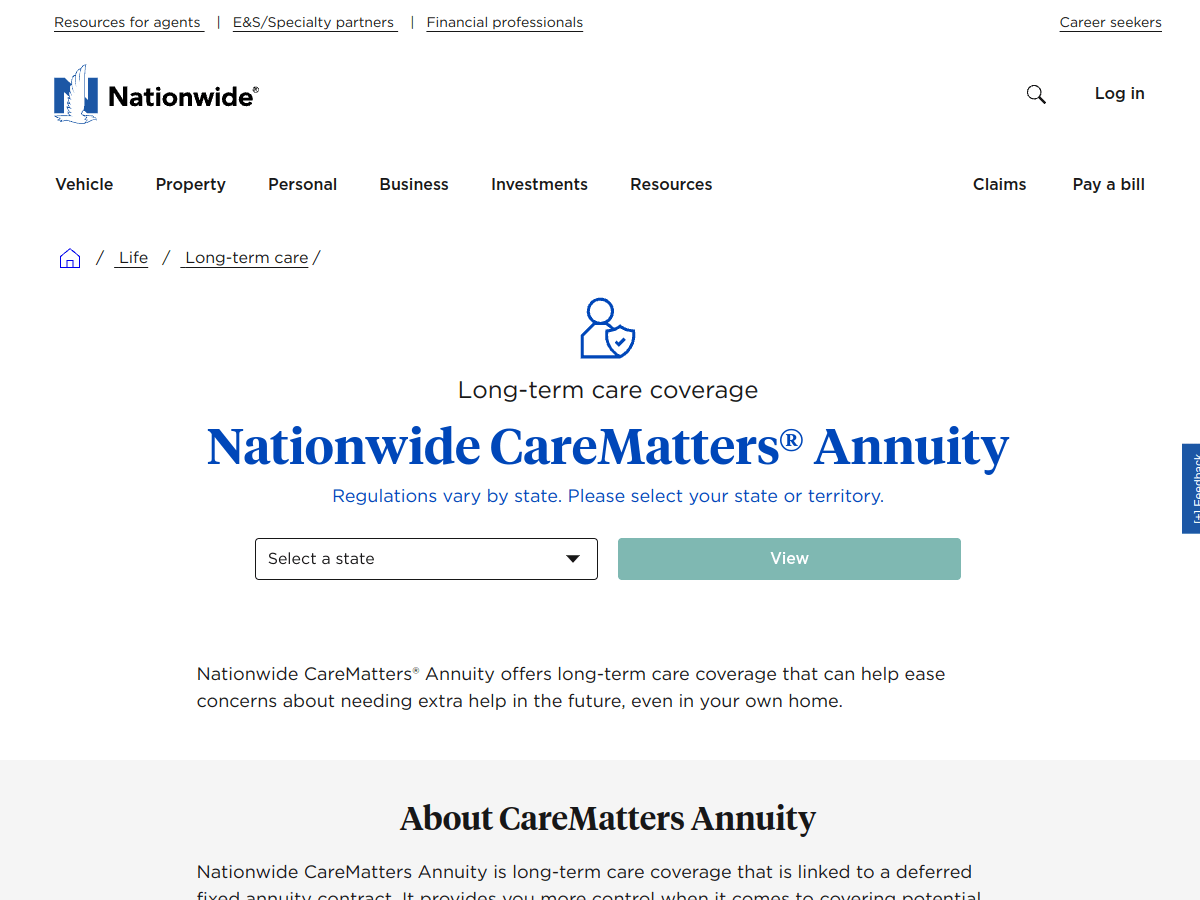 Nationwide CareMattersBest Cash for Home Care Nationwide CareMattersBest Cash for Home Care | Hybrid | Cash indemnity | Full flexibility to pay family at home |
| 03 | 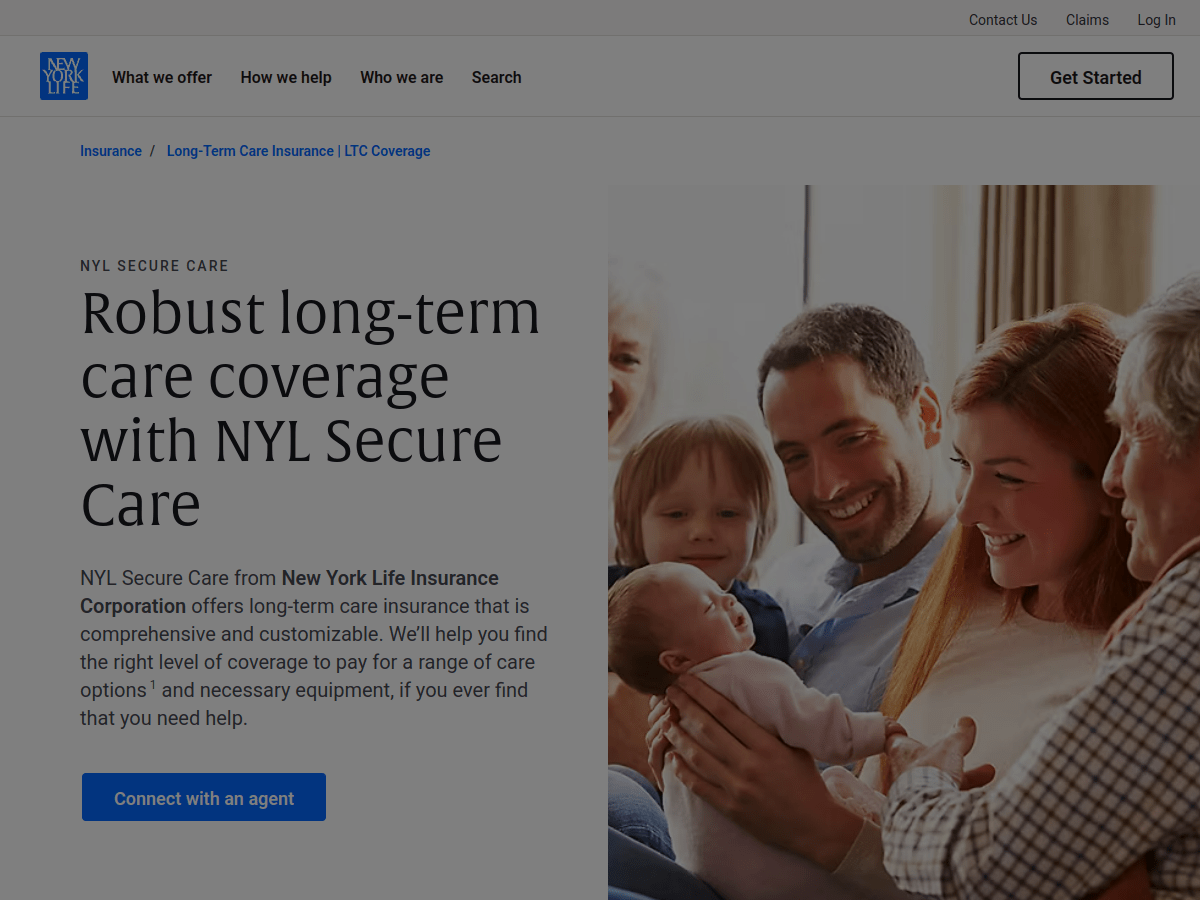 New York LifeBest Large Mutual New York LifeBest Large Mutual | Traditional | Reimbursement | A large, stable mutual carrier |
| 04 |  ThriventBest Financial Strength ThriventBest Financial Strength | Traditional | Reimbursement | Top-rated strength, eligible members |
| 05 | 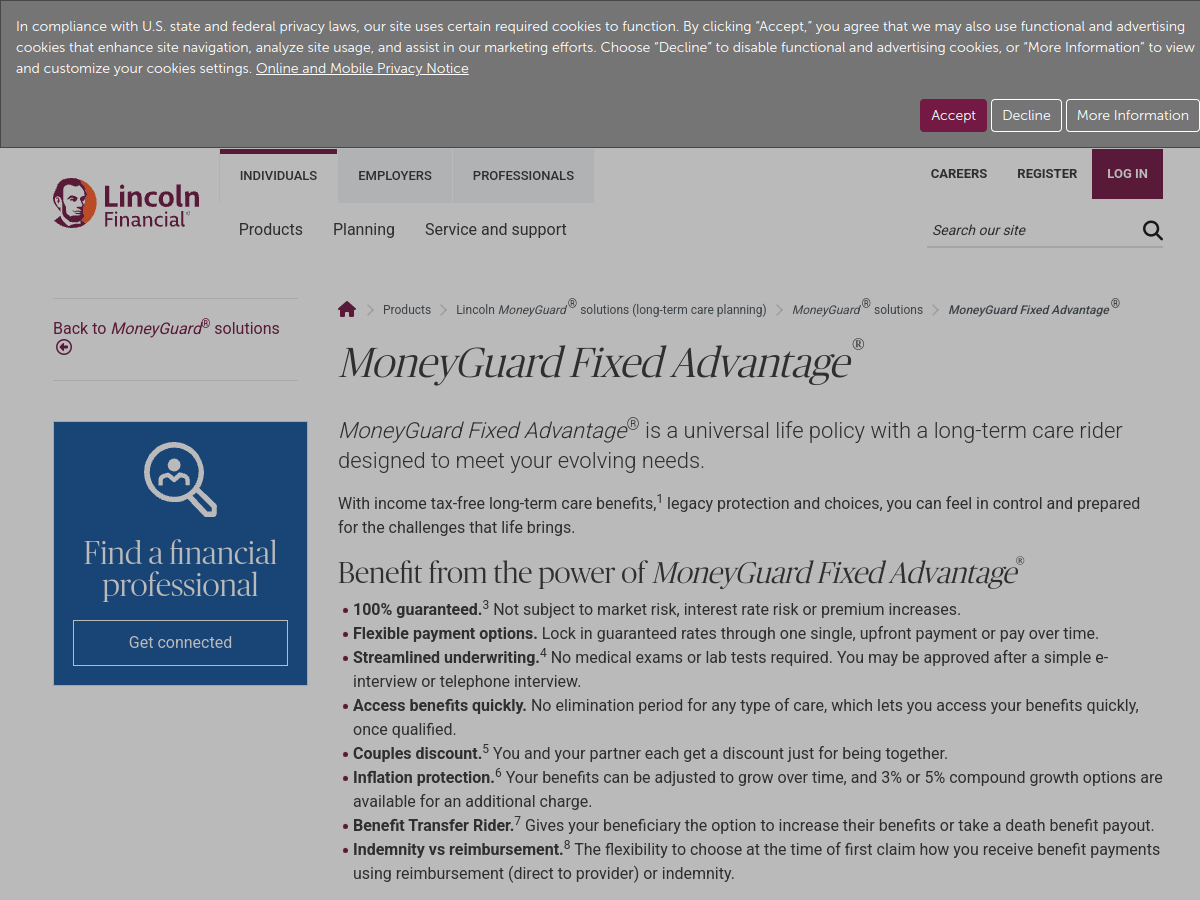 Lincoln MoneyGuardBest Quick Start Lincoln MoneyGuardBest Quick Start | Hybrid | Reimbursement or indemnity | No elimination period, guaranteed pricing |
| 06 |  OneAmerica Asset CareBest for Couples OneAmerica Asset CareBest for Couples | Hybrid | Reimbursement | Couples funding one joint policy |
| 07 |  Northwestern MutualBest Dividend Payer Northwestern MutualBest Dividend Payer | Traditional | Reimbursement | Dividend-paying standalone coverage |
| 08 |  Securian SecureCare IIIBest Cash Hybrid Securian SecureCare IIIBest Cash Hybrid | Hybrid | Cash indemnity | Cash benefit, no receipts |
| 09 |  Brighthouse SmartCareBest Growth Potential Brighthouse SmartCareBest Growth Potential | Hybrid | Cash indemnity | Growth potential plus 100% cash |
| 10 |  National Guardian LifeNewest 2026 Product National Guardian LifeNewest 2026 Product | Traditional | Reimbursement | Newest 2026 traditional product |
All 10 are active carriers writing new coverage as of July 2026. Types and benefit models come from each carrier’s own product pages, linked in every section below.
The Long-Term Care Fit Matrix
Competitors list brands. This matches a policy to your situation. Score each lever for the person being covered, weight it, and the pattern usually points clearly to traditional or hybrid, reimbursement or cash.
| Decision Lever | Weight | Traditional LTC Fits When | Hybrid Fits When |
|---|---|---|---|
| Policy Type Fit | 30% | You want the most coverage per premium dollar and accept “use it or lose it” | You want a benefit to a spouse or heirs even if care is never used |
| Benefit Model | 20% | You are fine documenting care bills for reimbursement | You want cash to pay family, or flexibility on how care is delivered |
| Inflation Options | 15% | You will add 3 to 5% compounding to keep pace with costs | Your premium is fixed upfront and you weigh growth differently |
| Couple Features | 15% | Two singles each want their own tailored policy | A couple wants one joint policy and a shared pool |
| Financial Strength | 10% | You are prioritizing a top AM Best rating and long track record | Same, plus a carrier strong in life and annuity lines |
| Availability | 10% | The product and riders you want are approved in your state | You want a nationally consistent linked-benefit design |
Worked example: a couple, both age 58, who want to stay home as long as possible. Home-first care favors cash flexibility, so a cash-indemnity option scores high on benefit model. Planning together favors a shared or joint structure. Before scoring a policy, map the family’s care-coordination plan for an aging parent, including roles, schedules, and backup coverage.
That pattern points toward a cash-indemnity hybrid like Nationwide CareMatters or a joint hybrid like OneAmerica Asset Care, with a traditional Mutual of Omaha policy plus a shared-care rider as the more coverage-per-dollar alternative.
When to prefer cash indemnity: you expect to rely on family or informal home care that a facility invoice would never capture.
When hybrid makes sense: the “I might pay premiums for nothing” objection is a dealbreaker, and leaving a benefit behind matters.
When traditional still wins: you want the largest possible pool of care dollars for the lowest premium and will document bills.
Keep Long-Term Care Policy Details Ready When Care Begins
Keep riders, premium receipts, elimination-period dates, and claim notes in one shared place, so the spouse tracking care and the sibling handling paperwork work from the same file. If that sibling lives elsewhere, add the records and claim deadlines to a remote caregiving plan.
- Policy documents, riders, and receipts stored together
- Claim notes and dates the whole care team can see
- Works alongside any carrier you choose above
The 10 Best Long-Term Care Insurance Companies (Ranked)
Premiums are individually underwritten, so treat any online figure as a starting point and get a custom quote. Rates depend on age, health, and the benefits you choose.
Mutual of Omaha
★ Best OverallType: Traditional Standalone LTC · Benefit Model: Reimbursement
- Policy typeTraditional standalone LTC
- Benefit modelReimbursement of covered care costs
- Best forDedicated care coverage without bundling life insurance
- StandoutShared-care and inflation riders for couples; A+ (Superior) AM Best
- CostCustom-quoted; depends on age, health, and benefit design (July 2026)
A+ (Superior) financial strength affirmed by AM Best on April 2, 2026.
Check Out Mutual of OmahaMutual of Omaha is one of the few major carriers still writing new standalone traditional policies, with shared-care and inflation riders for couples. It carries an A+ (Superior) rating from AM Best, affirmed April 2, 2026 (AM Best).
Premiums are custom-quoted and depend on age, health, and benefit design. The official Mutual of Omaha LTC page lays out the core coverage.
Heads up: traditional premiums are not guaranteed level for life and can rise with state-approved rate increases, so budget for that possibility rather than assuming a fixed bill.
Nationwide CareMatters
Best Cash for Home CareType: Hybrid, Linked-Benefit · Benefit Model: 100% Cash Indemnity
- Policy typeHybrid, linked-benefit
- Benefit model100% cash indemnity, monthly cash with no receipts
- Best forPaying a relative or covering home costs directly
- StandoutCash toward informal care, home mods, or a family caregiver; death benefit for heirs
- CostCustom-quoted; funded via life insurance or a deferred annuity (July 2026)
100% cash-indemnity benefit model verified July 2026.
Check Out Nationwide CareMattersNationwide earns its spot on flexibility. CareMatters pays a 100% cash indemnity benefit, meaning monthly cash with no receipts once a claim is approved (Nationwide).
Cash can go toward informal care, home modifications, or pay a family caregiver, which reimbursement policies typically will not touch. A death benefit protects heirs if care is never needed.
Heads up: cash-indemnity monthly benefits paid from a life policy are subject to an IRS per-diem limit, so very large benefits may have a taxable portion. Confirm specifics with a tax professional.
New York Life Secure Care
Best Large MutualType: Traditional Standalone LTC · Benefit Model: Reimbursement
- Policy typeTraditional standalone LTC (NYL Secure Care)
- Benefit modelReimbursement of covered LTC expenses
- Best forBuyers who prioritize the size and stability of a large mutual
- StandoutSold through career agents; also offers Asset Flex for a hybrid path
- CostCustom-quoted through a New York Life agent (July 2026)
Standalone reimbursement design verified July 2026.
Check Out New York LifeNew York Life offers comprehensive, customizable coverage from one of the largest mutual life insurers in the country, sold through its own career agents who can walk a family through options (New York Life). It also offers Asset Flex for buyers who prefer a hybrid.
Heads up: coverage is sold only through New York Life agents, so you cannot compare it side by side with other carriers through one independent broker in the same meeting.
Thrivent
Best Financial StrengthType: Traditional LTC (CareForward Hybrid Option) · Benefit Model: Reimbursement
- Policy typeTraditional LTC, with a CareForward hybrid option
- Benefit modelReimbursement, with monthly benefit options
- Best forEligible Thrivent members who want top-tier financial strength
- StandoutA++ (Superior) AM Best, the highest rating; decades in the category
- CostCustom-quoted through a Thrivent financial advisor (July 2026)
A++ (Superior) AM Best rating verified July 2026.
Check Out ThriventThrivent carries AM Best’s highest rating, A++ (Superior) (AM Best), and has written long-term care coverage for decades with a reputation for rate stability. Its long-term care line includes customizable monthly benefits.
Heads up: Thrivent is a membership-based fraternal organization, so eligibility and availability can be narrower than a carrier that sells to the general public in every state.
Lincoln MoneyGuard Fixed Advantage
Best Quick StartType: Hybrid, Universal Life with LTC Rider · Benefit Model: Reimbursement or Indemnity
- Policy typeHybrid, universal life with an LTC rider
- Benefit modelYour choice at claim time: reimbursement to the provider or indemnity
- Best forBenefits that start immediately, with pricing locked in
- StandoutNo elimination period; guaranteed pricing; couples discount; 3% or 5% compound inflation
- CostCustom-quoted; single upfront payment or pay over time (July 2026)
No elimination period and guaranteed pricing verified July 2026.
Check Out Lincoln MoneyGuardLincoln’s MoneyGuard Fixed Advantage lets you choose at claim time between reimbursement direct to the provider or indemnity (Lincoln Financial).
It carries no elimination period, so qualified benefits are accessible right away, plus guaranteed pricing, a couples discount, and 3% or 5% compound inflation options.
Heads up: guarantees and a paid-up design usually mean a higher premium outlay than a bare-bones traditional policy, so it rewards buyers who can commit funds now.
OneAmerica Asset Care
Best for CouplesType: Hybrid, Whole Life with LTC Benefits · Benefit Model: Reimbursement
- Policy typeHybrid, whole life (and annuity-funded) with LTC benefits
- Benefit modelReimbursement of covered LTC costs
- Best forCouples who want one joint policy covering both spouses
- StandoutShared benefit pool; fund from existing assets or an IRA; death benefit to heirs
- CostCustom-quoted; lump-sum, annual, or lifetime pay options (July 2026)
Joint, couples-first structure verified July 2026.
Check Out OneAmerica Asset CareAsset Care is built around couples and joint coverage, letting two spouses share a single policy and benefit pool, with options to fund it from existing assets or an IRA (OneAmerica). A death benefit passes to heirs if care is never used.
Heads up: joint coverage means both spouses draw from a shared pool, so heavy care needs for one can reduce what remains for the other.
Northwestern Mutual
Best Dividend PayerType: Traditional Standalone LTC (Plus Hybrid Options) · Benefit Model: Reimbursement
- Policy typeTraditional standalone LTC (Northwestern Long Term Care Insurance Company), plus hybrid options
- Benefit modelReimbursement of covered care costs
- Best forBuyers who value a dividend-paying mutual and standalone coverage
- StandoutAutomatic inflation-protection options; long history of paying dividends (never guaranteed)
- CostCustom-quoted through a Northwestern Mutual advisor (July 2026)
Standalone traditional design verified July 2026.
Check Out NorthwesternNorthwestern still offers standalone long-term care coverage and long-term care planning through its financial advisors, with automatic inflation-protection options (Northwestern Mutual).
As a mutual, it has a long history of paying dividends, though dividends are never guaranteed.
Heads up: coverage is sold through Northwestern’s own advisors, and specific products and riders vary by state, so confirm what is approved where you live.
Securian SecureCare III
Best Cash HybridType: Hybrid, Whole Life Plus LTC · Benefit Model: Cash Indemnity
Sold through financial professionals.
- Policy typeHybrid, whole life plus LTC
- Benefit modelCash indemnity, paid to the insured to use as they choose
- Best forA cash benefit you control without submitting receipts
- StandoutCaregiver-training benefit; home-modification benefit; return-of-premium options
- CostCustom-quoted; availability varies by state approval (July 2026)
Cash-indemnity hybrid design verified July 2026.
Check Out Securian SecureCare IIISecureCare III is a nonparticipating whole life policy that combines LTC protection with life insurance guarantees, adding a caregiver-training benefit and a home-modification benefit, plus return-of-premium options (Securian). This guide to helping a loved one age in place shows which home changes and support services a benefit may need to fund.
It pays long-term care as cash indemnity, so the money goes to the insured to use as they choose.
Heads up: SecureCare is offered through financial professionals rather than direct-to-consumer, so you will need an advisor to quote and apply, and state approvals differ.
Brighthouse SmartCare
Best Growth PotentialType: Hybrid, Indexed Universal Life with LTC Riders · Benefit Model: 100% Cash Indemnity
Sold through financial professionals.
- Policy typeHybrid, indexed universal life with LTC riders
- Benefit model100% cash indemnity for the long-term care benefit
- Best forBuyers who want growth potential alongside 100% cash benefits
- StandoutDeath benefit plus cash LTC; growth potential tied to an index
- CostCustom-quoted; flexible payment options (July 2026)
100% cash-indemnity LTC benefit verified July 2026.
Check Out Brighthouse SmartCareSmartCare pairs a death benefit with cash LTC coverage and ties growth potential to an index, giving the policy room to build value over time while keeping cash flexibility at claim. Its long-term care benefit pays as 100% cash indemnity (Brighthouse).
Heads up: because part of the design is index-linked, actual growth depends on market performance, so treat illustrated growth as a projection, not a promise.
National Guardian Life HonestLTC
Newest 2026 ProductType: Traditional Standalone LTC (HonestLTC) · Benefit Model: Reimbursement
- Policy typeTraditional standalone LTC (HonestLTC, replacing EssentialLTC)
- Benefit modelReimbursement, with a monthly benefit structure
- Best forBuyers who want the newest traditional design and live in a released state
- StandoutShared-benefit option; 1% to 5% inflation; partner discount; zero-day home-care rider
- CostCustom-quoted through an agent (July 2026)
HonestLTC rolled out February 2026; more than $5.1 billion in assets, A (Excellent) AM Best.
Check Out National Guardian LifeHonestLTC rolled out in February 2026 as NGL’s second-generation traditional product, adding a shared-benefit option for couples, expanded 1% to 5% inflation choices, a partner discount, and a home-care rider with a zero-day elimination period (NGL announcement).
NGL carries an A (Excellent) rating from AM Best, affirmed July 18, 2025 and reviewed January 30, 2026 (AM Best).
Heads up: HonestLTC is still rolling out state by state and is not available in California or New York, so confirm it is offered where you live before counting on it.
Also Notable (Availability Varies)
A few carriers can fit specific situations but come with narrower availability, so treat them as backups to the ranked 10 rather than head-to-head equals.
Worth a Look in the Right Situation
Capable options that sit outside the ranked list because availability or eligibility is narrower.
- Bankers Life still markets long-term care coverage, including a “Fundamental” variant, often to a middle-market buyer (Bankers Life).
- Knights of Columbus offers long-term care coverage, but only to members.
- LifeSecure focuses on worksite and employer-linked coverage that is state-dependent.
How Much Long-Term Care Actually Costs in 2026
Coverage only helps if the benefit matches real prices, and 2026 numbers are higher than most people expect. From the CareScout (Genworth) 2025 Cost of Care Survey, national medians run:
- Assisted living:$6,200 per month ($74,400 a year).
- Nursing home, semi-private room:$315 per day ($114,975 a year).
- Nursing home, private room:$355 per day ($129,575 a year).
- In-home non-medical caregiver:$35 per hour (about $80,080 a year at 44 hours a week). Before committing to that weekly schedule, use this guide to hiring an in-home caregiver or home care provider to vet the people and agencies delivering it.
- Adult day health care:$95 per day ($24,700 a year).
Two takeaways drive benefit design. First, home care is where most families start, and paid help there adds up fast, which is exactly where cash-indemnity flexibility earns its keep. Before estimating the benefit, map how family and professional caregivers will divide the weekly coverage.
Second, a benefit set years ago erodes, so inflation protection is not optional at these levels. For the full picture beyond premiums, the guide on how much in-home care really costs breaks down the day-to-day math.
What Really Drives Your Premium
Two people the same age can pay very different premiums, because underwriting looks at more than a birthday. The main drivers:
- Age and health at application. Buying younger and healthier is the single biggest lever, which is why the mid-50s to early-60s window is common. Families balancing premiums against their own future can use this guide to retirement planning for family caregivers.
- Benefit amount and length. A bigger monthly benefit and a longer benefit period cost more.
- Elimination period. The waiting period before benefits begin acts like a deductible; a shorter one costs more.
- Inflation protection. Adding 3% or 5% compounding raises the premium but protects the benefit’s real value.
No honest guide can quote a flat price, because long-term care coverage is individually underwritten. Anyone promising “guaranteed approval” or “premiums that will never increase” on a traditional policy is overselling.
How to Shop Without Mistakes
Buying long-term care coverage is less about finding one “best” company and more about matching a policy to your health, budget, and how you want care delivered.
- Decide traditional vs hybrid first. Use the fit matrix before you talk to anyone.
- Compare how benefits pay. Reimbursement stretches dollars; cash indemnity buys flexibility. Pick the one that matches your care plan.
- Check financial strength and complaints. Look up a carrier’s AM Best rating and review complaint records through the NAIC, which explains how to research complaints against an insurer.
- Confirm state availability. Products, riders, and pricing differ by state, so verify what is actually approved where you live.
- Work with a licensed professional. An independent agent can compare several carriers; a captive agent represents one. Both can help, as long as you know which you are talking to.
The free caregiver preparedness checklists are a useful way to organize documents and questions before that conversation. If care may be closer than coverage, a no-cost senior living advisor can help with placement options too.
Frequently Asked Questions
What Is the Best Long-Term Care Insurance Company?
There is no single best company, only the best fit. The right choice depends on your age, health, budget, whether you are planning as a couple, and whether you want reimbursement or cash benefits. Start with the fit matrix, then shortlist two or three carriers from the ranked list to quote.
What Age Should I Buy Long-Term Care Insurance?
Many people buy in their mid-50s to early-60s, because premiums and approval both depend heavily on age and health at application. Waiting can mean higher premiums or a decline if health changes. This is guidance, not a mandate; the right timing is personal.
Does Medicare Cover Long-Term Care?
Generally no. Medicare may cover short-term skilled care after a hospital stay, but it does not pay for ongoing custodial long-term care, the help with bathing, dressing, and daily living that most families actually need (Medicare.gov). That gap is the reason long-term care insurance exists.
Are Long-Term Care Insurance Premiums Tax-Deductible?
Sometimes, within limits. Premiums for tax-qualified policies can count as deductible medical expenses if you itemize, subject to age-based caps, and self-employed rules differ. The specifics live in IRS Publication 502. Confirm your situation with a tax professional, since this is general information, not tax advice.
What Is the Difference Between Reimbursement and Cash Indemnity?
Reimbursement pays you back for documented care bills up to a monthly cap, so unused benefit stays in the pool. Cash indemnity pays the full monthly benefit in cash once you qualify, with no receipts, so it can pay a family member or cover informal home care. Cash indemnity buys flexibility; reimbursement often stretches the total benefit further.
The Bottom Line
The best long-term care insurance company is the one whose policy type and benefit model match how your family will actually use care, at home first, with realistic cost expectations.
Traditional coverage stretches dollars; hybrids answer the “what if I never need it” worry; cash indemnity buys the freedom to pay whoever helps.
Keep Coverage Details Ready When Care Changes
Caring Village gives the family one secure place for policies, riders, receipts, claim dates, and the care notes needed when benefits begin.
- Policy documents and riders together
- Claim dates and receipts easy to find
- Care notes shared with the family
“Trying to manage my dad's care team was chaos before. Caring Village gave us one place to communicate, and it's been transformative.”
Son & Care Coordinator
Sources and Verification
- CareScout (Genworth). 2025 Cost of Care Survey results, investor.genworth.com. Accessed July 23, 2026.
- AM Best. Mutual of Omaha A+ (Superior) rating affirmed April 2, 2026, news.ambest.com. Accessed July 23, 2026.
- AM Best. Thrivent A++ (Superior) rating, news.ambest.com. Accessed July 23, 2026.
- National Guardian Life. HonestLTC launch announcement, nglic.com; NGL financial strength via AM Best. Accessed July 23, 2026.
- Carrier product pages: Mutual of Omaha, Nationwide CareMatters, New York Life Secure Care, Thrivent, Lincoln MoneyGuard, OneAmerica Asset Care, Northwestern Mutual, Securian SecureCare III, and Brighthouse SmartCare. Accessed July 23, 2026.
- Medicare. What Part A covers and paying for nursing home care, medicare.gov. Accessed July 23, 2026.
- IRS. Publication 502 on deductible medical expenses, irs.gov/publications/p502. Accessed July 23, 2026.
- NAIC. Long-term care insurance resources and complaint research, content.naic.org. Accessed July 23, 2026.