Caregiver Daily Notes: Examples and a Template for Agencies
For home care agencies and their aides, caregiver daily notes are a dated, factual record of a visit: care plan tasks completed or declined, food and fluids, medication support, changes from usual, and who was told. They give the next aide a handoff and the family a clear update. Caring Village lets aides post the visit note so families see what happened. Pair the 13-field template with the visit facts your EVV system records.

Updated
Caregiver Daily Notes Template for Home Care Agencies
Copy these fields into your approved form. Use the caregiver schedule to identify the shift, then record the care actually given. All example entries and sample notes below are fictional training examples.
| Field | What to Write | Example Entry |
|---|---|---|
Visit basics | Client ID, date, aide/role, actual times; reference EVV where available. | Client A; Nov 3; Ana R., aide; 8:58 AM to 1:02 PM. |
Care plan tasks | Each task and status; specify daily-living assistance. | Shower: standby help. Hair wash: declined, “tomorrow.” |
Meals and fluids | Food, approximate amounts and times. | 12:15 PM: half sandwich, all soup; about 16 oz water during visit. |
Medication support | Exact authorized action, medication-list reference, time, concerns and notification. | 9:30 AM: reminded; observed scheduled morning pack taken; see medication record. |
Toileting and continence | Assistance and observed changes. | Two bathroom trips; standby help. |
Skin and comfort | Location, visible change, reported discomfort; describe it and leave diagnosis to the nurse. | 12:35 PM: pink area on right heel; skin closed. |
Mobility and falls | Device, help, falls or near-falls; incident details and escalation. | Walked to mailbox with walker; aide alongside. |
Mood and behavior | Observed actions and exact words. | Laughed during daughter’s video call. |
Sleep and energy | Naps and alertness. | Napped 10:30 AM to 11:15 AM. |
Changes from usual | Compare with documented usual condition. | Heel finding new compared with care plan notes. |
Notifications | Who, method, time, response. | 12:40 PM: supervisor called about heel; said nurse would follow up. |
Next shift and supplies | Open task and responsible person. | Check supervisor’s instructions; briefs running low. |
Family update and sign-off | Authorized summary; author and actual entry time. | Care completed; heel concern reported. Ana R., aide; entered 1:05 PM. |
Follow state requirements, the care plan and agency policy, and record medication support within your authorized scope. Medication management apps support coordination; administration stays with authorized staff under the care plan.
Let Aides Post the Shift Note From Their Phones
Aides post the visit note from their phone, and authorized family members read the same update in the client's village.
Invite your care team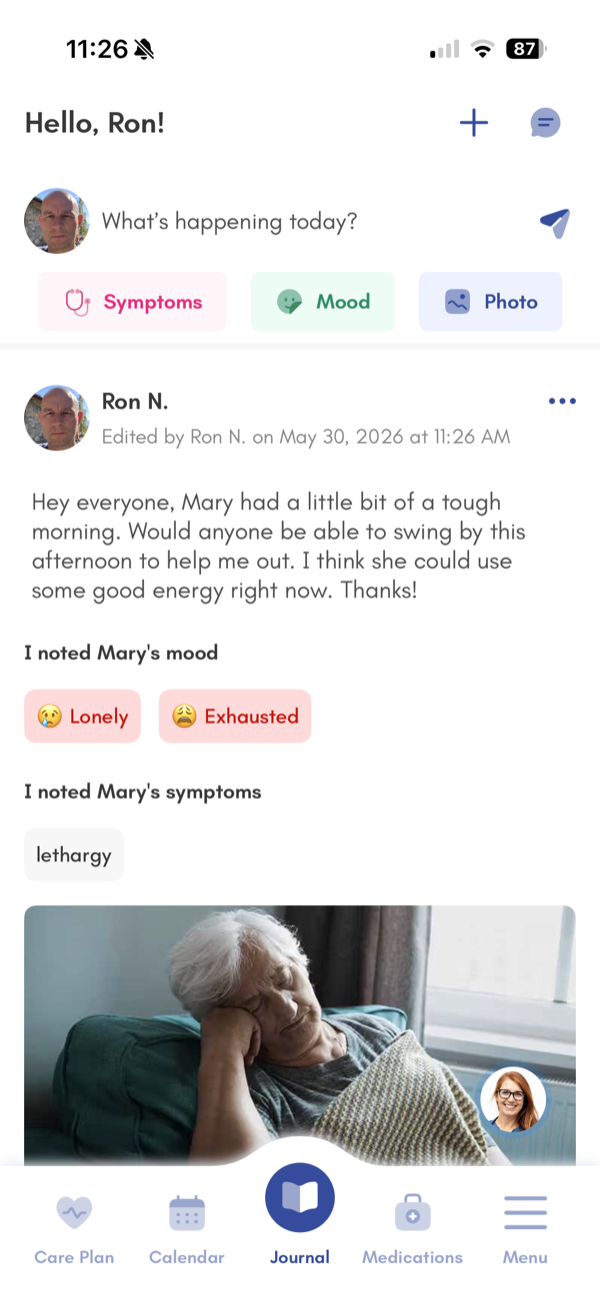
What Caregiver Daily Notes Are For (and Who Reads Them)
- Next aide: what changed and what needs follow-up.
- Supervisor: tasks completed, declined or needing attention.
- Authorized family: a clear account of the visit.
- Payer or surveyor: documentation required by the applicable program.
A 2020 Indiana home health survey found billed visit hours with the ordered tasks undocumented. A 2019 French study recorded 66% completeness for eating and 69% for falls on a 27-item checklist.
So gaps in routine notes are common; treat those figures as context for agencies. Agree what families and professional caregivers need.
What EVV Records and What Your Daily Notes Must Add
The 21st Century Cures Act requires electronic visit verification (EVV) for covered Medicaid-funded personal care and home health services that involve home visits.
Program exclusions apply, and EVV may be optional for private-pay agencies. Its six required fields verify visit facts; the narrative note adds the context.
| EVV Field | What the Note Adds | Example Note Detail |
|---|---|---|
Type of service performed | Tasks done, partly done or declined. | Hair wash declined. |
Individual receiving the service | Intake, mood and changes from usual. | Ate half a sandwich. |
Date of the service | Times of events during that visit. | Change at 10:40 AM. |
Location of service delivery | Where an incident happened. | Bathroom doorway. |
Individual providing the service | Other people present; who was notified. | Supervisor called at 12:40 PM. |
Time the service begins and ends | What happened between arrival and departure; entry time. | Entry made at 1:05 PM. |
Systems differ: confirm your official record’s location when comparing home care software.
Three Caregiver Daily Notes Examples
These fictional home care notes examples need your required identifiers, task statuses and sign-off. Record only what happened.
Routine Visit Note
- Nov 3; Ana R., home care aide; 8:58 AM to 1:02 PM.
- Shower completed with standby help; hair wash declined, “tomorrow.”
- At 9:30 AM, reminded and observed scheduled morning pack taken; see medication record.
- Lunch: half sandwich, all soup. Walked to mailbox with walker.
- New pink area on right heel at 12:35 PM; supervisor notified 12:40 PM, nurse follow-up planned.
- Followed agency escalation policy. Entered 1:05 PM.
Why it works: completed care, declined care and follow-up stay visible.
A Visit Update the Family Can Read
Aides post shift notes to the client's Caring Village journal, answer the daily care plan and check off medications. Families see how the visit went.
- Shift notes posted from the aide's phone
- Care plan answers the family can read
Shower done with standby help; hair wash moved to tomorrow at her request. Small pink area on right heel, supervisor told at 12:40.
I noted Evelyn’s mood
Thank you, Ana. I’ll check in with Evelyn tonight.

Declined Care Note
- Nov 4; Ana R., home care aide; 9:00 AM to 1:00 PM.
- Shower declined at 9:20 AM: “I feel cold.” Offered washcloth care within the plan; accepted.
- Noon medication pack declined at 12:00 PM: “It makes me dizzy.” Left pack sealed.
- Supervisor reached by phone at 12:05 PM; said nurse would contact client.
- Followed agency escalation policy. Entered 1:03 PM.
Why it works: choice, alternative care and notification are separate facts.
Fall or Change in Condition Note
- Nov 5; Ana R., home care aide; event entry 10:55 AM.
- At 10:40 AM, found client seated on bathroom floor. Said, “My foot slipped,” then suddenly asked who I was, a change from usual.
- Called 911 at 10:41 AM; followed dispatcher instructions and stayed with client.
- Supervisor called at 10:44 AM; authorized daughter at 10:47 AM.
- Followed agency emergency escalation policy. Handoff: emergency assessment underway; see incident report.
Why it works: facts replace “OK now.” Sudden confusion requires a 911 call; document afterward. Review fall prevention separately.
Vague Notes Rewritten: Before and After
Fictional personal care notes examples replace judgments with details, while the care plan stays as written.
| Vague Note | Specific Rewrite | What Changed |
|---|---|---|
Ate poorly. | 12:15 PM: three bites chicken, all applesauce, 4 oz juice; “not hungry.” | Time and amounts. |
Mom was lazy. | Declined walk at 10:00 AM: “My knees hurt.” | Her words replace a label. |
Refused meds. | Noon pack declined; sealed. Supervisor called 12:05 PM; nurse follow-up requested. | Action and escalation. |
Confused. | 10:40 AM: suddenly asked who the aide was; 911 called 10:41 AM. | Change and response. |
Accusing people. | 2:00 PM: “Someone took my wallet.” Found in jacket 2:10 PM. | Exact quote; diagnosis left to clinicians. |
Had a fall, OK. | 10:40 AM: found seated on bathroom floor; emergency response recorded separately. | Observation; clearance comes from emergency staff. |
Skin looks red. | 12:35 PM: quarter-sized pink area, right heel; skin closed; supervisor told 12:40 PM. | Location and notification. |
Med given QD. | 9:30 AM: reminder given; observed scheduled morning pack taken; see medication record. | Exact support, plain language. |
Good day. | Walked to mailbox with walker; laughed during daughter’s video call. | Observable activity. |
Observations feed dementia care conversations, and diagnosis belongs to clinicians. The 2011 Joint Commission list recommends writing “daily” in place of “QD.” Follow current agency policy.
Writing Rules Aides Can Follow on Shift
- Write during or promptly after care, once the client is safe.
- Describe what you observed; attribute what someone reported.
- Put a time on changes and notifications.
- Record declined and partly completed tasks.
- Use approved abbreviations only; prefer plain words.
- Preserve original content; add a dated, attributed correction.
- Label late entries with entry time and event time; never backdate.
- Write respectfully, as if the client will read it.
Use agency correction procedures: correct with a dated, attributed entry and keep the original. CMS medical-record guidance identifies changes by date and author. Skilled nursing, Medicare-certified home health and Medicaid programs have specific requirements; this template supplements required records.
Turning a Shift Note Into a Family Update
Use what happened, what changed and what's next as the order, for example: “Shower completed; hair wash declined. Heel concern reported; supervisor arranging follow-up.” Agree on audience and timing in your family communication plan.
- Share only with the client’s authorized recipients under agency policy.
- Keep staff disputes, other clients' information and speculation out of the update.
- Keep required clinical and incident details in the designated agency record; communicate urgent concerns directly.
Caring Village centers one village on one client. Wellness Journal updates and messaging keep follow-up together, and village information stays with its members, so confirm each person's access first.
Communication apps differ in controls. Keep scheduling, EVV and billing in their designated systems.
Give Each Client’s Family One Place to Read Updates
Invite the authorized circle into a client’s Caring Village. Shared updates and messages give family and staff one place to follow the visit.
Organize care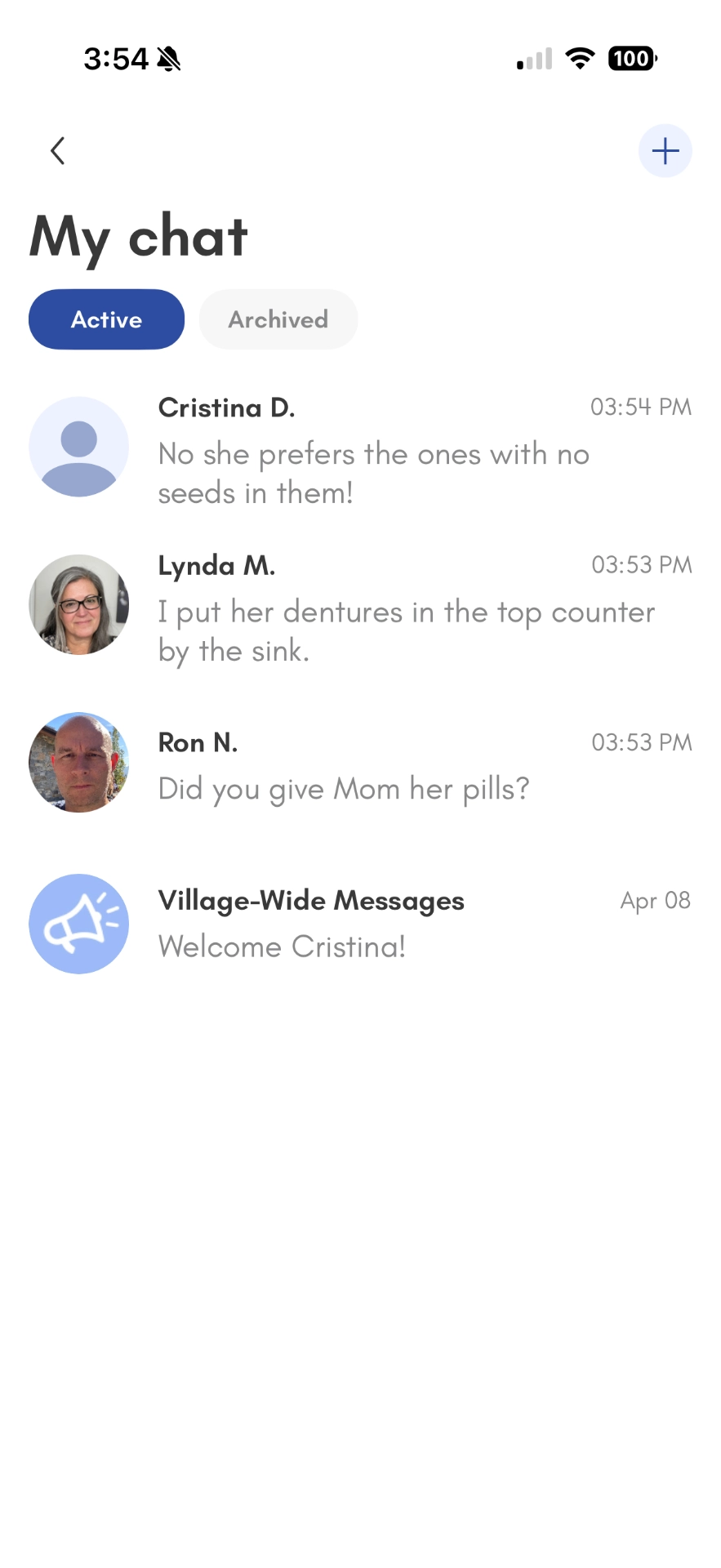
Caregiver Daily Notes FAQ
What Should a Caregiver Write in Daily Notes?
Record the visit identifiers, care performed or declined, relevant observations, notifications and follow-up. Your agency's approved form sets any additional required fields.
How Long Should a Caregiver Daily Note Be?
Use enough detail to explain the visit and outstanding needs. A routine note may be short; an incident needs its own required documentation.
Is an EVV Record the Same as a Daily Note?
EVV verifies required visit facts. Check whether your system also stores narrative notes: clock-in and clock-out times record the visit, and the note describes the care delivered.
Can Families See Caregiver Daily Notes?
Family access depends on authorization, agency policy and the system used. Decide whether to share the full note or an approved summary.
How Do You Correct a Mistake in a Daily Care Note?
Use the agency’s dated correction process while retaining the original entry. Apply that process to paper or electronic notes; ask your supervisor if unsure.
Your Next Step This Week
Rewrite the vaguest sentences in three recent notes. Check the template against agency requirements, then pilot it with one client for two weeks. Ask the incoming aide and authorized family reader what remains unclear. Adjust before wider rollout.
Make Every Shift Note Useful to the Family Too
Bring visit updates, medications and the care calendar into one shared Caring Village for each client’s circle.
As a professional caregiver managing multiple clients, this app keeps me organized. The daily log feature is incredibly easy to use.