11 Best Gifts for Someone With Dementia or Alzheimer’s
A stage-aware, safety-aware gift guide that helps you choose something kind, useful, and easy, with current prices and gifts to choose carefully.

Caring Village may earn a commission on purchases made through affiliate links in this article. Our recommendations are independent of commission rates.

A good gift for someone living with dementia is not about the price tag. It is about meeting the person where they are today, and making a hard day a little gentler.
The kindest gifts feel familiar, ask very little, and never make the person feel tested. That is a different goal than a typical wish list, and it changes what belongs on it.
This guide is organized by stage and by what the gift is for, because the same item can be perfect for one person and frustrating for another. We refreshed every product, price, and link in July 2026, and we flagged what to watch for so a well-meant gift does not cause stress. If you are still learning the signs, our guide to recognizing dementia is a gentle place to start.
What changed in our 2026 update
We rechecked every pick against its live retailer page in July 2026, confirmed each gift still had a live listing, and refreshed the prices you see here.
- Added the Dementia Gift Fit Table so you can match a gift type to the stage and situation, with the one safety thing to watch, before you shop.
- Swapped in current models where the old ones retired. The discontinued Jitterbug Smart3 became the Smart5, and an older Echo Show became the Echo Show 8 (2025).
- Rechecked the outbound shopping links so each recommendation points to a current, relevant product page instead of an old or retired listing.
Prices are shown as ranges and can still change by retailer.
Not sure where to start?
Jump straight to the pick that matches the situation.
Dementia Gift Fit Table
Which kind of gift fits which stage and situation, with the one safety thing to watch and a typical price. Every row maps to a product reviewed below.
| Stage / use case | Gift type | Why it helps | Safety watchout | Typical price | Caregiver note |
|---|---|---|---|---|---|
| Early stage | Simplified phone or video display Jitterbug Smart5, Echo Show 8 | Keeps the person connected with less confusion; emergency and check-in features | Caregiver configures it; review always-listening privacy with the family | $120 to $180plus a plan for the phone | Set it up for them, then keep it simple and unchanged. |
| Early to mid stage | Day clock with day, date, and gentle alarms American Lifetime Day Clock | Reduces repeated what-day-is-it questions and anchors the day | Alarms are reminders, not a medication system | $48 to $60 | Place it where they sit most; set alarms to the real routine. |
| Mid stage | Simple music player or playlist Relish Radio | Familiar music reaches people when words get harder; eases stress | Preset stations so there is nothing to get wrong | $150 to $160 | Load their era’s music; name the buttons. |
| Mid stage | High-contrast adaptive dinnerware Power of Red set | Helps the person see and recognize food to keep eating independently | A daily-living aid, not a treatment | $37 to $45 | Introduce gently; some people resist new dishes. |
| Mid to later stage | Adaptive anti-strip clothing Silvert’s jumpsuit | Eases assisted dressing and reduces distressing undressing | Only when undressing or toileting issues are present; not a general gift | $60 to $80 | Check sizing carefully; choose a flattering style. |
| Mid to later stage | Robotic companion pet or fidget item Joy For All pet, GeriGuard pillow | Soothes agitation, eases loneliness, gives restless hands a focus | Watch small parts and battery access if the person mouths objects | $30 to $160 | A pet for nurturing, a fidget for the hardest hours. |
| All stages | No-fail shared activity Aquapaint, reminiscence cards | Mess-free, no winners or losers, sparks connection and stories | Keep it pressure-free; match themes to their life | $18 to $25 | The point is the shared time, not the result. |
| Caregiver support | Medication help or care coordination Hero, Caring Village | Helps organize medication routines and keeps the family aligned | Subscription cost; supports but does not replace supervision | From $29.99/moHero | Frame as helping the caregiver, with consent. |
| Choose carefully | GPS trackers and recording devices | Can address wandering, but only with consent and a plan | Get family consent; avoid covert tracking; see our GPS guide | $29 to ~$769AirTag to AngelSense | Decide together; we link the guide, not a purchase page. |
Before you buy
Five quick checks that prevent a kind gift from causing stress.
- Avoid small removable parts if there is any choking risk.
- Avoid complex instructions if frustration is likely.
- Avoid products that track, record, or share data without family consent.
- Ask the caregiver what routines are actually working before you buy.
- Keep the receipt, because needs can change quickly.
Top Picks Compared
Tap any row to jump to the full review. Prices were verified in July 2026 and can change by retailer.
| # | Product | Stage | Type | Price | Best for |
|---|---|---|---|---|---|
| 01 | 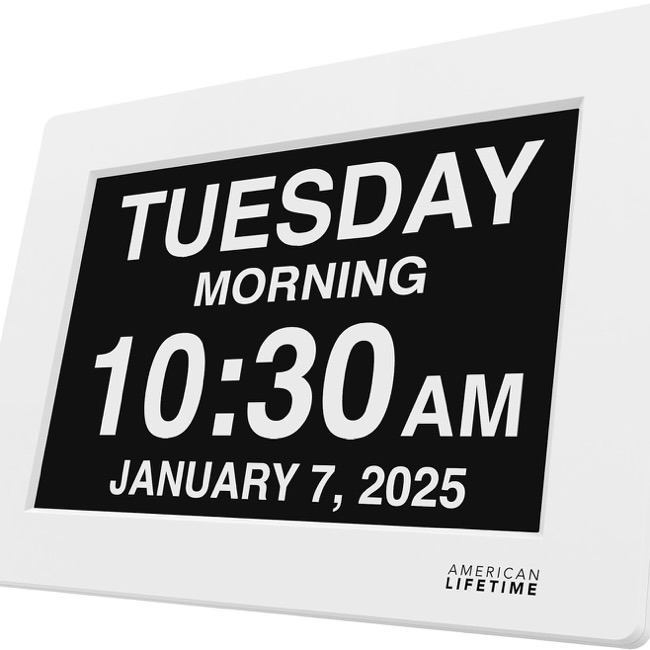 American Lifetime Day Clock★ Best overall American Lifetime Day Clock★ Best overall |
Early to mid | Day clock | ~$48 to $60 | Orientation and routine |
| 02 | 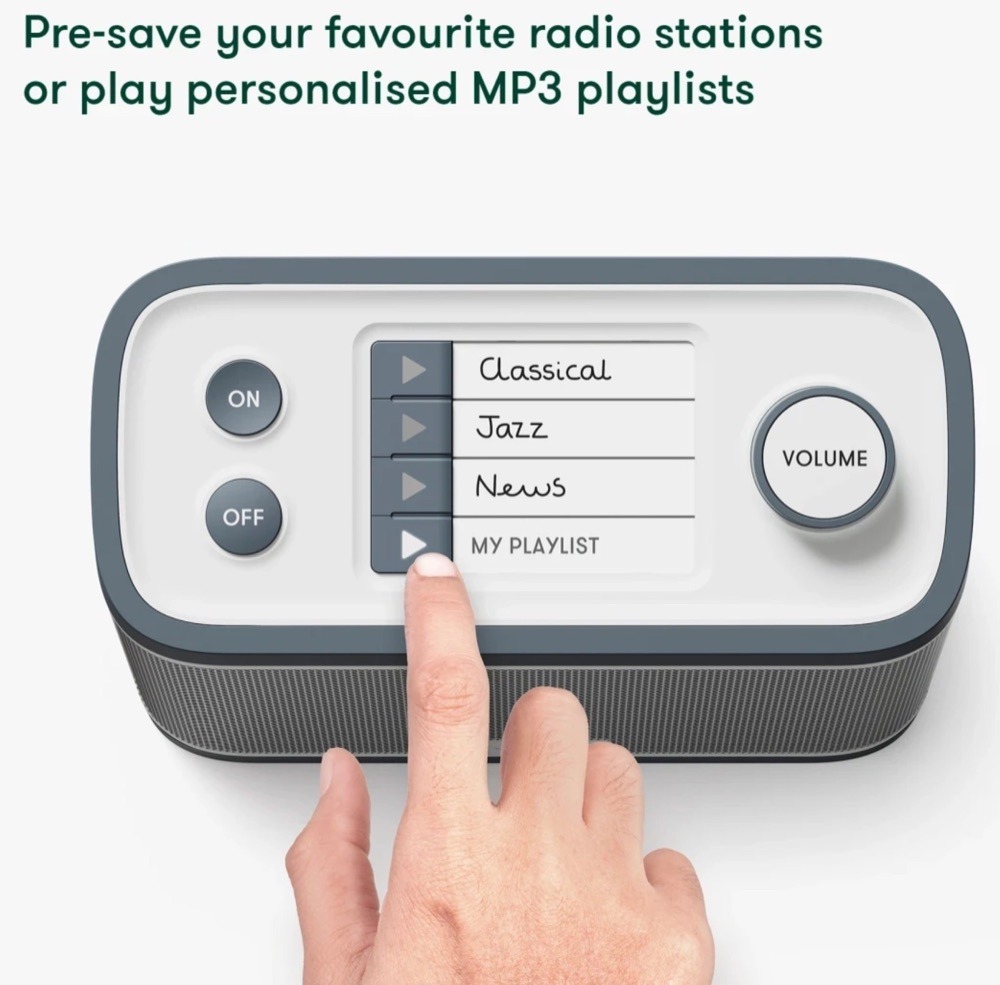 Relish Radio & Music PlayerMusic and reminiscence Relish Radio & Music PlayerMusic and reminiscence |
Mid | Music player | ~$150 to $160 | Familiar music |
| 03 | 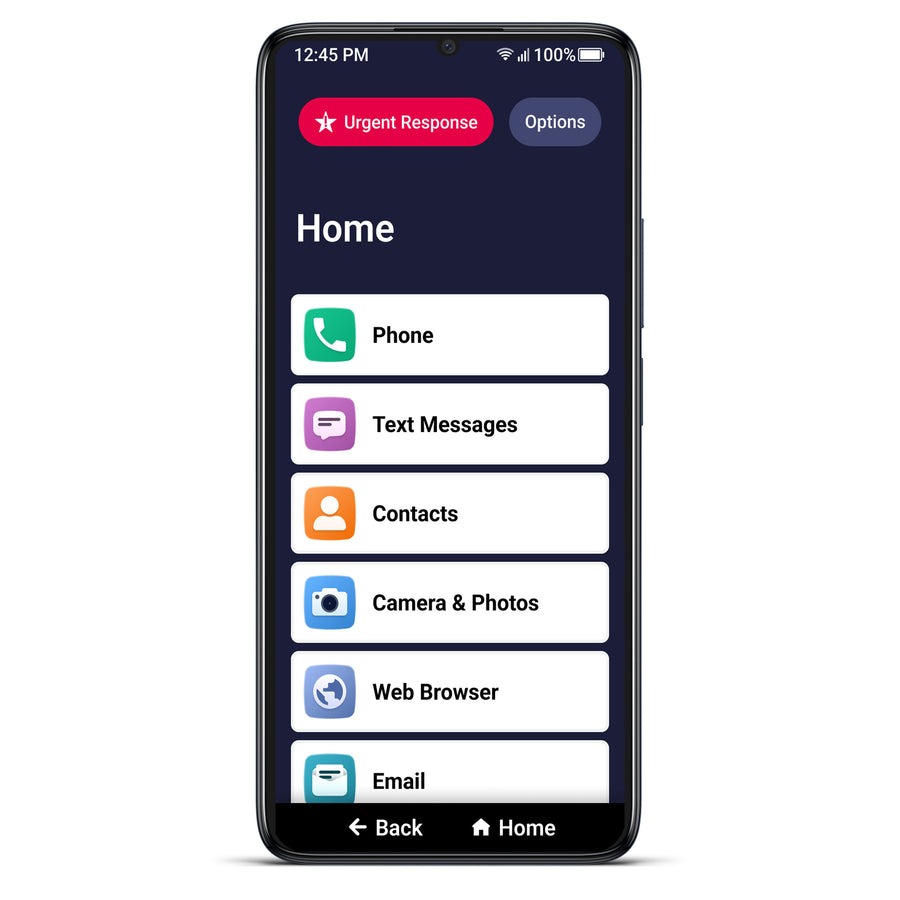 Lively Jitterbug Smart5Simplified phone Lively Jitterbug Smart5Simplified phone |
Early | Phone | ~$120 + plan | Independence |
| 04 | 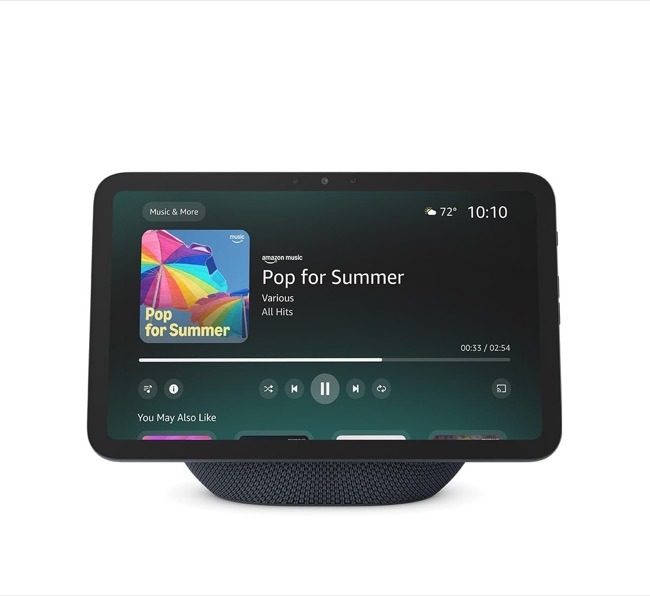 Amazon Echo Show 8Video calls Amazon Echo Show 8Video calls |
Early to mid | Smart display | ~$150 to $180 | Hands-free calls |
| 05 | 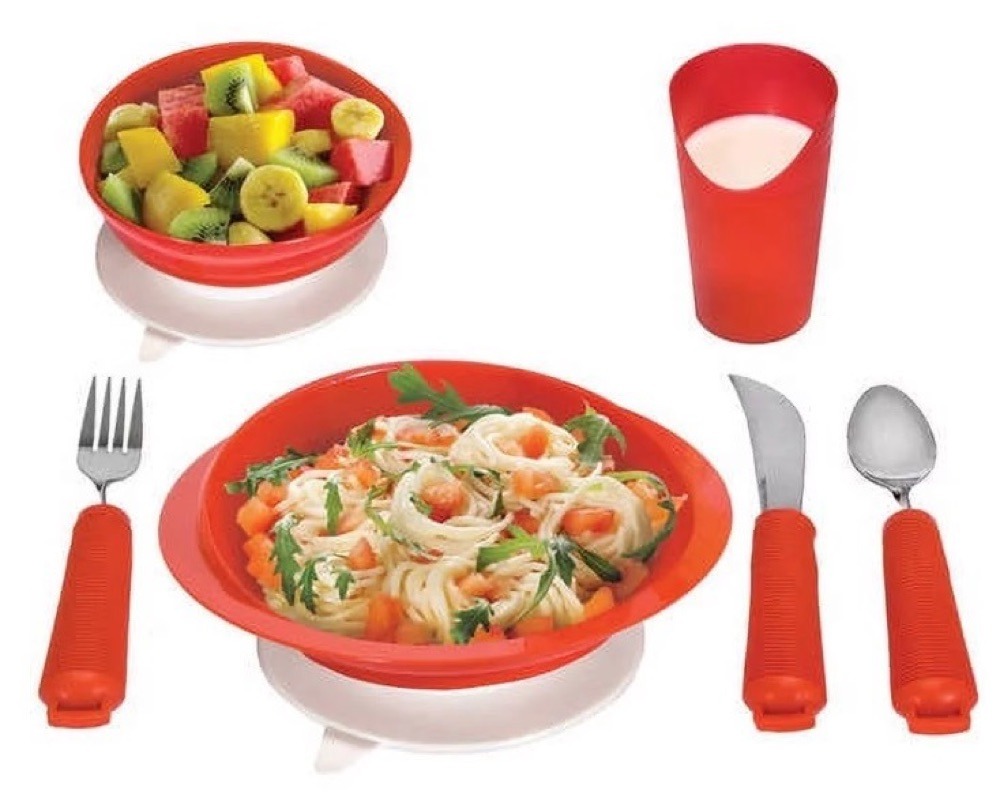 Power of Red DinnerwareMealtimes Power of Red DinnerwareMealtimes |
Mid to later | Daily-living aid | ~$37 to $45 | Eating independently |
| 06 |  Silvert’s Stay Dressed JumpsuitDressing and dignity Silvert’s Stay Dressed JumpsuitDressing and dignity |
Mid to later | Adaptive clothing | ~$60 to $80 | Assisted dressing |
| 07 |  Joy For All Companion PetComfort companion Joy For All Companion PetComfort companion |
Mid to later | Robotic pet | ~$30 to $160 | Easing agitation |
| 08 | 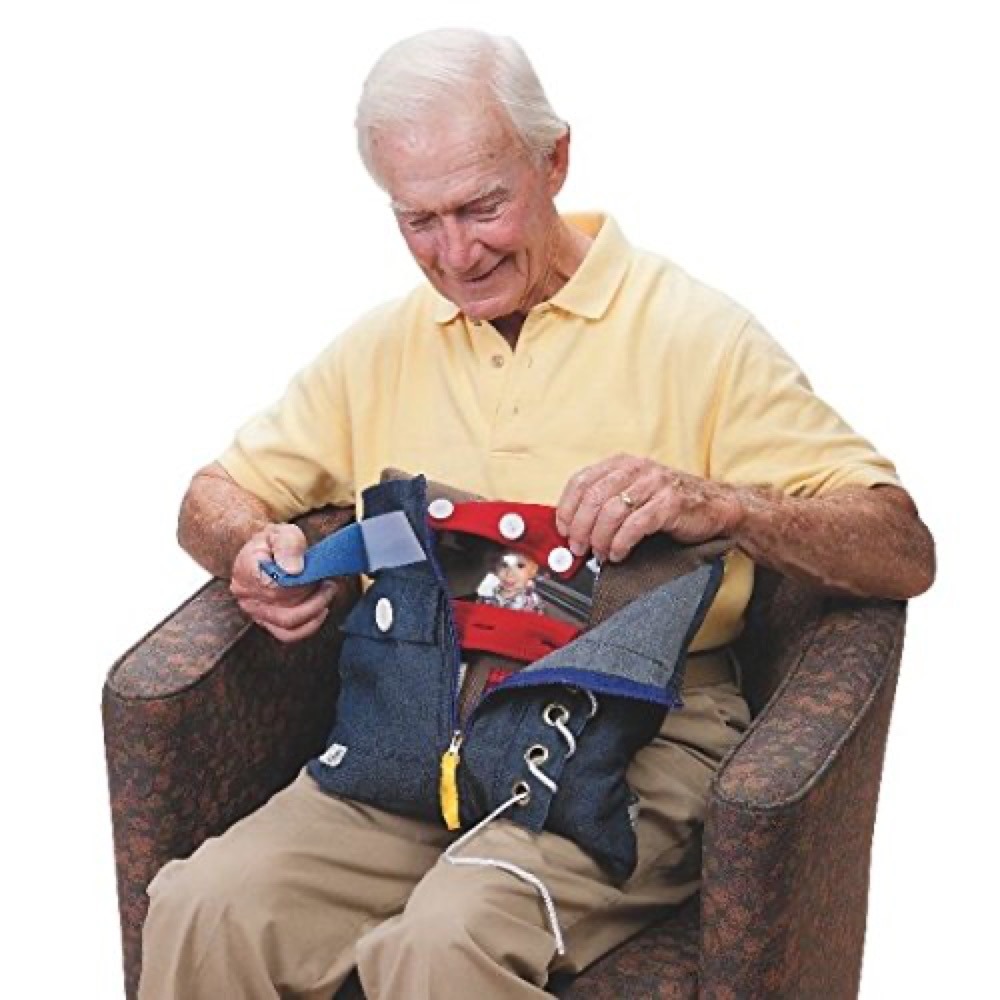 GeriGuard Fidget PillowRestless hands GeriGuard Fidget PillowRestless hands |
Mid to later | Sensory item | ~$55 to $65 | Sundowning hours |
| 09 |  Relish AquapaintShared activity Relish AquapaintShared activity |
All stages | Activity | ~$20 to $25 | No-fail creativity |
| 10 | 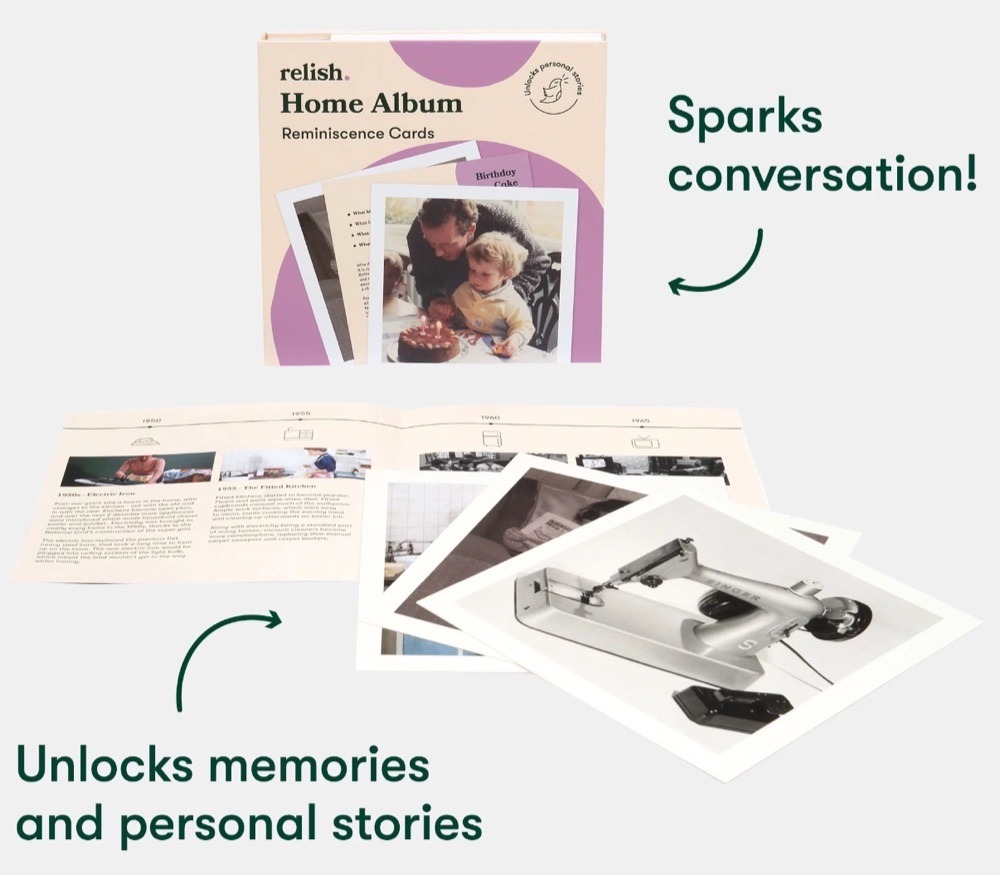 Relish Reminiscence CardsConnection Relish Reminiscence CardsConnection |
Early to mid | Activity | ~$18 to $25 | Shared stories |
| 11 | 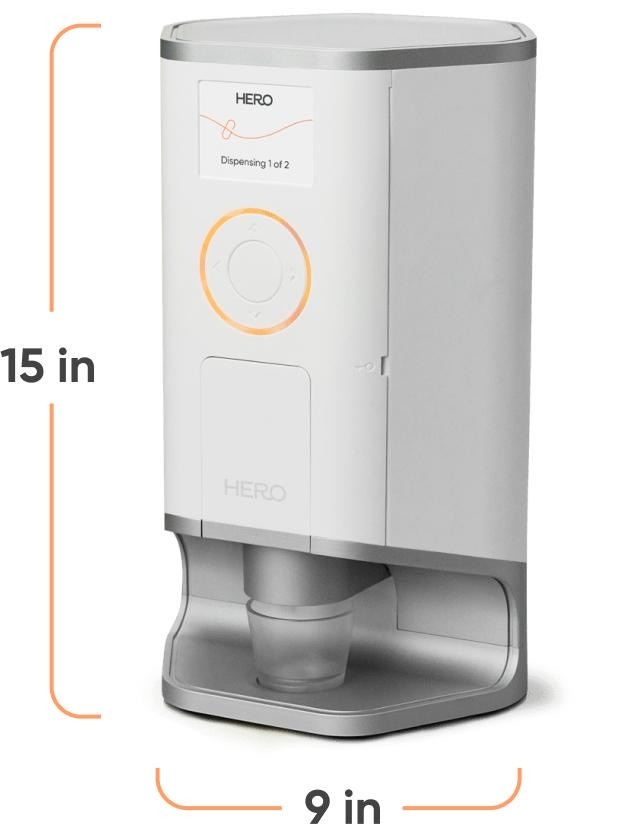 Hero Medication DispenserCaregiver supportSubscription Hero Medication DispenserCaregiver supportSubscription |
Early + oversight | Med dispenser | From $29.99/mo | Fewer missed doses |
All pricing verified July 2026. Subject to change by retailer.
How We Chose These Gifts
- Stage and ability fit. The gift should match what the person can do today, not what they could do last year.
- Safety first. We screened for choking hazards, batteries and small parts, overstimulation, wandering risk, and frustration.
- Genuine usefulness. Each pick supports daily living, comfort, connection, or the caregiver, with no overpromising.
- No medical overclaiming. We do not present any gift as a treatment for, or a way to slow, dementia. The same rule applies to digital games; see what brain training apps can and cannot do before buying a subscription.
- Current and buyable. Every product, price, and link was verified in July 2026.
The Picks, Reviewed
Stage-aware recommendations, from orientation and connection to comfort, shared activities, and caregiver support.
American Lifetime Day Clock
★ Best overallAnchors the day for someone who keeps asking what day it is.
- Best forEarly to mid stage
- Price~$48 to $60
- DisplayFull day, date, time of day
- AlarmsUp to 5, auto-dimming
- BackupBattery backup
- Warranty1-year, 30-day returns
Specs and price verified July 2026. 8-inch white listed around $59.95 at Walmart.
Check out American Lifetime Day ClockThis clock spells out the time of day, the full day of the week, and the date with no confusing abbreviations. There is nothing for the person to operate, which is the point. A caregiver sets it once and places it where the person sits most.
The packaging intentionally leaves off the words dementia, Alzheimer’s, and memory loss, so it never feels clinical to receive.
What works well
- Large, high-contrast display that is easy to read with low vision
- No setup complexity for the person living with dementia
- The brand keeps the listing current, with an updated version sold today
Worth knowing
- Alarms are simple chimes, not a substitute for a supervised medication routine
- Wall versus tabletop and size choices can confuse first-time buyers
Relish Dementia Radio and Music Player
One-touch familiar music when standard radios get too confusing.
- Best forMid-stage comfort
- Price~$150 to $160
- ButtonsLarge, audible feedback
- VolumeDial never reaches zero
- PlaylistUSB for personal songs
- ModesFM, digital, headphones
Price verified July 2026 at relish-life.com ($159.99).
Check out Relish Dementia Radio and MusicMusic is one of the few things that consistently reaches people in the mid to later stages, often after words become harder. This radio is built for that, with a hidden rear panel where a caregiver presets and names favorite stations, and a volume dial that never reaches zero so the device never seems broken.
What works well
- Designed specifically for dexterity and visual-impairment needs
- Music reaches people deep into mid and later stages
- USB slot lets a caregiver load personal songs alongside FM and digital stations
Worth knowing
- Premium price for a single-function device
- Needs a caregiver to do the initial station and playlist setup
Lively Jitterbug Smart5
A simplified phone with a single list-style screen and an Urgent Response button.
- Best forEarly-stage independence
- Device$119.99 (often less)
- Activation$35 one-time
- PlansFrom $19.99/month
- Screen6.75-inch, Android 16
- Storage128GB, 5G
- Support24/7 US care team
Smart5 pricing, 5G, 128GB storage, and plan terms verified July 2026 at shop.lively.com.
Check out Lively Jitterbug Smart5This replaces the discontinued Smart3 that older guides still link to and keeps the recommendation on Lively’s newest simplified smartphone. The single list-based menu, rather than a grid of apps, is what makes it manageable, and the built-in Urgent Response button and nurse line give a worried family some peace of mind.
What works well
- Purpose-built for older adults, far less overwhelming than a standard smartphone
- 5G, Wi-Fi calling, 128GB storage, and a 50MP camera make it more current than older Jitterbug models
- Built-in emergency and nurse support give caregivers reassurance
Worth knowing
- Locked to Lively service, so it is not a fit if you want to keep an existing carrier
- Needs a monthly Lively service plan on top of the device cost
- Best for early stage; touchscreens get harder as dementia progresses
Amazon Echo Show 8 (2025 release)
Hands-free video calls, reminders, and caregiver check-ins.
- Best forEarly to mid connection
- Price$179.99 (often ~$150 on sale)
- Screen8.7-inch HD touchscreen
- CallsAuto-framing video
- Drop InCaregiver check-in
- PrivacyMic/camera off switch
Price verified July 2026. Larger Echo Show 11 is $220.
Check out Amazon Echo Show 8For someone in early to mid stage, this is one of the simplest ways to make and receive a video call, and it never gets impatient with repeated questions. The Drop In feature lets an approved caregiver connect without the person needing to physically answer, which helps for distance check-ins. It does take a caregiver to set up contacts and Wi-Fi first.
Review privacy before you set it up
- This is an always-listening device. Set it up only with the family’s awareness, review the microphone and camera controls, and avoid it in later stages where voice assistants can confuse.
What works well
- One of the simplest video-call options for early dementia
- Voice reminders can reinforce a daily routine
- Never gets impatient with repeated questions
Worth knowing
- Voice assistants can confuse people in later stages
- Requires Wi-Fi and a caregiver to set up contacts and Drop In
Power of Red Complete Adaptive Dinnerware Set
High-contrast red dishes that help a person see and recognize food.
- Best forMid to later stage
- Price~$37 to $45
- IncludesPlate, bowl, cup, utensils
- GripSuction-cup bases
- CupNose cut-out design
- CareDishwasher safe
Exact product re-verified at Walmart July 2026; confirm current price at checkout.
Check out Power of Red Complete AdaptiveHigh-contrast red dishes can make food easier to see against the plate, which may help some people stay engaged at meals. Dementia-care guidance often supports high-contrast place settings as a practical visibility cue, though results vary by person. The bendable, built-up-handle utensils and rimmed sides help with reduced motor function and fewer spills.
What works well
- Addresses a real, common mealtime struggle in dementia care
- High-contrast color supports visibility for some people at mealtimes
- Inexpensive and practical
Worth knowing
- This is a daily-living aid, not a treatment; it supports eating, it does not improve cognition
- Some people resist a sudden change of familiar dishes
Silvert’s Stay Dressed Anti-Strip Jumpsuit
Eases assisted dressing and reduces distressing undressing, with dignity.
- Best forMid to later stage
- Men’s price$64.98 (often on sale)
- Women’s price~$59.98 to $79.98
- ClosureFull back zip, dome snaps
- FabricSoft knit, machine washable
- RangeMen’s and women’s styles
Pricing verified July 2026 on silverts.com.
Check out Silvert'sThis is a specific gift for a specific, distressing problem: when a loved one compulsively undresses, or when assisted dressing and toileting have become hard. The back zipper and neck dome snaps make unassisted disrobing difficult, while a long zipper to below the knee makes assisted dressing easier. It preserves dignity rather than feeling like a restraint.
If you are also navigating personal care, our guide to bathing with dementia pairs well here.
What works well
- Solves a specific care problem while preserving dignity
- Caregiver-focused design rather than a novelty item
Worth knowing
- Only appropriate when compulsive undressing or toileting mishaps are an issue; not a general gift
- Check sizing carefully; some variants run out of stock
Joy For All Companion Pet (Cat or Pup)
A lifelike companion that purrs, barks, and responds to touch, easing agitation and loneliness.
- Best forMid to later stage
- Cat$159.99 (official site)
- Pup~$159.97 to $174.99
- Budget optionPerfect Petzzz ~$30 to $40
- PowerBattery, no app
- ResponsePetting, motion, sound
Prices verified July 2026 on joyforall.com.
Check out Joy For All Companion PetPrefer the dog? The Golden Pup works the same way. On a tighter budget, a non-interactive Perfect Petzzz plush is a gentle alternative.
Robotic companion pets respond to petting, hugging, and motion. Cats purr and roll, pups bark back and turn toward your voice. Some dementia-care programs use robotic pets to support comfort, engagement, and emotional connection, but they are not a treatment and responses vary by person. The nurturing role often lands deeply in mid to later stages.
What works well
- May support comfort, engagement, and emotional connection for some people
- No charging, no setup, no screens
- Provides the nurturing role many people respond to
Worth knowing
- Premium price compared with a basic plush companion
- Watch small parts and battery access in people who mouth objects
GeriGuard Memory Loss Fidget and Therapy Pillow
Gives restless hands a safe, soothing focus during the hardest hours.
- Best forMid to later stage
- Price~$55 to $65
- ActivitiesLacing, buckles, zips
- ExtrasButtoned pocket, clip rings
- FabricsAssorted, tactile
- BatteriesNone
Live and current July 2026; reconfirm price at checkout.
Check out GeriGuard Fidget PillowA fidget item keeps hands busy during difficult parts of the day, like sundowning and transitions. This pillow has lacing, buckling, and zipping activities plus a buttoned pocket and clip rings, with assorted fabrics for tactile stimulation. There are no batteries and no small loose parts to swallow, though it is worth checking that seams and attachments hold up if the person pulls hard.
What works well
- Keeps hands busy during sundowning and transitions
- No batteries, no small loose parts to swallow
- Varied tactile fabrics, a buttoned pocket, and clip rings give restless hands several things to explore
Worth knowing
- Describe it as comfort and engagement, not memory improvement
- Check seams and attachments hold up if the person pulls hard
Relish Aquapaint Reusable Water Painting
A mess-free, no-fail activity to do together; paint with water and the image appears.
- Best forAll stages, shared
- Price~$20 to $25 per 5-pack
- HowPaint with water
- FadesBack to white in 15 to 20 min
- ReusableOver a year of daily use
- Themes5 reminiscence images
Price verified July 2026; Special Pack is $89.96 on the official site.
Check out Relish Aquapaint Reusable Water PaintingYou paint water onto the canvas, an image appears, then it fades back to white to be reused. There is no right or wrong and no mess, which keeps frustration very low. Relish designs its activities for people living with dementia, and this works best as something you do together rather than hand over. Families planning more shared moments can use bucket list apps for family experiences to save simple, stage-appropriate ideas and name who will join.
What works well
- No right or wrong, no mess, reusable, very low frustration
- Works as a shared caregiver-and-loved-one activity
- Each canvas fades back to white in 15 to 20 minutes and lasts over a year of daily reuse
Worth knowing
- Can feel single-use unless paired with a routine
- Pick a theme that matches the person’s interests
Relish Reminiscence and Conversation Cards
Picture and conversation cards that spark shared stories with no winners or losers.
- Best forEarly to mid stage
- Price~$18 to $25 per set
- FormatImages with prompts
- PiecesLarge, easy to handle
- StyleNon-competitive
- PackagingNo mention of dementia
Price verified July 2026.
Check out Relish Reminiscence and Conversation CardsThese cards pair reminiscence images with prompt questions on the back to start a conversation. They are non-competitive, conversation-oriented, and large enough to handle easily. Choose a theme that fits the person’s life history, and frame it around connection and enjoyment, not memory training.
What works well
- Excellent for a family activity that meets the person where they are
- Low cost, no batteries, no frustration
- Large, easy-to-handle cards with no mention of dementia on the packaging
Worth knowing
- Frame around connection and enjoyment, not memory training
- Choose a theme that fits the person’s life history
Hero Medication Dispenser
Caregiver pickSubscriptionAn automatic dispenser that sorts doses and sends app reminders, for early stage with oversight.
- Best forEarly stage + oversight
- PriceFrom $29.99/month
- ModelSubscription service
- DeviceCountertop, one-button
- AppSchedules and refills
- Guarantee30-day money back
Pricing verified July 2026; from $29.99/month on a prepaid 12-month plan.
Check out HeroFramed correctly, this is a genuinely useful caregiver-support gift: it sorts and dispenses scheduled doses, sends app reminders, and gives family visibility into refills. It can help organize the routine for an early-stage loved one who still manages medication with oversight, but it does not replace supervision or clinical medication guidance. The cost is ongoing and a gift-giver should understand that before committing. For a broader device comparison, see our guide to the best automatic pill dispensers. If you want app-only options first, see our guide to medication reminder apps.
What works well
- A genuinely useful caregiver-support gift
- Helps organize medication timing with family visibility
Worth knowing
- Ongoing monthly cost a gift-giver must understand
- Best for early stage with oversight, not a substitute for supervision
- Frame as medication organization, never as a treatment
Gifts to Avoid or Choose Carefully
Some well-meant gifts can backfire. A quick screen saves a difficult moment later.
Skip or think twice about these
- Anything with small removable parts if there is a choking risk.
- Anything with complex instructions if frustration is likely.
- Childish toys that can feel demeaning; choose age-appropriate comfort items instead.
- Products that overpromise to treat, improve, or slow dementia.
GPS trackers and devices that record or share location sit in a category of their own. They can genuinely help with wandering risk, but only with the person’s and the family’s consent and a clear plan, never as a surprise. Options run from a roughly $29 Apple AirTag, which is a supplement and not a real-time tracking or SOS device, up to dedicated services like AngelSense at about $769 in the first year. Rather than affiliate a tracker here, we point you to our GPS trackers guide so you can decide together.
A Short Decision Framework
If you only have a minute, match the situation to a pick.
- Want orientation and routine? The American Lifetime Day Clock.
- Does music reach them? The Relish Radio, loaded with their era’s songs.
- Want connection from a distance? The Echo Show 8 for video calls, or the Jitterbug Smart5 if they still carry a phone.
- Mealtimes getting harder? The Power of Red dinnerware set.
- Comfort in the hardest hours? A Joy For All companion pet or the GeriGuard fidget pillow.
- Want to do something together? Aquapaint or reminiscence cards.
- Supporting the caregiver? The Hero dispenser, or set up a shared Caring Village to keep the team aligned. For the bigger picture, see how to coordinate care for an aging parent and the best dementia caregiver apps.
Frequently Asked Questions
What are the best gifts by dementia stage?
In early stage, lean toward independence and connection: a simplified phone like the Jitterbug Smart5, an Echo Show 8 for video calls, or a day clock for routine. In mid stage, comfort and reminiscence work best: familiar music on the Relish Radio, conversation cards, or high-contrast dinnerware for mealtimes. In later stage, focus on sensory comfort and easy shared activities: a Joy For All companion pet, a fidget pillow, or Aquapaint.
What gifts should you avoid for someone with dementia?
Avoid anything with small removable parts if there is a choking risk, anything with complex instructions if frustration is likely, childish toys that can feel demeaning, and any product that claims to treat or slow dementia. Be cautious with GPS trackers and anything that records or shares data, and only use them with consent.
What is a meaningful gift for someone with dementia?
Meaningful gifts feel familiar and ask very little. Personalized music from their era, photos and reminiscence cards tied to their life, a soft companion pet, or simply time spent on a no-fail shared activity like Aquapaint tend to land better than anything complicated.
Are tech gifts like smart displays a good idea?
They can be, in early to mid stage, if a caregiver sets everything up and keeps it simple. An Echo Show 8 makes hands-free video calls easy and can voice daily reminders. Review the always-listening privacy settings with the family first, and remember that voice assistants can confuse people in later stages.
What safety concerns matter most with dementia gifts?
Watch for choking hazards and small parts, battery access in people who mouth objects, overstimulation, frustration with complex tasks, and wandering. When in doubt, ask the caregiver what is working now, and keep the receipt so you can adjust as needs change.
Lynda writes practical, caregiver-first guides for Caring Village, with a focus on dementia and Alzheimer’s care. She approaches gift guides the way a thoughtful family member would: warmly, with an eye for safety, dignity, and what actually helps day to day.
Sources and Verification
Prices, product claims, and safety guidance below were verified on July 5, 2026. Pricing and availability can change, so confirm current details before buying.
Sources
- Lively Jitterbug Smart5 is the current official model, $119.99 with a $35 one-time activation fee, 5G, 128GB storage, Android 16, a 50MP camera, and plans from $19.99/month before taxes and fees. Lively
- Relish Dementia Radio & Music Player is sold direct at $159.99 USD. Relish and on Amazon US (ASIN B095XH6J35). Amazon
- Echo Show 8 (2025 release, 4th gen) is $179.99 list (often around $150 on sale), the Echo Show 11 is $220, and the Show 8 supports auto-framing video calls. 9to5Toys; live Amazon page (ASIN B0DC8ZMR1P). Amazon
- American Lifetime day clock (ASIN B019G79V1Q) resolves to the current 2026 dementia clock. Amazon; an 8-inch white version is listed around $59.95 at Walmart. Walmart
- Joy For All companion cats are $159.99 on the official site. Joy For All; the Golden Pup has a live Amazon listing (ASIN B01L9B5JYU), about $159.97 to $174.99. Amazon; budget plush alternative Perfect Petzzz (ASIN B0045CLGFM). Amazon
- GeriGuard Memory Loss Fidget & Therapy Pillow is a live, current Amazon listing (ASIN B0778SWJPV). Amazon
- Power of Red Complete Adaptive Dinnerware Set is sold at Walmart; red high-contrast dinnerware is associated with easier food recognition for people with dementia. Walmart
- Silvert’s men’s Stay Dressed full-back-zip jumpsuit lists at $64.98 (recently on sale around $58.48) and is in stock; women’s anti-strip jumpsuits run about $59.98 to $79.98. Silvert’s
- Relish Aquapaint reusable packs (5 canvases, reusable over a year, fade in 15 to 20 minutes) are sold on Amazon by theme; the official Special Pack is $89.96. Relish; reminiscence/conversation cards (Amazon B08GH493NZ). Amazon
- Hero medication dispenser is subscription-only: from $29.99/month prepaid 12-month ($359.88/year), $44.99/month on a 12-month commitment, or $59.99/month no-commitment, with 24/7 support, app, and a limited lifetime warranty. Hero
- For wandering risk, GPS options range from a $29 Apple AirTag (supplement only, no real-time tracking, SOS, or geofencing) to AngelSense (about $769 first-year on annual prepaid); tracking should follow consent and state law. SafeWise