

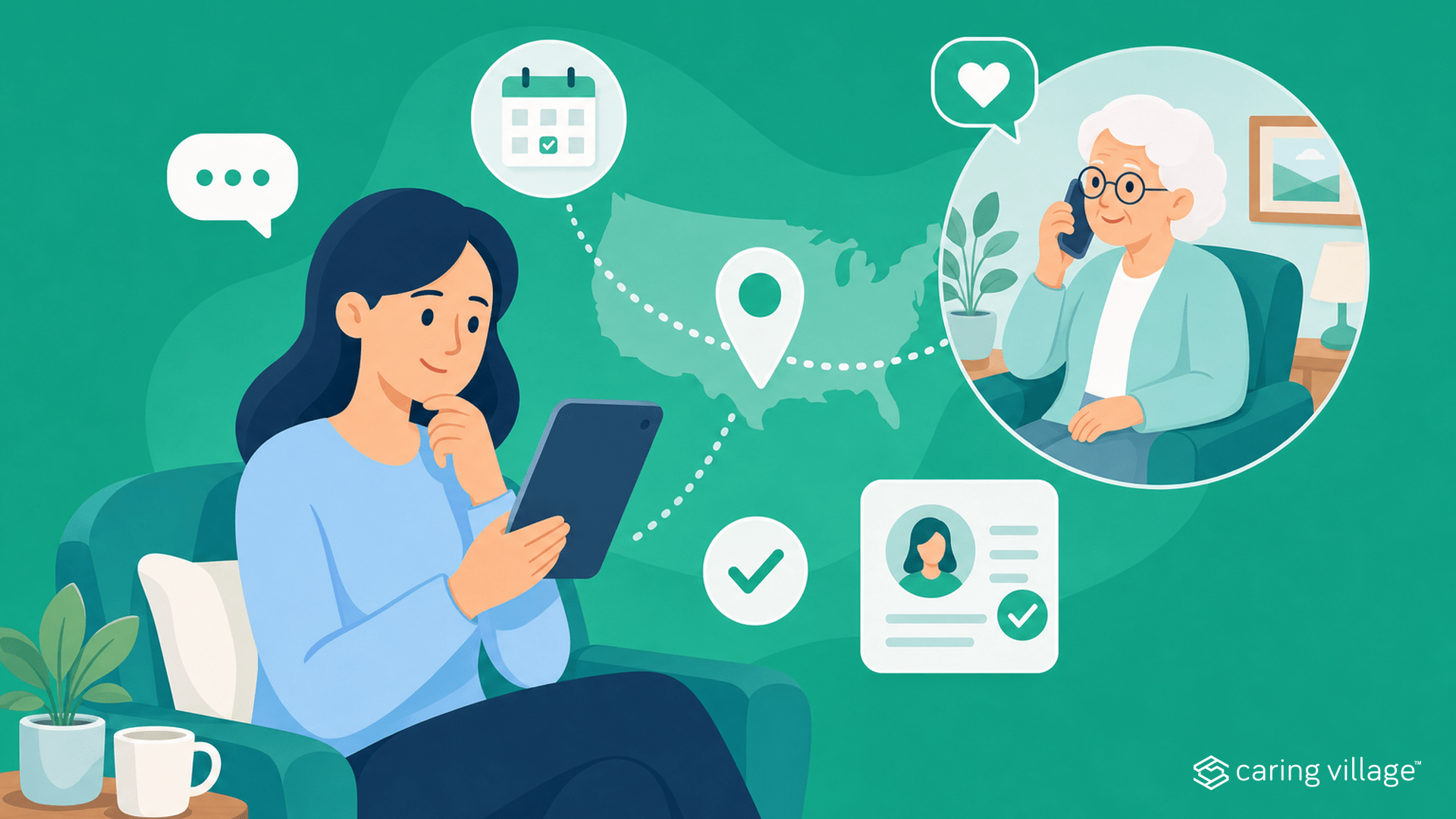

Long-distance caregiving often fails in one predictable way: everyone is “communicating,” but nobody is actually coordinating. You might be checking in daily, but without a central hub, the result looks like love and feels like pure chaos.
Being miles away shouldn’t mean feeling helpless. This guide is designed to help you stay close, stay informed, and stay ready—even when you’re hours apart.
In this article, we’ll cover:
- Building a local support network with clear roles.
- Centralizing meds and docs using digital tools.
- Creating an emergency plan that works remotely.
To bridge the distance, we suggest using an app like Caring Village. It’s a simple spot to turn scattered texts and mental notes into one organized team, taking the guesswork out of who’s doing what.
Read on to learn more about how this approach can bring your family peace of mind.
Legal note: POA, HIPAA authorization, advance directive, healthcare proxy, and financial authority rules vary by state and situation. Use this as a planning checklist, then confirm documents with a qualified attorney, clinician, or local advisor.
The Challenges Of Long-Distance Caregiving
Caring for someone from a different city or state comes with a heavy mental load. It’s a specific kind of stress that stems from:
- The Visibility Gap: You can’t see the subtle changes, like a fridge that hasn’t been restocked or a sudden change in mood. If you notice these shifts during a visit or a video call, it also helps to know how to recognize the first signs of dementia in a family member so you can take action early.
- Communication Hurdles: Keeping siblings, neighbors, and doctors on the same page can feel like a full-time job.
- The Weight of Guilt: That nagging feeling that you should be there physically, even when your own life and work are elsewhere.
What Are the Most Effective Long-Distance Caregiving Tips?
The most effective long-distance caregiving tips include building a reliable local support network, using shared tools for schedules and tasks, keeping an up-to-date medication list and key documents accessible, and creating an emergency plan with clear roles. Regular check-ins plus shared updates help you spot changes early—before they become crises.
Tip 1: Build Your Local Support Team

Since you can’t be there every day, you need people who can. A reliable local network acts as your eyes and ears on the ground.
For more planning context, the National Institute on Aging’s So Far Away long-distance caregiving guide recommends building reliable local contacts before a crisis. The Eldercare Locator can also help you find local aging services at 1-800-677-1116. For complex situations, an Aging Life Care Manager or geriatric care manager can coordinate local support and report back to the family.
- Find Your Local Nodes: Identify who is already physically close to your loved one. This includes helpful neighbors who notice if the mail is piling up, friends from faith groups or clubs, and professionals like home health aides or the local pharmacist.
- Make the Ask Small and Specific: Most people want to help but are afraid of being overwhelmed. Make it easy for them to say yes by asking for one clear, time-bound task. For a neighbor, it might be checking the trash on Monday mornings; for a friend, it’s a quick text after a Thursday visit.
Tip 2: Create a Single Source of Truth (Calendar, Tasks, Documents)
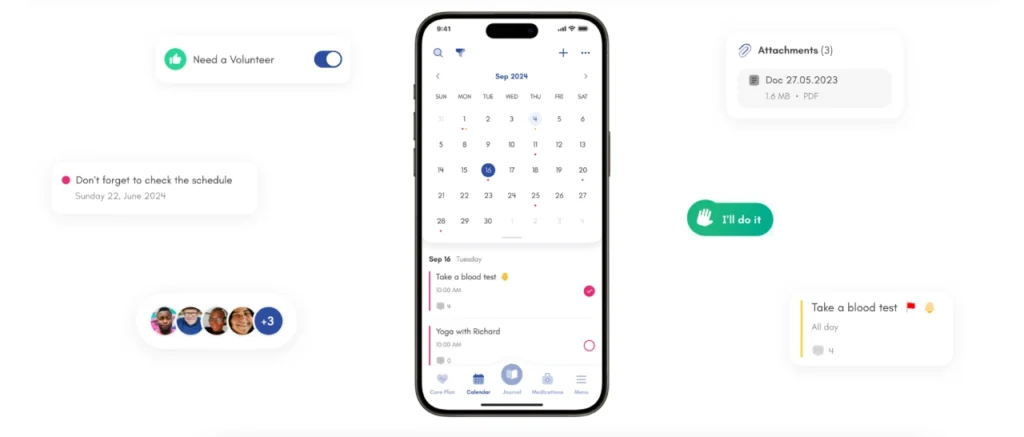
Long-distance caregiving breaks down when information is scattered across texts, emails, notebooks, and people’s memories.
You need one central place where your entire care plan lives.
What to centralize:
- Shared calendar: Doctor visits, caregiver shifts, refill dates
- Task list with owners: Grocery runs, prescription pickups, home maintenance
- Secure messaging: Medical updates and provider instructions
- Document vault: Insurance cards, medication lists, advance directives
Why this matters: Emergencies don’t wait for someone to find a file cabinet. If a neighbor or home aide needs critical info fast, it should be available on their phone in seconds—not buried in a text thread from three months ago.
Tip 3: Track Health Trends Without Micromanaging
When you are far away, moving from small talk to real information helps you catch changes before they become problems.
1. Use Better Prompts for Check-ins
Instead of asking how things are going, try using specific questions that reveal how your loved one is actually feeling. Set a regular schedule for these calls so they become a comfortable habit.
- What felt a little harder to do this week than it was last week?
- Have you noticed any new dizziness or pain lately?
- Walk me through what you ate for lunch and dinner yesterday.
- Is there anything specific you are worried about right now?
2. Use a Wellness Journal to Spot Trends
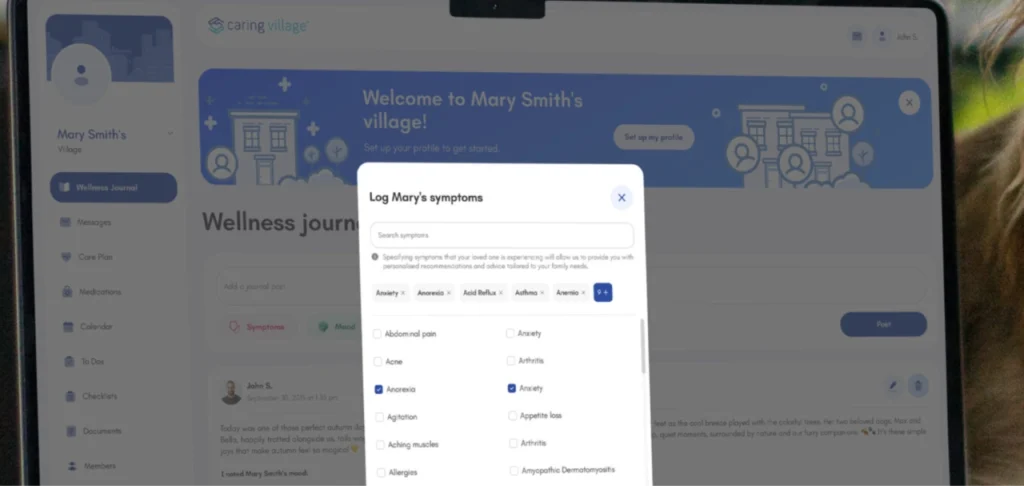
Instead of constantly asking local helpers how a loved one is doing, ask them to log quick notes in a shared journal. This helps the whole team see patterns over time.
- What to log: Mood, appetite, sleep, and mobility.
- Why it helps: Noticing three days of low energy in a row is much more useful for a doctor than a vague feeling that someone seems tired.
3. Request Simple Updates
If you need reassurance, make it a standard part of the routine so it doesn’t feel like you are nagging. Ask your local helpers for one simple thing during their visits:
- A quick photo of the pill box or the fridge.
- One sentence on what looked different today.
- A simple text to confirm they are up and moving.
Tip 4: Get Legal and Medical Authority Set Up Early

This is the part most families ignore, until it’s too late. If you don’t have legal authority to make decisions, doctors may refuse to talk to you. Hospitals may block updates. Financial institutions may freeze accounts.
What to put in place:
- Healthcare power of attorney
- HIPAA release form
- Advance directive or living will
- Financial power of attorney
Why it matters: Without these, you can’t legally consent to treatment, access medical records, or manage finances, even if you’re the primary caregiver. This step is especially critical when you become a caregiver overnight, as having paperwork ready can prevent a crisis from becoming a legal standstill.
Pro tip: Store scanned copies in a secure digital folder and give access to your local support team before an emergency happens.
Tip 5: Manage Money and Insurance From Afar
Financial chaos is one of the fastest ways to derail long-distance caregiving.
What to systematize:
- Automatic bill payments
- A shared spreadsheet or app for expenses
- Medicare and insurance claims tracking. If future coverage is still undecided, compare current LTC carriers and store the shortlist with the other financial records.
- Fraud monitoring alerts
- A designated “finance lead” in your care team
Why it matters: Missed payments, lost reimbursements, and unnoticed financial abuse are common in remote care situations.
You don’t need to control everything yourself—but you do need visibility and accountability.
Tip 6: Prepare for Emergencies With a First-30-Minutes Plan

Emergencies don’t wait for you to catch a flight. When you are miles away, you need to know that the people on the ground know exactly what to do in the first thirty minutes of a crisis.
1. Build Your Response Plan
Decide now who will take the lead during the most critical moments. You should have clear answers to these five questions:
- Who is called first locally?
- Who has a key to unlock the home for emergency responders?
- Who will meet the ambulance at the door?
- Where are the medical records and medication lists kept?
- Which hospital is the preferred choice for care?
2. Keep a Central Contact List
Store one master list and share it with everyone in your support circle. This list should include:
- Primary care doctors and specialists.
- The preferred hospital and local pharmacy.
- Neighbors who have agreed to answer a call at any hour.
- Contact info for any home health agencies or facilities.
3. Use Checklists Instead of Guesswork
Safety is more reliable when it is based on a list rather than a feeling. Remember that seniors face increased risks on stairs, so ensure those areas are well-lit and unobstructed.
Perform a simple walkthrough once a month to ensure everything is ready:
- Home Safety: Confirm trip hazards like loose rugs are removed and grab bars are secure.
- Health Updates: Ensure the medication list has the correct dosages.
- Digital Access: Verify that current IDs and insurance cards are uploaded and accessible to your local team.
Tip 7: Making the Most of In-Person Visits
When you travel to visit, your time is limited. It is easy to spend the whole trip doing chores and forget to actually spend time together. Try splitting your visit into two clear categories:
- The Care List: These are the tasks you must do. Attend an appointment, check the medication bottles in person, and do a quick safety walk-through of the house.
- The Connection List: This is the heart of your visit. Cook a favorite meal together, take a short drive to a meaningful place, or just look at photos.
You are not just managing a care plan. You are maintaining a relationship. Protecting your quality time is just as important as checking the paperwork.
The CARE Framework for Remote Caregiving
For long-distance caregivers, use the same CARE Framework consistently: Communicate, Assess, Redistribute, and Engage. The goal is to make care visible, repeatable, and shared instead of relying on one person’s memory.
Communicate
Share updates in one place so siblings, local helpers, and professionals are not working from different versions of the story.
Assess
Track health, mood, home safety, appointments, and your own stress level so you can see patterns before they become emergencies.
Redistribute
Move tasks out of your head and assign them to the right person, whether that is a sibling, neighbor, aide, or local professional.
Engage
Keep the support network active with clear roles, regular check-ins, and shared visibility so help does not fade after the first crisis.
Taking Care Of Yourself As A Long-Distance Caregiver
It is easy to let the stress of being away take over your life. Here is how to manage the load without burning out.
1. Know the Early Signs of Burnout
Burnout doesn’t always happen at once. Watch for these early warning signs:
- A constant sense of background panic.
- Feeling irritable with siblings or local helpers.
- Trouble sleeping before scheduled visits or calls.
- Spending late nights searching for symptoms online.
- Feeling like you can never do enough, no matter how much you do.
Recognizing these symptoms is the first step in learning how to avoid caregiver burnout before it affects your own health and your ability to care for your loved one.
2. Delegate Like a Leader, Not a Hero
You cannot own every part of the care plan from a distance. Pick a few categories to manage and let others handle the rest. This might include:
- Scheduling and appointments.
- Medication refills.
- Home safety and maintenance.
- Paperwork and insurance.
Using a shared tool helps you delegate with confidence. Instead of just hoping a task gets done, you can see the status of it in real time.
3. Use Support to Reduce the Mental Load
You don’t have to carry every decision in your head. Having a central place for information reduces the isolation that often comes with remote caregiving. Many caregivers find peace of mind just by being able to check in and see how their loved one is doing throughout the day.
Work, Family, and Technology Questions to Plan Early
Long-distance care is not only a calendar problem. The complete guide to caring for elderly parents adds a care-needs worksheet, benefits paths, and legal documents. Check these issues early so they do not become emergencies later:
- Work leave: Review U.S. Department of Labor FMLA caregiver guidance and your employer’s leave policies before a crisis forces time away from work.
- Tax questions: Ask a tax professional whether medical travel, home modifications, or support costs may be deductible; IRS Publication 502 is a useful starting point.
- Sibling dynamics: Name the local-vs-remote tension directly. Local helpers often carry the physical load, while remote caregivers can own scheduling, research, paperwork, bills, or regular family updates.
- Smart-home support: Consider video doorbells, motion sensors, fall detection, smart speakers, and simple video calling when the older adult is comfortable with the setup.
- Telehealth: Ask providers whether virtual follow-ups are available; Medicare’s telehealth coverage page explains common coverage rules.
- Medication dispensers: For high-risk routines, ask the clinician or pharmacist about connected dispensers with caregiver alerts, such as Hero, MedMinder, or Livi, and confirm current pricing and availability before purchasing.
How Caring Village Supports Long-Distance Caregivers
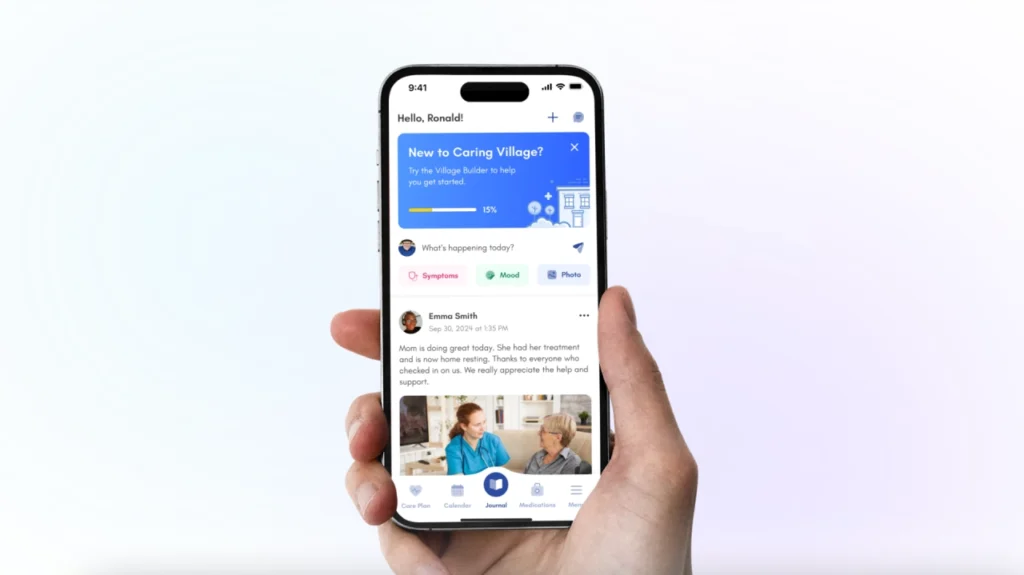
Caring Village is built to replace scattered texts, spreadsheets, and apps with one organized system for your entire care team. We designed our features to take the weight off your shoulders:
- Julia, Your AI Assistant: Get 24/7 help answering caregiving questions, thinking through next steps, and organizing care decisions. Julia is not a medical, legal, or crisis service.
- Shared Visibility: As Kate Flanagan put it, “[Caring Village] has been a life saver! I don’t know where we would be without it! My Mom’s care has been changing a lot lately and we have been able to communicate the changes in real time.“
- Streamlined Coordination: From document storage to medication reminders, we help you keep the village organized so you can focus on being a family member, spouse or partner, friend, or trusted caregiver.
Quick Tips for Remote Care
| Goal | Strategy |
|---|---|
| Share medical info securely | Use the Caring Village document vault. |
| Manage medications | Set shared tasks and reminders. |
| Coordinate with family | Use the shared calendar and secure messaging. |
| Track health trends | Use the wellness journal for daily updates. |
| Stay ready for emergencies | Use the preparedness checklists and shared contacts. |
Start by creating one shared care plan with current contacts, medications, documents, appointments, local helpers, and emergency instructions. Then decide who owns each category.
Use one shared calendar, task list, and update feed so every helper sees the same information. Written roles and recurring check-ins reduce confusion between local and remote family members.
Useful tools include a shared care app, video calling, telehealth portals, medication dispensers with alerts, smart home sensors, and secure document storage.
Families commonly discuss HIPAA authorization, advance directives, healthcare proxy documents, financial power of attorney, and emergency contact lists. Rules vary by state, so confirm requirements with a qualified professional.
From Managing a Crisis to Managing a Village
Long-distance caregiving is challenging, but it doesn’t have to be unpredictable. Moving your communication out of messy text threads and into a dedicated space helps you stop reacting to crises and start staying ahead of them.
Keep these tips in mind:
- Assign clear roles: Give your local helpers specific tasks instead of asking for general help.
- Centralize your info: Keep medical history and documents in one place so they are always ready.
- Watch for trends: Track daily wellness to catch health changes before they become emergencies.
If you are ready to move from hoping things are okay to knowing they are, Caring Village is here to help. Caring Village gives you the tools to coordinate calendars, securely store documents, and track wellness trends, all in one place.
Get Started Free. Join families using Caring Village to coordinate care and stay connected, no matter the distance.