
A cane is one of the smallest mobility aids a family will ever shop for, and one of the easiest to get wrong.
Pick a cane that is too light for the support your loved one actually needs, and you have not solved the problem. You may have hidden it. The goal here is not just to find a well-made cane. It is to match the right kind of cane to the right mobility need, and to recognize the moment a cane is no longer the right tool at all.
A cane is for light support and balance. It safely carries only about a quarter of a person’s body weight, according to the Cleveland Clinic. If your loved one leans hard on a cane, struggles to stand from a chair, or has new or worsening falls, that is a sign to ask a physical therapist whether a quad cane, a hemi-walker, or a walker would be safer.
This guide compares six current canes, gives you a fit matrix to choose a cane type by mobility need, and walks through proper height, hand side, and when to size up. Prices and links were verified in July 2026.
What changed in our 2026 update
We rechecked every product against its live retailer page in July 2026, confirmed each cane is still sold, and refreshed prices where the live listing showed them.
- Reorganized the guide around the mobility need each cane serves, and added a Cane Fit Matrix so you can match a cane type to the situation before you shop.
- Confirmed current listings and updated pricing where available, from the HurryCane Freedom Edition down to the ProBasics folding cane.
- Added clearer guidance on when a cane is no longer enough and it is time to ask a physical therapist about a quad cane, a hemi-walker, or a walker.
Prices and availability were verified within the last 30 days and can still change.
Not sure where to start?
Jump straight to the pick that matches the situation.
Cane Fit Matrix
Match the type of cane to the mobility need it actually serves. Stability and portability are scored on a five-point scale, where 5 is best for that column.
| Cane type | Best for | Not ideal for | Stability | Portability | Caregiver note |
|---|---|---|---|---|---|
| Single-point | Light balance help, a minor injury, mild arthritis when the person can bear most of their own weight | Heavy weight-bearing, significant balance loss | 2Low to med | 5High | A cane carries only about 25% of body weight; if your loved one leans hard on it, ask a PT about more support. |
| Offset cane | Everyday walking where you want body weight centered over the shaft for better control | Anyone who needs a cane that stands on its own | 3Medium | 5High | The offset handle puts weight directly over the tip, a sensible upgrade from a basic C-cane. |
| Quad cane | More stability and weight-bearing; a step between a single cane and a walker; stands on its own | Stairs, tight spaces, fast walkers, anyone who cannot place all four feet flat | 4Med to high | 2Low to med | All four feet must touch the ground or it wobbles; excellent for standing and pausing safely. |
| Folding cane | Travel, the car, occasional or backup use | Primary all-day support | 2Low to med | 5High | Convenient, but keep it as a backup rather than the main daily cane. |
| Ergonomic / posture cane | Encouraging an upright posture and easing wrist and shoulder strain | Heavy weight-bearing | 3Medium | 4Med to high | The posture benefit only works when the height is set correctly to the wrist crease. |
| Hemi-walker or walker | Weakness in both legs, pain on both sides, or when a cane is simply no longer enough | Someone who only needs light balance help | 5High | 1Low | A walker supports about 50% of body weight versus about 25% for a cane; new falls or unsafe transfers are cues to ask a PT or OT about stepping up. |
Fit tip: set cane height so the handle reaches the wrist crease with the arm hanging straight, leaving about a 20-degree bend at the elbow. Hold the cane in the hand opposite the weaker or injured leg, then move the cane and the weak leg forward together (Cleveland Clinic).
Top Picks Compared
| # | Product | Type | Capacity | Price | Best For |
|---|---|---|---|---|---|
| 01 | 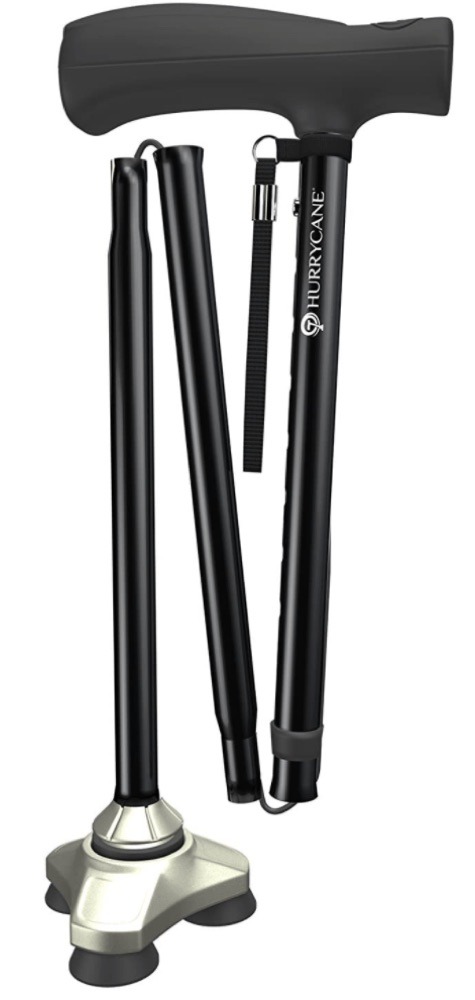 HurryCane Freedom Edition★ Best overall HurryCane Freedom Edition★ Best overall |
Pivoting tripod folding | 350 lbs | ~$37 to $60 | Everyday balance, uneven terrain |
| 02 | 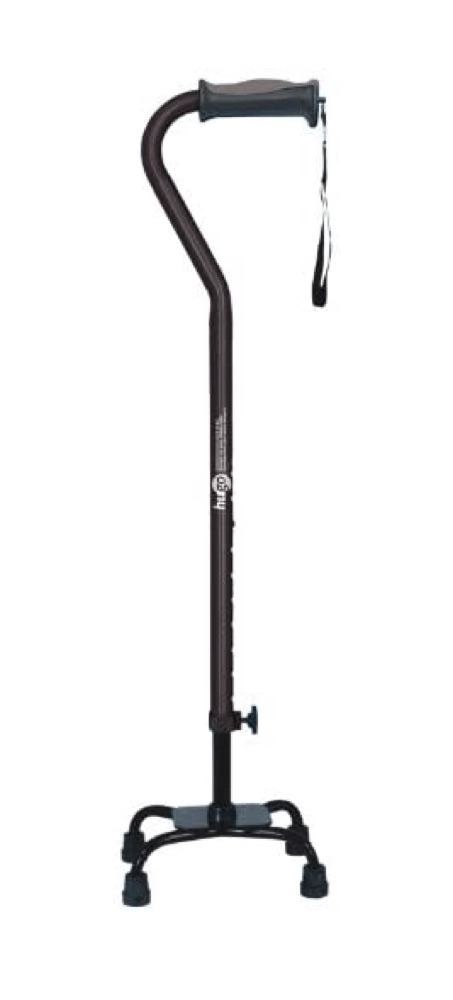 Hugo Adjustable Quad CaneMost stable Hugo Adjustable Quad CaneMost stable |
Quad, four-point | 300 lbs | ~$21 to $30 | Maximum standing stability |
| 03 | 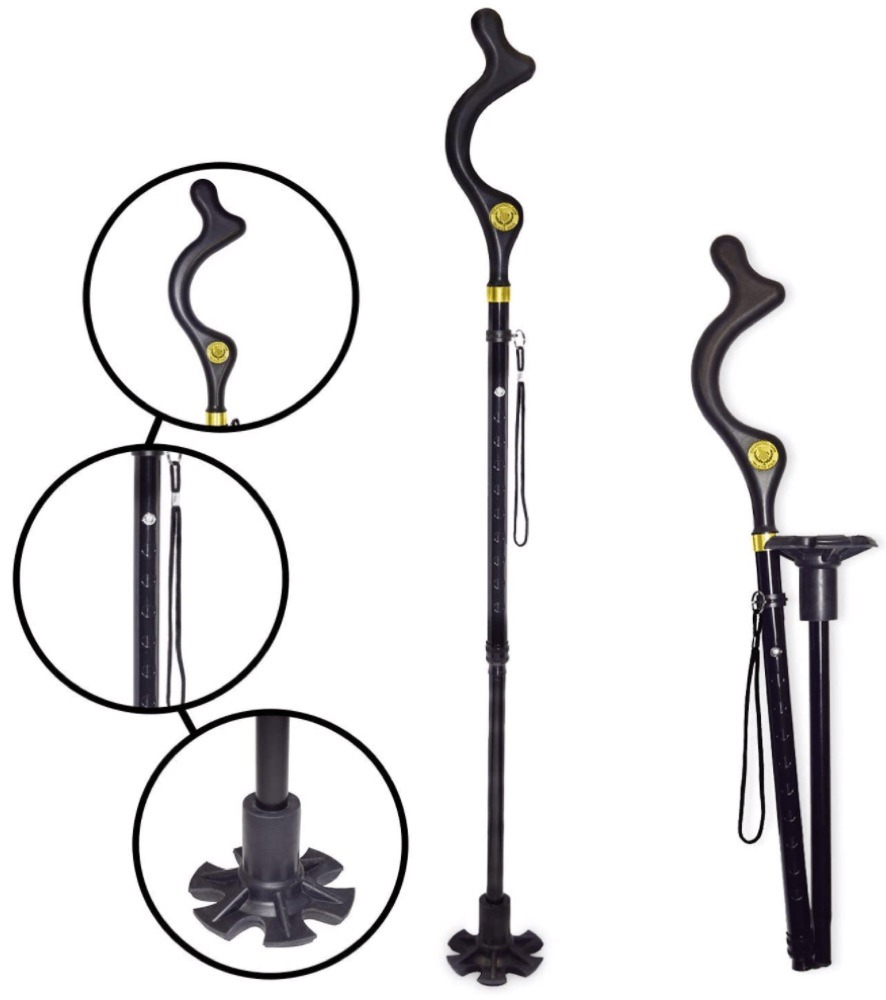 Campbell Posture CaneBest for posture Campbell Posture CaneBest for posture |
Ergonomic posture, folding | Not rated | ~$30 to $66 | Staying upright |
| 04 | 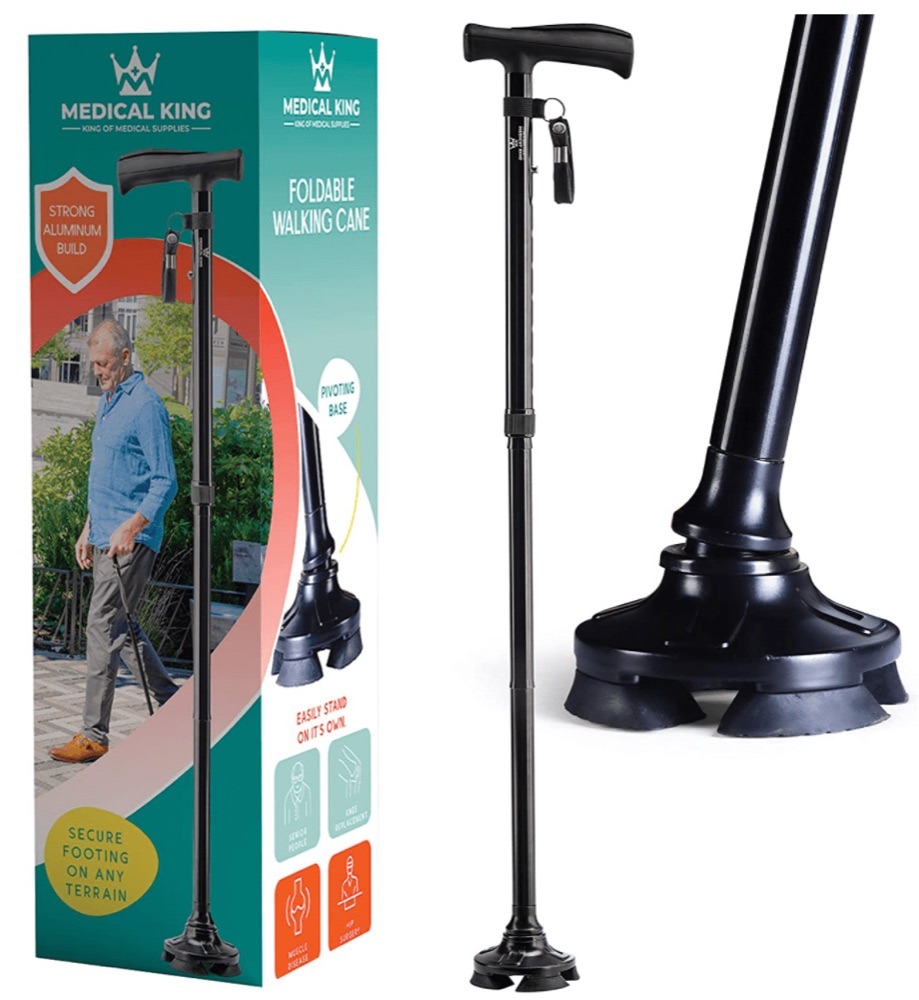 Medical King Walking CaneBest budget Medical King Walking CaneBest budget |
Self-standing folding | 300 lbs | ~$20 to $30 | Budget self-standing folding |
| 05 | 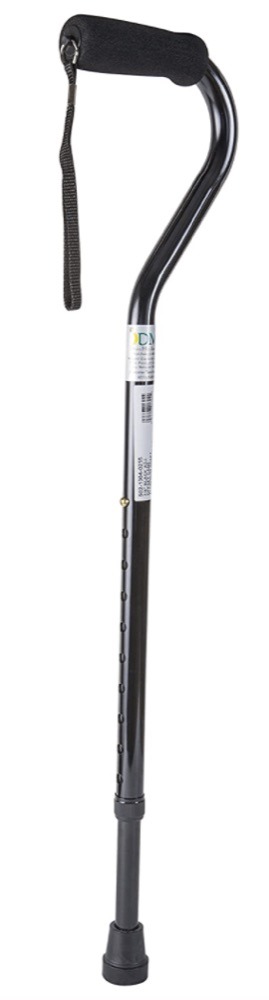 DMI Deluxe Offset CaneLightest pick DMI Deluxe Offset CaneLightest pick |
Offset single-point | 250 lbs | ~$19 to $25 | Lightweight everyday offset |
| 06 | 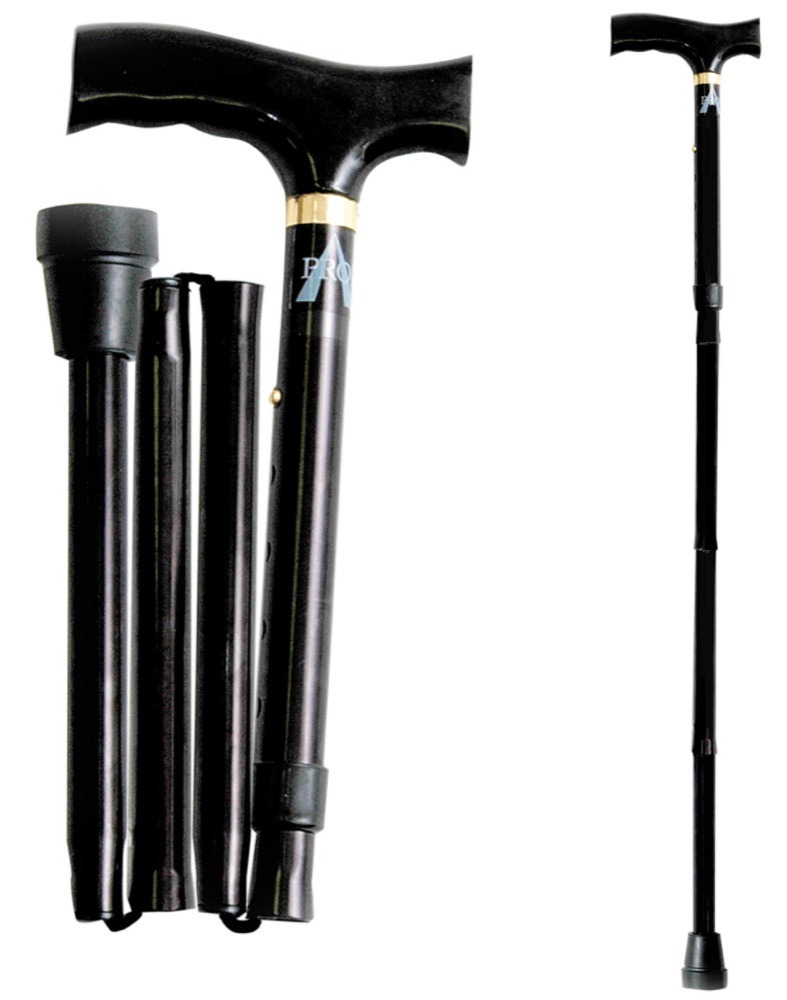 ProBasics Folding Cane MarketplaceBest for travel ProBasics Folding Cane MarketplaceBest for travel |
4-piece folding | 300 lbs | Check price | Grab-and-go travel |
Pricing verified where shown July 2026. ProBasics is marketplace-priced, so confirm the current listing before ordering.
How We Chose
Brand matters less than fit. Each cane here is judged on the mobility need it actually serves and how well it suits a family caregiver helping at home.
- Match to mobility need. The situation a cane fits, not the marketing claim.
- Stability and base. Single tip, offset, tripod, or quad, and whether it stands on its own.
- Fit range. Height adjustability and weight capacity across body types.
- Handle and grip. Comfort, wrist strain, and a strap to reduce drops.
- Portability. Folding, weight, and how well it travels.
- Value and availability. Current price and a reliable place to buy.
The Top Picks, Reviewed
Six current canes, each matched to the loved one it fits best.
HurryCane Freedom Edition
★ Best overallA folding tripod cane that is steadier than a single tip and still pockets small.
- HandleGrooved ergonomic T-handle
- Height30.5 to 37.5 in (folds to ~13.7 in)
- Capacity350 lbs
- BaseSteadiGrip pivoting tripod
Specs and pricing verified July 2026. Subject to change.
Check out HurryCane Freedom EditionThe HurryCane Freedom Edition earns the top spot because its three-point base gives more day-to-day stability than a single rubber tip, while still folding small enough for a coat pocket or a car door bin. The base also lets the cane stand on its own, so it does not clatter to the floor every time it is set down. For a loved one who wants steadier footing on uneven sidewalks without carrying a walker, it is the most versatile choice here.
What works well
- Three-point base is steadier than a single tip
- Self-standing, so it does not fall over when set down
- Folds in seconds for the car, travel, and storage
- High 350 lb capacity suits a wide range of body types
Worth knowing
- The pivoting base takes a short adjustment period for a new user
- Costs more than a basic single-point cane
- Still a cane, not a substitute for a walker when both legs are weak
Hugo Adjustable Quad Cane
Most stableThe steadiest pick here, and a sensible bridge between a single cane and a walker.
- HandleErgonomic, reversible left or right
- Height11 settings (~5’0″ to 6’5″)
- WeightAbout 2.07 lbs
- Capacity300 lbs
Specs and pricing verified July 2026. Amazon was unavailable when rechecked, so this points to a current Home Depot listing.
Check out Hugo Adjustable Quad CaneWhen a single-point cane no longer feels secure but a walker is more than the person needs, a quad cane is the bridge. The Hugo Adjustable Quad Cane has a four-point base that stands on its own and offers the most stability in this roster, which is reassuring for standing, pausing, and gentle weight-bearing. The reflective strap helps with visibility in low light, and the handle reverses for either hand.
What works well
- Four-point base stands on its own and is the steadiest here
- Handle reverses for left or right hand use
- Reflective strap aids visibility in low light
- A good step between a single-point cane and a walker
Worth knowing
- Heavier and more awkward than a single-point cane
- All four feet must contact the ground evenly or it can wobble
- Slower on stairs and in tight spaces
When to size up instead
- If your loved one needs steady support on both sides, has weakness in both legs, or has had new falls, a quad cane may not be enough. Ask a physical therapist whether a hemi-walker or a walker is the safer step.
Campbell Posture Cane
Best for postureAn angled handle that encourages a more upright stance and a forward line of sight.
- HandleAngled ergonomic grip
- Height10 settings, 40 to 49 in
- WeightAbout 1.6 lbs
- Tip360-degree traction; FSA/HSA
Specs and pricing verified July 2026. Amazon was unavailable when rechecked, so this points to the brand’s current order page.
Check out Campbell Posture CaneFor a loved one who tends to hunch forward, the Campbell Posture Cane uses an angled handle to encourage a more upright stance, which can ease wrist and shoulder strain over a long day. It is light at about 1.6 lbs, stands on its own, and folds for storage. It is FSA and HSA eligible, which can help with the cost. The maker markets it as a posture aid rather than a weight-bearing device and does not publish a weight rating, so it suits balance and posture help, not heavy leaning.
What works well
- Angled handle encourages an upright posture
- Self-standing and folds for storage
- Light at about 1.6 lbs
- FSA and HSA eligible
Worth knowing
- Single-point support only, not for heavy weight-bearing
- The posture benefit depends on correct height
- The Amazon listing was unavailable when rechecked, so confirm current shipping on the brand page before buying
Medical King Walking Cane
Best budgetA self-standing folding cane that covers the basics without the premium price.
- HandleContoured, with wrist strap
- Height10 settings (~4’5″ to 6’5″)
- WeightAbout 1.5 lbs
- Capacity300 lbs
Specs and pricing verified July 2026. Subject to change.
Check out Medical King Walking CaneIf you want a self-standing folding cane without the premium price, the Medical King cane covers the basics well. It folds for travel, stands on its own, and has a wide height range that fits both shorter and taller users. The wrist strap is a small touch that reduces drops.
What works well
- Low price point
- Self-standing and folds for travel
- Wide height range fits short and tall users
- Wrist strap reduces drops
Worth knowing
- Single tip only, so it is less steady for weight-bearing than the quad cane
- Build quality is value-tier versus premium brands
- The listing has multiple variant ASINs, so confirm color and version at checkout
DMI Deluxe Offset Cane
Lightest pickA simple, very light offset cane that centers weight over the shaft for control.
- HandleSoft foam offset, wrist strap
- Height30 to 39 in, 1-inch steps
- WeightAbout 12 oz
- Capacity250 lbs; FSA eligible
Specs and pricing verified July 2026. Subject to change.
Check out DMI Deluxe Offset CaneThe DMI Deluxe is the simplest pick here, and that is the point. Its offset handle centers body weight directly over the cane shaft for better control, it weighs about 12 ounces, and there is no learning curve. For a loved one who needs light, dependable balance help and weighs under 250 lbs, it is an easy, low-cost choice.
What works well
- Very light at about 12 oz
- Offset handle centers weight for better control
- Inexpensive
- Simple, no learning curve
Worth knowing
- The lowest weight capacity in this roster at 250 lbs
- Does not fold
- Single tip with no self-standing base, so it does not stand on its own
ProBasics Folding Cane Marketplace
Best for travelA four-piece folding cane that packs into a pouch for the suitcase or tote bag.
- HandleContoured comfort-grip T-handle
- Height32.5 to 36.5 in, locking ring
- WeightAbout 13 oz
- Capacity300 lbs
Availability confirmed July 2026. Confirm current price before buying.
Check out ProBasics Folding Cane MarketplaceFor a cane that lives in a tote bag or a suitcase, the ProBasics folding cane breaks into four parts and packs into a carry pouch, with a locking ring to hold the height and a 300 lb capacity. As with any folding cane, it is best kept as a backup for travel and occasional use rather than the main daily cane.
What works well
- Folds into four parts and packs into a pouch
- 300 lb weight capacity
- Light and compact for travel
- Locking ring secures the height setting
Worth knowing
- Folding canes are best as a backup, not primary daily support
- Single tip only, best for light balance rather than heavy weight-bearing
- Sold through Walmart in the current link path, with no Amazon listing wired
How to Choose: A Quick Decision Framework
Once you know the mobility need, the pick usually chooses itself.
- Choose the HurryCane Freedom Edition if you want the best all-around daily cane with extra base stability that still folds and travels.
- Choose the Hugo Adjustable Quad Cane if standing and weight-bearing feel shaky and you want the steadiest option short of a walker.
- Choose the Campbell Posture Cane if the main concern is a forward hunch and you want help staying upright.
- Choose the Medical King cane if you want a self-standing folding cane at the lowest reasonable price.
- Choose the DMI Deluxe offset cane if your loved one needs light, simple balance help and weighs under 250 lbs.
- Choose the ProBasics folding cane if you mainly need a compact backup for travel.
- Step up to a walker or hemi-walker, after a PT or OT assessment, if your loved one leans hard on the cane, has both legs weak, or has new or worsening falls. Our guide to the best walkers for older adults is the next stop.
Frequently Asked Questions
How tall should a walking cane be?
Stand naturally in everyday shoes with your arm hanging straight at your side. The top of the cane handle should reach the crease of your wrist, which leaves about a 20-degree bend at the elbow when you hold it. A cane that is too tall makes you hunch and grip hard; one that is too short throws you forward. Most adjustable canes set in 1-inch increments, so it is easy to fine-tune (Cleveland Clinic).
Which hand should hold a cane?
Hold the cane in the hand opposite the weaker or injured leg, then move the cane and the weak leg forward together. It feels backward at first, but it keeps the body balanced and takes weight off the side that needs the help (Cleveland Clinic).
Cane or walker, which does my loved one need?
A cane is for light support and balance and carries only about 25 percent of body weight. A walker supports about 50 percent and suits weakness in both legs or pain on both sides. If your loved one leans hard on a cane, struggles to stand, or has had new falls, that is the moment to ask a physical therapist about a walker or hemi-walker (Cleveland Clinic; Physiopedia).
Are quad canes better than regular canes?
Not better, different. A quad cane has a four-point base that gives more stability and stands on its own, which helps with standing and weight-bearing. The tradeoff is that it is heavier, slower on stairs, and only works when all four feet sit flat on the ground. It is a sensible step between a single cane and a walker (Physiopedia).
Does Medicare or insurance cover a cane?
A standard cane is durable medical equipment, and Medicare Part B may cover part of the cost with a doctor’s order when it is medically necessary, after the deductible and coinsurance. Coverage rules and supplier requirements vary, so check with the loved one’s plan and ask the prescriber’s office to confirm before buying. FSA and HSA funds often cover canes as well.
When should we ask a physical therapist or occupational therapist?
Ask for an assessment if there are new or worsening falls, a noticeable change in gait, trouble rising from a chair, fear of walking, or if the current cane no longer feels like enough. A PT or OT can confirm the right device, fit it correctly, and check the home for hazards. A cane may help with balance when properly fitted, but it does not prevent falls on its own.
About the experts

Brooke Lounsbury has over 26 years of nursing experience with a primary focus on home health and hospice, where mobility support, transfer safety, fall-risk awareness, and caregiver education are part of daily patient care. She creates continuing-education courses for nurses at PedagogyEducation.com and has written for Jase Medical and The Wellness Company on senior health topics.

Dan Fogarty has more than 12 years of experience in healthcare management and strategic communication. He earned his Master’s in Health Communication from Johns Hopkins University and served as Chief Administrative Officer of the NIH Clinical Center and Chief Intramural AO for the National Heart, Lung and Blood Institute for 12 years. He is currently Senior Advisor for Strategic Operations, Management and Technology for SAMHSA, a Fellow of the American College of Healthcare Executives (FACHE, 2021), and Adjunct Faculty at MCPHS.

Lynda Menegotti is Editor-in-Chief at Caring Village, where she leads editorial standards and fact-checking across the site’s caregiving and senior-health guides.
Sources and Verification
Every price, spec, and safety statement here traces to a current source. Prices and links were checked in July 2026 and can change; confirm at the retailer before buying.
Sources
- Cleveland Clinic, How to Use a Cane: proper height (handle at the wrist crease, about 20-degree elbow bend), holding the cane opposite the weaker leg, and a cane supporting up to about 25 percent of body weight. clevelandclinic.org
- Mayo Clinic and Cleveland Clinic: cane fit, wrist-height guidance, opposite-side use, and safe walking technique. mayoclinic.org; clevelandclinic.org
- Vive Health, Best Walking Canes: cane-type comparison for stability versus portability across single-point, offset, quad, and folding canes. vivehealth.com
- HurryCane Freedom Edition: manufacturer price $39.99, adjustable 30.5 to 37.5 in, supports up to 350 lbs, SteadiGrip pivoting base. shop.hurrycane.com; retailer price points $49.95 to $59.95, folds to 13.7 in. bischoffsmedical.com
- Hugo Adjustable Quad Cane: official Drive Medical product page for the small-base model, reversible right/left handle, 300 lb capacity, and current specs. drivemedical.com
- Campbell Posture Cane: current brand page, 10 height adjustments, 360-degree traction tip, posture-focused handle, and FSA/HSA positioning. Amazon was unavailable when rechecked. campbellcane.com
- Medical King self-standing folding cane: current Amazon ASIN B0BX4L4YFW, collapsible with 10 adjustable heights and a self-standing base. amazon.com
- DMI Deluxe offset cane: Amazon ASIN B000CSWBWU, supports up to 250 lbs, adjustable 30 to 39 in, offset ergonomic grip, FSA eligible. amazon.com
- PMI ProBasics Folding Cane: 300 lb capacity, 32.5 to 36.5 in, current Walmart item 924446555. walmart.com
Affiliate disclosure
Caring Village may earn a commission when you buy through links in this article, at no extra cost to you. Recommendations are chosen by our team and are not influenced by commission rates. A cane is one tool among several; when the better answer for your loved one is a walker, a clinician’s assessment, or simply a different cane type, that is what we will point you toward.
A note on guidance
This article is general information, not medical, financial, or legal advice. Whether a particular cane or walker is right, and how to fit and use it safely, depends on your loved one’s needs; check with a physician, physical therapist, or occupational therapist. Medicare, FSA, and HSA coverage rules vary by plan, so confirm eligibility and any doctor’s-order requirement with the plan before buying.