
Choosing a walker for a parent or spouse usually starts with a worrying moment. A near-fall in the hallway, a doctor who mentions it after a hospital stay, or a loved one who has quietly stopped going out because walking feels unsteady.
A walker can give back a lot of that confidence. But the choice is not really about brands. It is about matching the right type of walker to the person’s actual balance, strength, and home, and knowing when a walker is the wrong tool entirely.
This refreshed guide leads with that decision. First, a fit matrix that compares every walker type at a glance. Then current 2026 picks with verified specs, available dated pricing, and clear notes where pricing needs checkout confirmation. Finally, a short framework helps you land on one. If a cane might be enough, our companion guide to the best walking canes is the place to start.
What changed in our 2026 update
We rebuilt this guide around walker type, re-checked every product link at the source in July 2026, and confirmed each pick still had a live listing.
- Added the Walker Fit Matrix so you can match the walker type to the mobility situation before comparing brands.
- Broadened the roster to cover every type a caregiver weighs, adding a standard no-wheel walker and a 500 lb bariatric rollator for heavier users.
- Retired a thin, short-warranty brand that no longer earned its slot, and repaired the outbound links so each one resolves to a live US product page.
Prices are shown as ranges and can still change by retailer.
A walker does not prevent falls on its own
- The American Family Physician review of mobility devices notes that many people obtain a device without any professional fitting, which can leave it the wrong height or the wrong type.
- What lowers fall risk is the combination of the right device, correct fit and height, some training in how to use it, and a home set up for safe movement.
- If there have been recent falls, dizziness, or a big change in strength, ask the person’s clinician or a physical or occupational therapist before buying.
The Walker Fit Matrix
Match the walker type to the mobility situation before you compare brands. Stability and portability are rated relative to the other walker types here, not on an absolute scale.
| Walker type | Best for | Avoid if | Indoor / outdoor | Stability | Portability | Typical price |
|---|---|---|---|---|---|---|
| Standard walker | Maximum stability and weight-bearing when the user can lift the frame. Often used after surgery or for serious balance loss.Must be lifted with every step. | Weak arms or shoulders, or poor coordination, make lifting it unsafe. | Indoor, smooth floors | Highest | Lightestabout 7.5 lb, folds flat | About $30 to $40 |
| Two-wheel walker | Steady support without lifting every step. Front wheels glide; rear glides keep it from rolling away.No brakes, no seat. | The user needs to lean full weight through the frame, or wants a seat to rest. | Mostly indoor, smooth | High | Lightabout 7.5 lb, folds | About $28 to $40 |
| Four-wheel rollator | Low endurance and longer outings. Built-in seat, hand brakes, and storage for rest breaks.Lock the brakes before sitting. | The user needs weight-bearing support or might forget to lock the brakes. | Indoor and outdoor | Moderateleast stable type | Moderateabout 15.6 to 20 lb, folds | About $84 to $210 |
| Three-wheel rollator | Tight indoor spaces and travel. A narrow triangle footprint turns where a four-wheel frame cannot.Folds slim for the car. | The user needs to sit and rest, or has poor balance. | Both, best in tight spaces | Lowerthree wheels | Light, folds narrowabout 13.5 to 16.5 lb | About $150 to $160 |
| Bariatric rollator | Heavier users who need a reinforced frame and a wider, deeper seat, up to a 500 lb capacity.Confirm true weight and doorway widths first. | The home has narrow doorways, or the user wants a lightweight aid. | Indoor and outdoor | Highreinforced | Heaviest, bulkiest | Verify at purchase |
| Transport chair | Users who cannot safely stand or bear weight for walking. A caregiver pushes the chair. | The user can still walk with support. Keep them mobile with a walker instead. | Both, caregiver-pushed | Seated | N/A | See guide |
Red flags to ask a PT or OT about before buying
- Recent falls
- Dizziness
- Cognitive impairment that makes hand brakes hard to remember or use
- Inability to stand safely
- Narrow home pathways
- A need for full weight-bearing support
Many people get a mobility device without a professional fitting. A clinician, or a physical or occupational therapist, can confirm the right height, wheel style, brake type, weight capacity, and home-safety fit for one specific person. Proper fit, training, and home setup matter, and a walker on its own does not prevent falls.
Top Picks Compared
All seven picks below are currently sold and were link-checked and spec-verified in July 2026. Tap any row to jump to the full review. Pricing is shown as a range because it varies by retailer.
| # | Walker | Type | Capacity | Price | Best for |
|---|---|---|---|---|---|
| 01 | 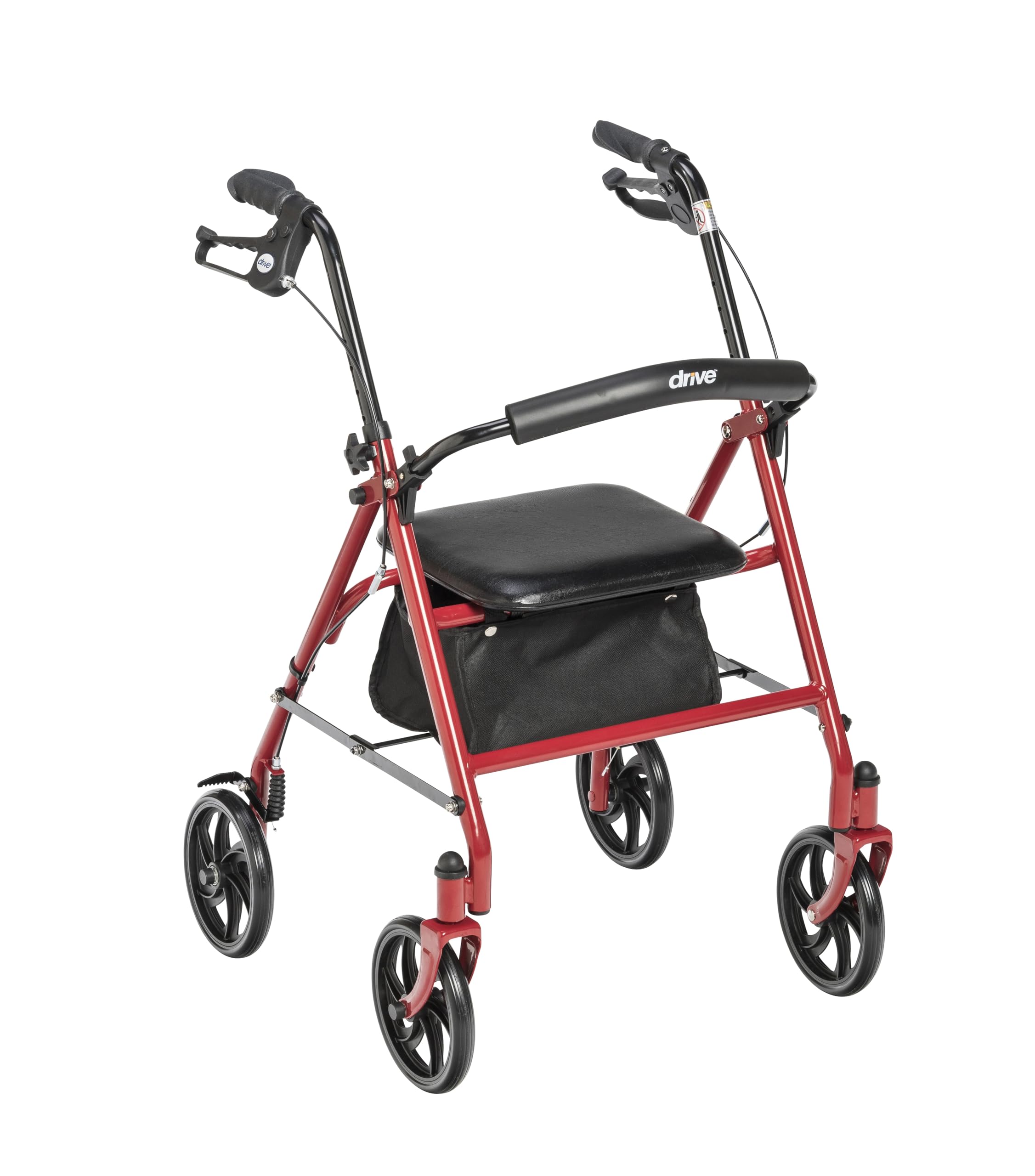 Drive Medical Four Wheel Rollator (7.5″ casters)★ Best overall Drive Medical Four Wheel Rollator (7.5″ casters)★ Best overall |
Four-wheel rollator | 350 lb | ~$84–150 | All-around, with a seat |
| 02 | 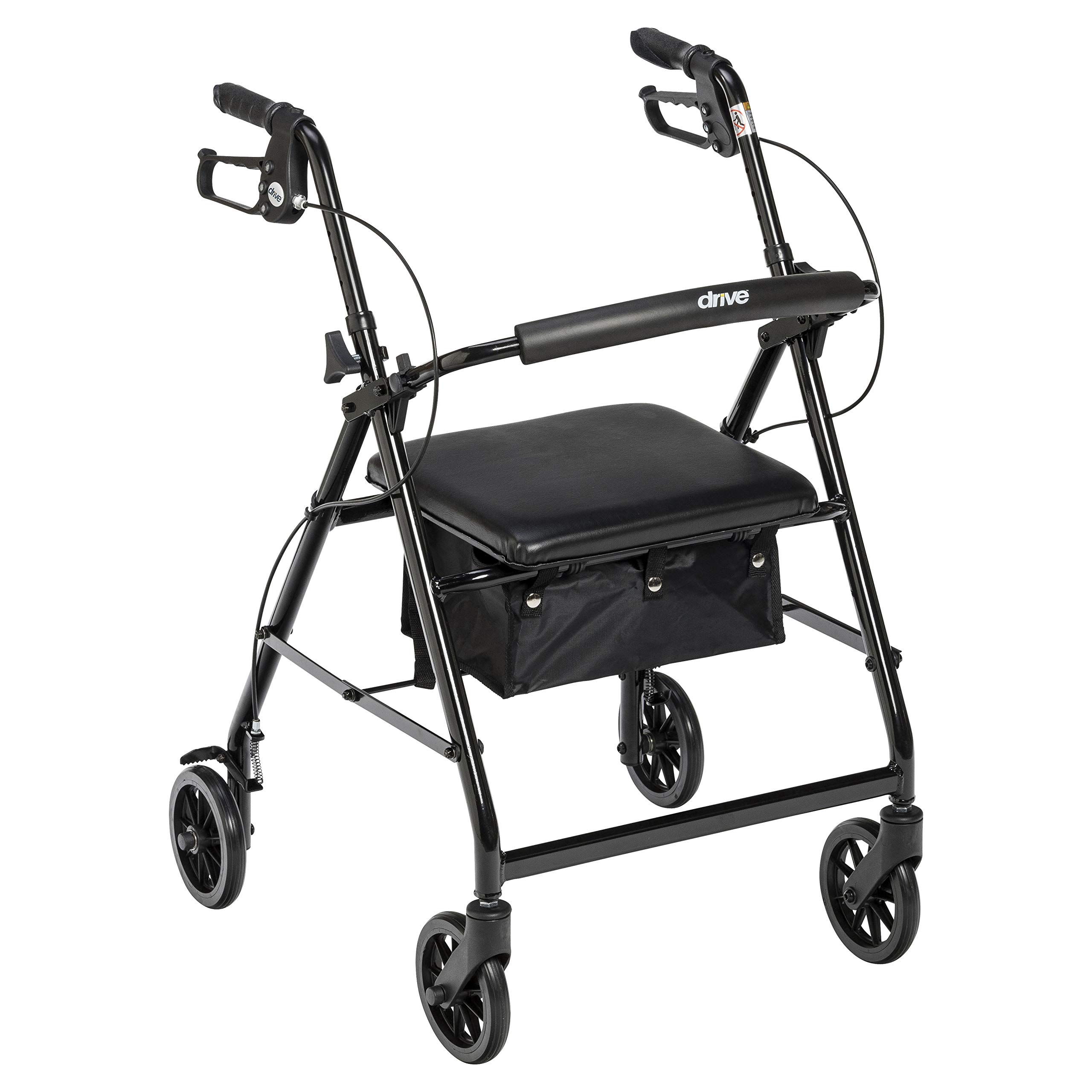 Drive Medical Aluminum Rollator (6″ wheels)★ Lightest rollator Drive Medical Aluminum Rollator (6″ wheels)★ Lightest rollator |
Four-wheel rollator | 300 lb | ~$90–210 | Lifting in and out of a car |
| 03 | 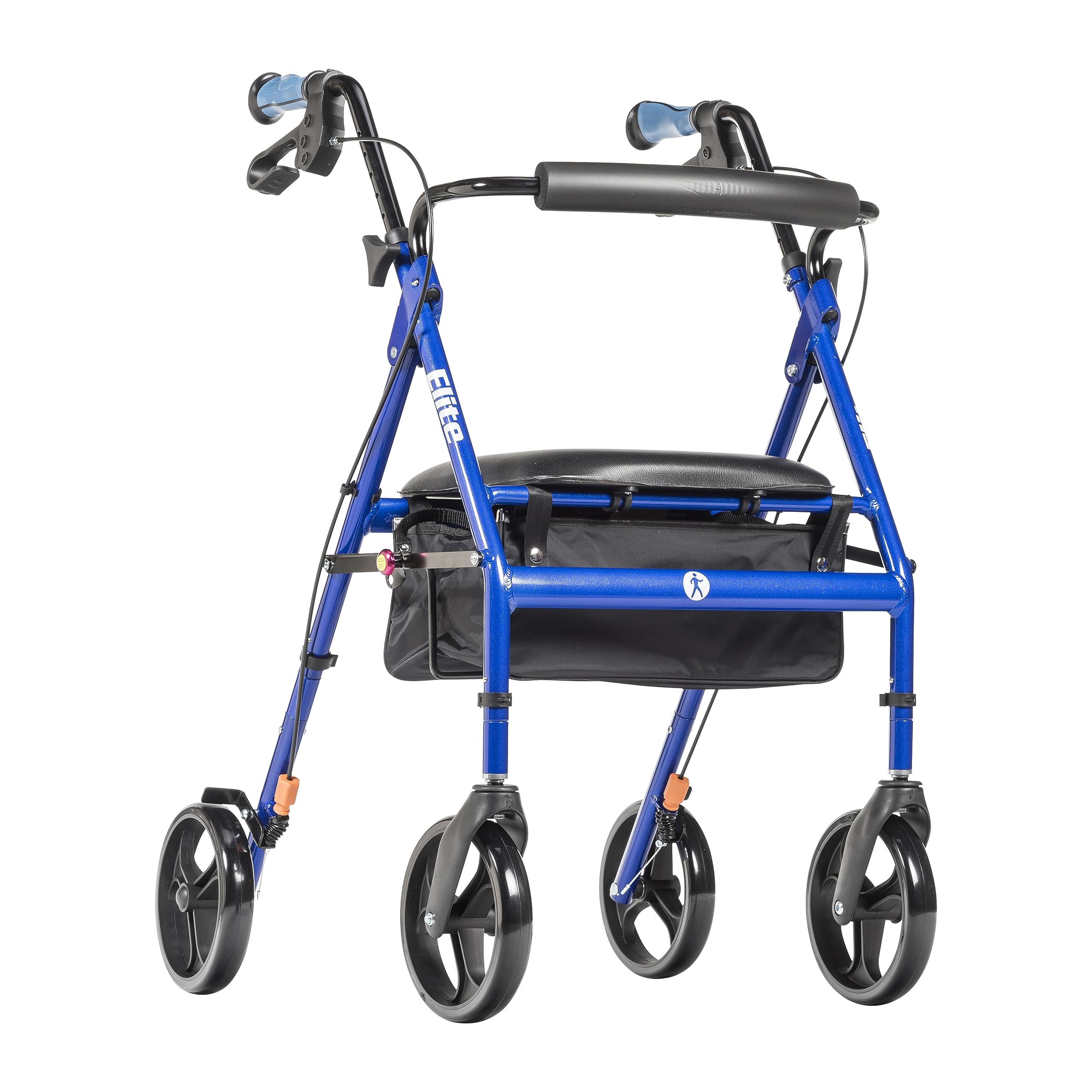 Hugo Elite Rollator★ Most comfortable Hugo Elite Rollator★ Most comfortable |
Four-wheel rollator | 300 lb | ~$185 | Comfort and extra storage |
| 04 | 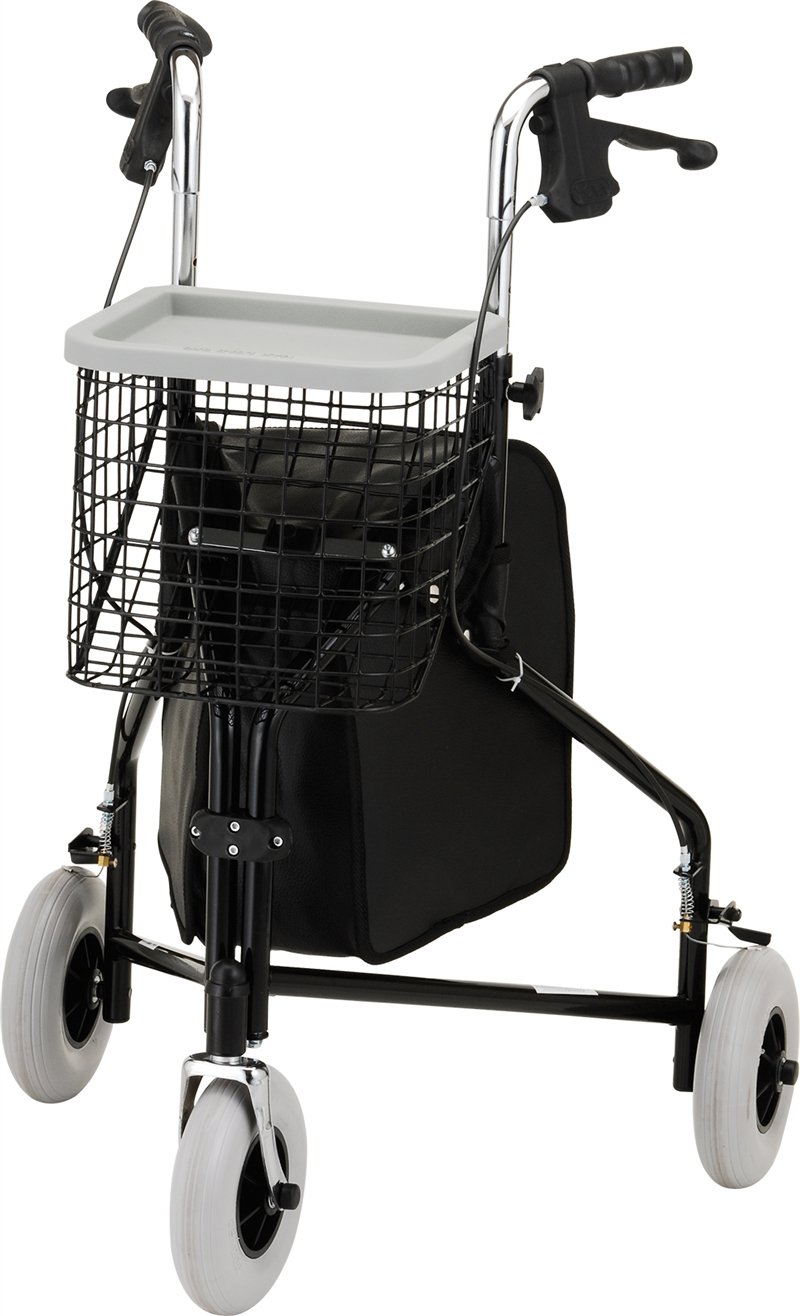 NOVA Traveler 3 Wheel Rollator★ Tight spaces NOVA Traveler 3 Wheel Rollator★ Tight spaces |
Three-wheel rollator | 250 lb | ~$150–160 | Apartments and travel |
| 05 | 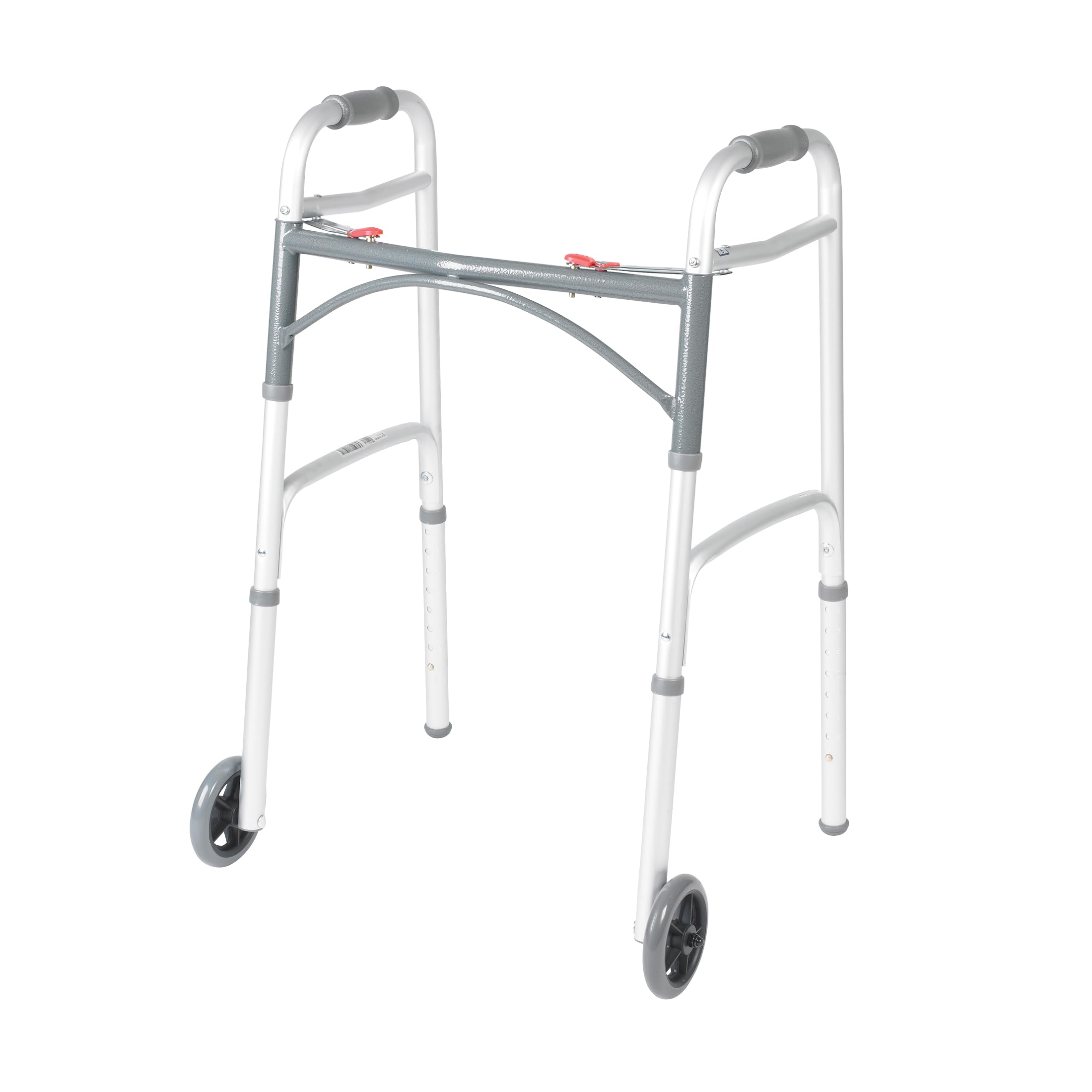 Drive Medical Deluxe Two Button Folding Walker (5″)★ Best value Drive Medical Deluxe Two Button Folding Walker (5″)★ Best value |
Two-wheel walker | 350 lb | ~$28–40 | Support without lifting each step |
| 06 | 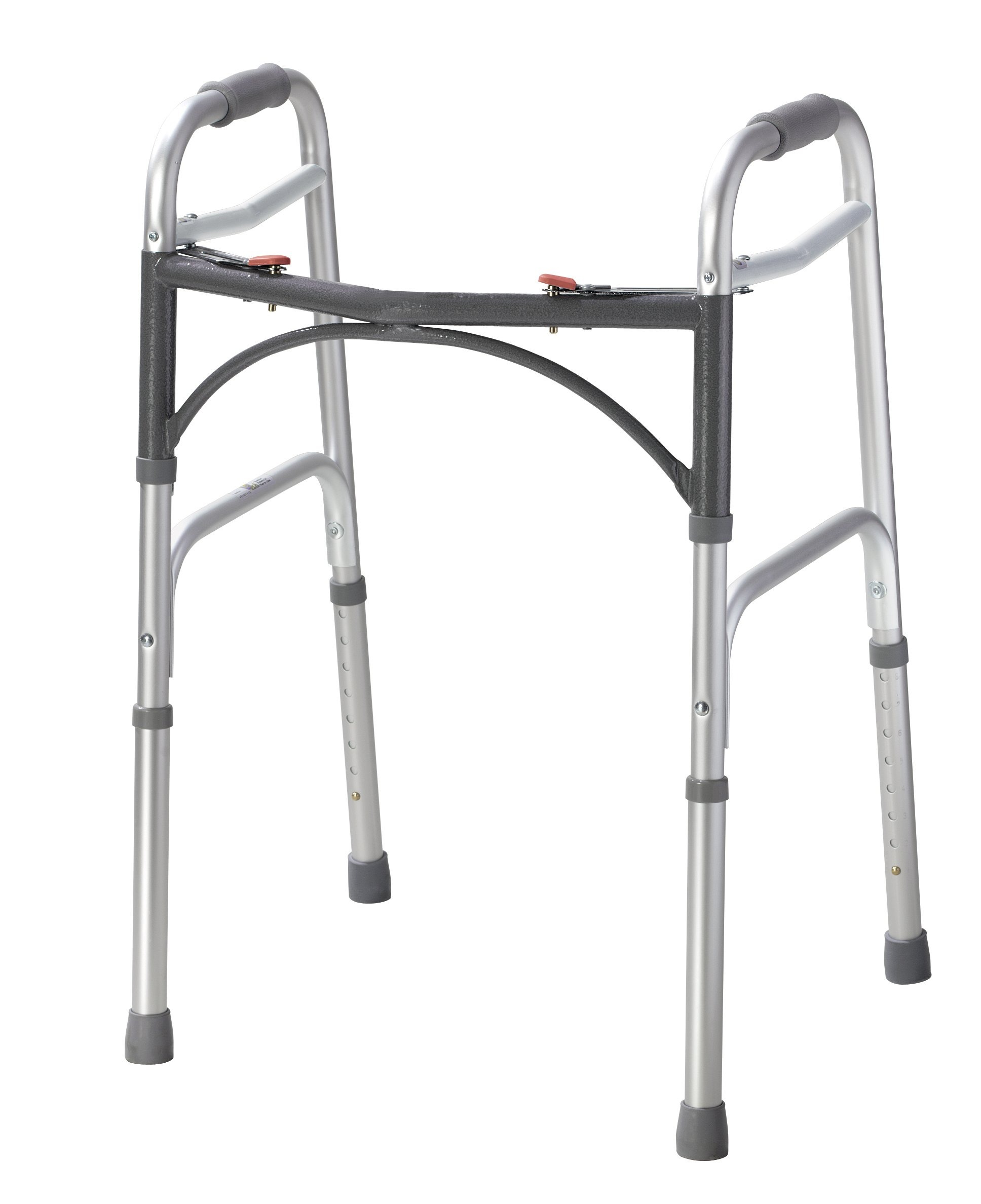 Drive Medical Two-Button Standard Folding Walker★ Most stable Drive Medical Two-Button Standard Folding Walker★ Most stable |
Standard, no wheels | 350 lb | ~$30–40 | Maximum stability and weight-bearing |
| 07 | 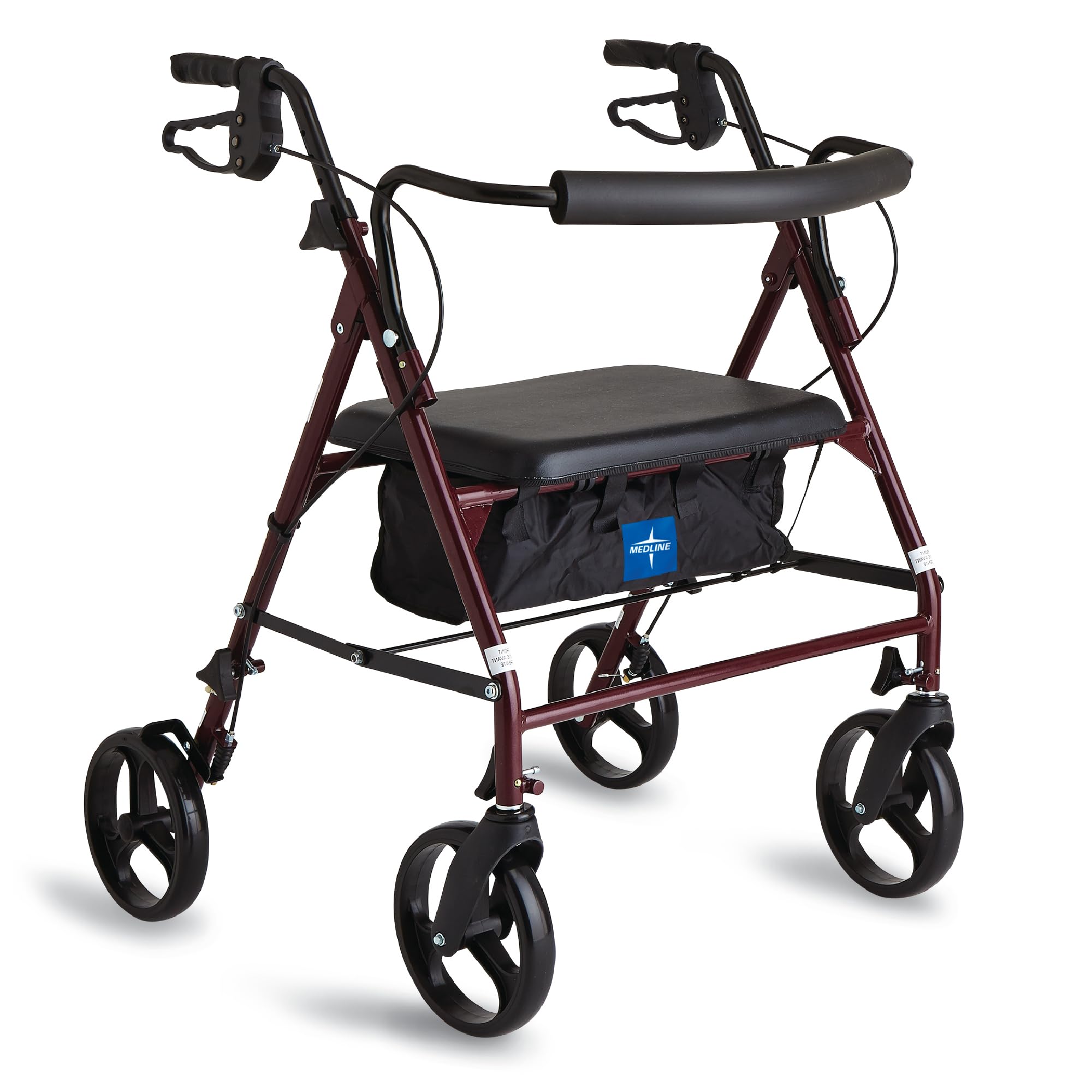 Medline Steel Bariatric Rollator (500 lb)★ Heavy-duty Medline Steel Bariatric Rollator (500 lb)★ Heavy-duty |
Bariatric rollator | 500 lb | Verify | Heavier users, reinforced frame |
All product links were re-verified as live listings in July 2026. Retailer prices were re-checked where available; when a live price could not be retrieved, the table says to confirm at checkout. Prices are ranges and are subject to change by retailer.
How We Chose
This roster is built to cover every walker type a caregiver is likely to weigh, then ranked by how well each pick fits everyday family caregiving. Caring Village does not make or sell a walker, so nothing here is steered by an in-house product.
- Type coverage first. The list spans a standard no-wheel walker, a two-wheel walker, four-wheel rollators, a three-wheel rollator, and a heavy-duty bariatric rollator, so the matrix above maps to a real product.
- Verified specs and live listings. Every weight capacity, wheel size, seat dimension, and folded size was confirmed against a manufacturer or retailer page in July 2026, and every product link resolves to a live page.
- Dated, honest pricing. Prices are shown as dated ranges where available, with checkout-confirmation notes where a live price could not be retrieved. The same walker can swing widely between Amazon and medical-supply retailers.
- Caregiver fit. Weight to lift into a car, fold mechanism, warranty, and whether the user can actually work the brakes carry as much weight as the headline specs.
- Safety honesty. No pick is described as fall-proof. The four-wheel rollators, the most popular type, are also the least stable, and we say so.
The Picks, Reviewed
Seven current walkers, ranked by fit for family caregivers and older adults.
Drive Medical Four Wheel Rollator with Fold Up Removable Back Support
★ Best overallThe all-around pick: a seat, hand brakes, and storage for indoor and outdoor use. Four-wheel rollator
This is the rollator most older adults who simply tire easily should look at first. The 7.5 inch casters roll over thresholds and pavement rather than only smooth floors, and the padded fold-up backrest lets the user rest mid-walk without finding a chair.
- TypeFour-wheel rollator
- Wheels7.5″ casters
- Capacity350 lb (300 lb at some retailers)
- WeightAbout 18.5 to 20 lb
- Seat12″ x 12″, about 21″ to floor
- Handles31″ to 35.5″
- FoldsYes, loop-lock hand brakes
- PriceAbout $84 to $150
Specs re-verified and link live-checked July 2026; price verified July 2026 (SpinLife $84, reduced from $159). Subject to change.
Check out Drive Medical Four Wheel RollatorWhat works well
- Seat and backrest let the user rest mid-walk, which suits low endurance
- 7.5″ casters roll over thresholds and pavement, not just smooth floors
- Widely stocked and inexpensive for a full rollator with a seat
- Folds for the car and for storage
Worth knowing
- Steel frame is heavier to lift into a car than aluminum rollators
- Like all rollators, it can roll away if the brakes are not locked before sitting
- No weight-bearing support, so it is not for someone who must lean their full weight on the frame
Choose this if
- The person walks indoors and out, gets tired on longer outings, and wants somewhere to sit. It is a practical first rollator to consider when the person can use hand brakes reliably.
Drive Medical Aluminum Rollator Walker, 6″ Wheels
★ Lightest rollatorThe lightest full-feature rollator, for the caregiver lifting it in and out of a car often. Four-wheel rollator
If the rollator goes in and out of a trunk every day, those few pounds matter. The aluminum frame is several pounds lighter than the steel model above, folds side-to-side one-handed, and stands upright on its own so it parks neatly by a door.
- TypeFour-wheel aluminum rollator
- Wheels6″ soft-grip casters
- Capacity300 lb
- WeightAbout 15.6 lb
- Seat12″ x 14″, about 20″ to floor
- Handles32″ to 37″
- FoldsOne-handed, stands upright
- PriceAbout $90 to $210
Specs re-verified and link live-checked July 2026 against the current Amazon listing. Pricing changes often, so confirm the current price before ordering.
Check out Drive Medical Aluminum Rollator WalkerWhat works well
- Aluminum frame is several pounds lighter than the steel rollator, so it is easier to lift
- One-handed side-to-side fold, and it stands upright for parking
- Padded seat plus a removable backrest for resting
Worth knowing
- 300 lb capacity, lower than the steel model’s 350 lb
- 6″ wheels handle pavement but roll less smoothly over grass or gravel than 8″ wheels
- Aluminum can feel less rock-solid than steel to some users
Choose this if
- You are the one loading the rollator into the car for appointments and errands, and want the lightest option that still has a seat and brakes.
Hugo Elite Rollator Walker with Seat, Backrest and Saddle Bag
★ Most comfortableExtra comfort, a height-adjustable seat, and two storage bags for errands. Four-wheel rollator
The Hugo Elite is the comfort choice. Its seat adjusts up to two inches, so it fits a wide range of heights, and the 8 inch wheels roll more smoothly over uneven ground than the 6 inch models. Between the under-seat bag and the saddle bag, there is real room for shopping.
- TypeFour-wheel rollator
- Wheels8″
- Capacity300 lb
- WeightAbout 17 to 18 lb
- Seat12″ x 12″, 20″ to 22″ (2″ adjustable)
- FitsUsers about 4’3″ to 6’2″
- StorageUnder-seat bag plus saddle bag
- PriceAbout $185
Specs re-verified and link live-checked July 2026; price verified July 2026 (Quill $184.69, garnet red). Subject to change.
Check out Hugo Elite RollatorWhat works well
- Height-adjustable seat fits a wide range of user heights
- Two storage bags for shopping and personal items
- 8″ wheels roll more smoothly than 6″ over uneven ground
Worth knowing
- 300 lb capacity
- Pricier than the basic Drive Medical rollators
- Warranty runs through the seller or Hugo’s phone line rather than a simple online process
Choose this if
- Comfort and storage matter most, the user is on the taller or shorter end of average, and the budget has a little more room.
NOVA Traveler 3 Wheel Rollator Walker, 8″ Wheels
★ Tight spacesA narrow triangle footprint for apartments and travel, where a four-wheel frame cannot turn. Three-wheel rollator
In a small apartment or a home with tight turns, a four-wheel rollator can feel like steering a cart through a galley kitchen. The three-wheel Traveler 3 turns in much tighter spaces, folds narrow for the car, and is light to lift. The tradeoff is no seat and a bit less stability.
- TypeThree-wheel rollator (no seat)
- Wheels8″ all-terrain
- Capacity250 lb
- WeightAbout 13.5 to 16.5 lb
- HandlesAbout 33.25″ to 37″
- FoldedAbout 26.5″ W x 9.25″ D
- IncludesTray, basket, zippered pouch
- PriceAbout $150 to $160
Specs re-verified and link live-checked July 2026; price verified July 2026 (Just Walkers $159.99, currently sold out there; sold and in stock on Amazon). Subject to change.
Check out NOVA Traveler 3 Wheel RollatorWhat works well
- Three-wheel triangle footprint turns in tighter spaces than a four-wheel rollator
- Folds narrow for cars and storage, and is light to lift
- Tray, basket, and pouch included for carrying things
Worth knowing
- No seat, so there is no place to rest mid-walk
- Three wheels are less stable than four; not for someone who leans heavily or has poor balance
- Lowest weight capacity in this roster at 250 lb
Choose this if
- The home has tight hallways or the walker needs to travel, the user has decent balance, and a seat is not a must-have.
Drive Medical Deluxe Two Button Folding Walker with 5″ Wheels
★ Best valueSteady support without lifting the frame each step, on mostly smooth indoor surfaces. Two-wheel walker
A two-wheel walker is a middle ground between a standard walker and a rollator. The front wheels glide forward so the user does not lift it with every step, while rear glide caps stop it from rolling away on its own. At about 7.5 lb and often under $40, it is the value pick.
- TypeTwo-wheel front-wheeled walker
- Wheels5″ front, rear glide caps
- Capacity350 lb
- WeightAbout 7.5 lb
- Width24″ overall
- Handles32″ to 39″, 1″ increments
- FoldsDual push-button; sides detach
- PriceAbout $28 to $40
Specs re-verified and link live-checked July 2026; price verified July 2026 from the current Amazon listing at about $28, with some other retailers around $40. Subject to change.
Check out Drive Medical Deluxe Two ButtonWhat works well
- Front wheels glide forward so the user does not lift the frame each step
- Very light, about 7.5 lb, and inexpensive
- 350 lb capacity, higher than the rollators in this roster
- Rear glide caps keep it from rolling away on its own
Worth knowing
- No seat and no hand brakes
- 5″ wheels are best on smooth indoor floors, not rough outdoor terrain
- Provides less momentum control than a braked rollator
Choose this if
- The user needs steady indoor support, has the strength to push but not to lift a frame each step, and does not need to sit and rest.
Drive Medical Two-Button Standard Folding Walker (no wheels)
★ Most stableMaximum stability and weight-bearing when the user can lift the frame. Standard walker
When stability matters more than speed, a no-wheel walker is the most secure option here. All four rubber-tipped legs stay planted, so it cannot roll, and the user can bear weight straight through the frame. The catch is that it must be lifted with every step, which takes arm and shoulder strength.
- TypeStandard walker, four legs
- WheelsNone, rubber-tipped legs
- Capacity350 lb
- WeightAbout 7.5 lb
- Width24″ overall
- HandlesAdjustable, 32″ to 39″ range
- FoldsDual push-button, folds flat
- PriceAbout $30 to $40
Specs re-verified and link live-checked July 2026. Price inferred from the adjacent Deluxe folding-walker line; confirm at purchase. Subject to change.
Check out Drive Medical Two-Button Standard FoldingWhat works well
- Most stable option here; all four legs stay planted, so it cannot roll away
- Lets the user bear weight through the frame
- Lightest and least expensive type, and folds flat
Worth knowing
- Must be lifted with every step, which requires arm and shoulder strength
- Slower walking pace; no seat, brakes, or storage
- Lifting can be tiring or unsafe for someone with weak arms or poor coordination
Choose this if
- The user needs to lean firmly on the frame for balance or after surgery, and still has the upper-body strength to lift the walker forward each step.
Medline Steel Bariatric Rollator Walker, 500 lb Capacity
★ Heavy-dutyA reinforced frame and a wider, deeper seat for heavier users. Bariatric rollator
A standard rollator’s 300 lb limit does not fit every body. This Medline rollator is built on a reinforced steel frame rated to 500 lb, with a wider, deeper padded seat and full hand brakes. The tradeoffs are weight and width, so it is worth measuring doorways first.
- TypeBariatric four-wheel rollator
- Wheels8″
- Capacity500 lb
- SeatLarge padded seat with backrest
- HandlesAdjustable height
- FoldsYes, with storage
- ColorBurgundy
- PriceConfirm current price at purchase
Product confirmed live, in stock, and currently sold July 2026. A current price was not retrieved on the verification date; confirm before buying.
Check out Medline Steel Bariatric Rollator WalkerWhat works well
- 500 lb reinforced capacity for users a standard rollator cannot safely hold
- Wider, deeper padded seat for comfort
- 8″ wheels and full hand brakes for indoor and outdoor use
Worth knowing
- Heavier and bulkier than standard rollators, so it is harder to lift into a car
- Wider frame may not fit through narrow doorways or tight bathrooms
- Always confirm the user’s true weight and the home’s doorway widths before buying
Measure before you buy
- Confirm the user’s actual weight against the 500 lb rating, then measure the narrowest doorway the rollator must pass through. A heavy-duty frame that does not fit the bathroom door solves one problem and creates another.
How to Land on One
If you only remember one thing, let it be this: pick the type first, then the product. The matrix near the top does most of the work, and these four questions narrow it the rest of the way.
- Does the person need to bear weight through the frame? If yes, a standard no-wheel walker is the most stable, as long as they can lift it. If lifting is too hard, a two-wheel walker is the next step.
- Do they tire on outings and want to sit? Then a four-wheel rollator with a seat may fit. The Drive Medical Four Wheel Rollator is a practical first option when hand brakes are manageable; choose the aluminum model if car loading is frequent, or the Hugo Elite for comfort.
- Is the home tight, or does it need to travel? A three-wheel rollator like the NOVA Traveler 3 turns and folds where a four-wheel frame struggles.
- Is the user heavier than a standard 300 lb limit? Move to the bariatric rollator, and measure doorways before ordering.
Whatever you choose, set the handle height so the person’s wrist sits at the top of the grip with arms relaxed, and have a clinician or therapist confirm the fit if there is any doubt. For a parent who is starting to need more help across the board, our guide to coordinating care for an aging parent covers the bigger picture, and families caring from afar may find the long-distance caregiving tips useful too.
Frequently Asked Questions
What is the difference between a walker and a rollator?
A standard walker has no wheels and must be lifted with every step, which makes it the most stable choice for someone who needs to bear weight through the frame. A rollator has wheels, hand brakes, and usually a seat, so it rolls along with the user without lifting. Rollators are easier outdoors and for longer outings, but they are less stable and require the user to remember to lock the brakes before sitting.
Can someone with memory problems safely use the hand brakes on a rollator?
This is the key question for a rollator. The brakes only help if the user reliably squeezes and locks them before sitting and releases them to walk. If cognitive impairment makes that hard to remember, a rollator can roll away unexpectedly. In that situation a standard or two-wheel walker, which has no brakes to manage, is often safer. Ask a physical or occupational therapist to assess before buying.
Will Medicare help pay for a walker?
Walkers and rollators are generally covered by Medicare Part B as durable medical equipment when a doctor documents that they are medically necessary and prescribes one, and the equipment comes from a Medicare-enrolled supplier. Coverage, the supplier requirements, and the share of cost can change, so confirm the current rules with Medicare and the prescribing clinician before purchasing. The affiliate retail links here are not a Medicare claim path.
How do I set the right walker height?
Have the person stand upright in their usual shoes with arms relaxed at their sides. Adjust the handles so the top of the grip sits at the crease of the wrist. When they hold the grips, the elbows should bend slightly, roughly 15 to 20 degrees. A handle set too high or too low encourages stooping or leaning and undermines the support, which is one reason a professional fitting is worth it.
Indoor or outdoor: does wheel size matter?
Yes. Smaller 5 to 6 inch wheels are smooth and predictable on indoor floors but catch on grass, gravel, and uneven pavement. Larger 7.5 to 8 inch wheels roll more easily over thresholds and outdoor surfaces. If most walking happens outdoors or over thresholds, lean toward the larger wheels; for tight indoor use, smaller wheels turn more easily.
Does a walker prevent falls?
No device prevents falls on its own. A walker can improve stability and confidence, but the protective effect comes from the combination of the right type of device, a correct fit and height, some training in how to use it, and a home arranged for safe movement. If there have been recent falls, dizziness, or a sudden change in strength, have a clinician or therapist evaluate before relying on any walker.
About the experts

Dan Fogarty has more than 12 years of experience in healthcare management and strategic communication. He earned his Master’s in Health Communication from Johns Hopkins University and served as Chief Administrative Officer of the NIH Clinical Center and Chief Intramural AO for the National Heart, Lung and Blood Institute for 12 years. He is currently Senior Advisor for Strategic Operations, Management and Technology for SAMHSA, a Fellow of the American College of Healthcare Executives (FACHE, 2021), and Adjunct Faculty at MCPHS.

Lynda Menegotti is Editor-in-Chief at Caring Village, where she leads editorial standards and fact-checking across the site’s caregiving and senior-health guides.
Sources and verification
- American Family Physician, “Mobility Assistive Device Use in Older Adults,” 2021. Notes that many patients obtain devices without professional fitting, that four-wheel rollators suit higher-functioning users who need no weight-bearing support, and that they are the least stable type because they can slide if the brakes are not engaged. aafp.org
- NHATS device-use breakdown behind the older-adult walker-use figure: 11.6% used walkers (including walking frames and rollators), 16.4% used canes, in the prior month. PMC
- Drive Medical Four Wheel Rollator (ASIN B005S1CHKC): live product page, 7.5″ wheels, 350 lb limit. Amazon. Price $84 (reduced from $159), SpinLife, links re-verified live 2026-07-05; price verified 2026-07-06.
- Drive Medical Aluminum Rollator, 6″ wheels (ASIN B001GUQY62): 300 lb, about 15.6 lb, one-handed fold. Amazon. Current Amazon listing used for availability and price verification; confirm current pricing before purchase.
- Hugo Elite Rollator (ASIN B001ULD154): 300 lb, 8″ wheels, height-adjustable seat, fits 4’3″ to 6’2″. Amazon. Price $184.69, Quill, links re-verified live 2026-07-05; price verified 2026-07-06.
- NOVA Traveler 3 (ASIN B07DJTZDB1, model 4900BK): 250 lb, 8″ wheels, three-wheel design. Amazon. Price $159.99, Just Walkers (currently sold out there; sold and in stock on Amazon), links re-verified live 2026-07-05; price verified 2026-07-06.
- Drive Medical Deluxe Two Button Folding Walker, 5″ wheels (ASIN B001HOM4U2, model 10210-1): 350 lb, 7.5 lb, 24″ wide. Amazon. Current Amazon listing used for availability and price verification.
- Drive Medical Two-Button Standard Folding Walker, no wheels (ASIN B000MMC6EE, model 10200-1): 350 lb, 7.5 lb, four rubber-tipped legs. Amazon, link re-verified live 2026-07-06; price inferred from the adjacent Deluxe folding-walker line, confirm at purchase.
- Medline Steel Bariatric Rollator, 500 lb (ASIN B00OMFG7PQ): 8″ wheels, padded seat and backrest, adjustable handles, burgundy. Amazon, re-verified as a live listing 2026-07-06; current price not retrieved, confirm at purchase.