Most families do not start shopping for identity theft protection because of a feature. They start because something felt off. A strange charge on a parent’s statement, a Medicare letter that did not make sense, or a phone scam that came uncomfortably close.
That worry is well founded. The Federal Trade Commission reports that fraud losses among adults 60 and older rose roughly four-fold, from about $600 million in 2020 to $2.4 billion in 2024, and older adults tend to report higher median dollar losses than younger ones.
So this guide ranks identity theft protection the way a caregiver actually uses it. Not just by credit-monitoring checkboxes, but by whether a family can set it up, whether one adult child can help a parent without taking over their accounts, and how much hands-on recovery help arrives if something does go wrong.
🔄 What changed in our 2026 update
- Every price re-checked in July 2026 against each provider’s own plan page and security.org, including the first-year prices that renew higher.
- Aura leads the ranking as the simplest all-in-one pick, because it puts 3-bureau credit monitoring on every plan instead of reserving it for the top tier.
- ID Watchdog moved to a complementary mention below the five ranked picks, since it is oriented toward employer and benefits channels more than direct family signup.
- Plan links and provider details refreshed to match current pages, including IdentityForce now operating under TransUnion.
Not sure where to start?
Jump straight to the pick that matches the situation.
Top Picks Compared
The columns that matter most for an older adult are family fit and recovery support, not just the headline price. Here is the at-a-glance view; the full fit matrix is right below it.
| # | Provider | Credit scope | Family fit | Starts at | Best For |
|---|---|---|---|---|---|
| 01 | 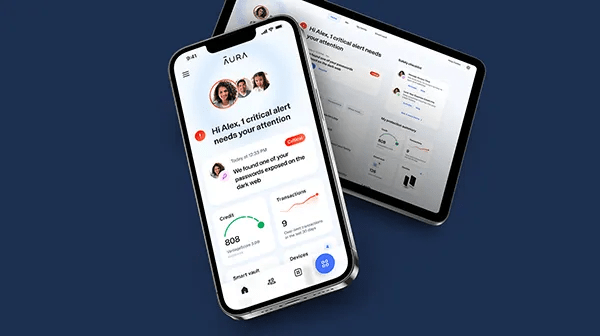 Aura★ Best overall Aura★ Best overall |
3 bureaus, all plans | Up to 5 adults | ~$12/mo annually | Simplest all-in-one family protection |
| 02 |  LifeLockBest-known brand LifeLockBest-known brand |
1 bureau; 3 on top tier | 2 adults + 5 kids | ~$7.50/mo first year | A recognizable brand plus device security |
| 03 |  Identity GuardBest budget start Identity GuardBest budget start |
Scales by tier | Family at every tier | ~$7.50/mo annually | Protecting one parent first, then scaling |
| 04 |  IDShieldBest recovery help IDShieldBest recovery help |
1 or 3 bureaus by plan | 2 adults + 10 kids | ~$14.95/mo | Hands-on, investigator-led recovery |
| 05 |  IdentityForceBest dark-web focus IdentityForceBest dark-web focus |
None on base; 3 on +Credit | Family tiers available | ~$17.95/mo | Dark-web and identity monitoring depth |
All pricing verified July 5, 2026 at provider pages and security.org. Subject to change.
How we ranked this: Rankings reflect caregiver and family fit, and nothing else. We named Aura our top pick on the strength of its coverage for families, and each provider is judged on the same yardstick regardless of how we link to it.Senior Identity Protection Fit Matrix
Every ranked provider judged on the eight things that decide whether a service actually fits a family protecting an older adult. The fit rating is our caregiver-focused read of the columns to its right.
| Provider | Best for | Senior / caregiver fit | Credit monitoring scope | Recovery support | Family plan | Starting price | Main tradeoff |
|---|---|---|---|---|---|---|---|
| Aura | All-in-one family protection | High | 3 bureaus on every plan | U.S.-based remediation, 24/7 | Yes, up to 5 adults + children | $12/mo billed annually | Lowest prices need annual billing |
| LifeLock | Recognizable brand + device security | Medium | 1 bureau; 3 bureaus on Ultimate Plus | Member services + Norton support, restoration specialists | Yes, 2 adults + up to 5 kids under 18 | $7.50/mo first year (Standard) | Prices renew 30 to 45% higher; 3-bureau is top tier only |
| Identity Guard | Fraud alerting on a budget | Medium-High | None (Value), 1 bureau (Total), 3-bureau annual report (Ultra) | U.S.-based case managers | Yes, at every tier | $7.50/mo billed annually (Value) | Full 3-bureau data only on the Ultra tier |
| IDShield | Hands-on restoration + most child coverage | High | 1 bureau (TransUnion) or 3 bureaus by plan | Licensed private investigators and 24/7 restoration support | Yes, 2 adults + up to 10 children | $14.95/mo (Individual, 1-bureau) | Reimbursement limits stated inconsistently by tier |
| IdentityForce | Dark-web + identity monitoring | Medium | None (UltraSecure), 3 bureaus (UltraSecure+Credit) | 24/7 U.S.-based recovery, 40+ years experience | Yes (UltraSecure Family / +Credit Family) | $17.95/mo or $179.50/yr (UltraSecure) | Base plan has no credit monitoring; pricing varies by page |
The matrix rewards two things generic comparison lists usually skip: whether a plan covers a parent and an adult child together, and whether recovery is hands-on or just advisory. That is why Aura and IDShield sit at the top even though one is an all-in-one bundle and the other is built around investigator-led restoration.
Do this even if you buy a service
Paid monitoring watches and alerts. These free steps actually close the doors a thief would use, and the FTC recommends them regardless of which service you choose.
Lock things down
- Freeze credit at all three bureaus when appropriate. A freeze stops new accounts from being opened in your parent’s name, and it is free to place or lift.You can lift it temporarily when applying for credit.
- Use strong, unique passwords and turn on multi-factor authentication. Especially on bank, email, and Medicare or insurance accounts.
Watch the statements
- Review Medicare, insurance, and bank statements. Look for charges, visits, or claims your loved one did not make, since medical identity theft often shows up here first.
- Keep IDs, insurance cards, and support details organized and access-controlled. So the people who should help can, and others cannot.
Be ready to act fast
- Save recovery steps and key support contacts in a secure family coordination system. A shared, access-controlled place like Caring Village document storage means whoever is closest can act quickly without passing around passwords.
- If theft happens, report it at IdentityTheft.gov for a free, personalized recovery plan.
How We Judged These Services
We started from the article’s older roster, kept the providers that still serve families well, added Aura as the current category leader, and moved one product into a complementary mention. Every price and plan detail below was verified in July 2026 against the provider’s own pages or security.org’s plan reviews.
Rather than rank on raw feature counts, we weighted what decides whether a service fits a family protecting an older adult.
- Senior and caregiver fit. Can one plan protect a parent and an adult child, and can a caregiver help without taking over the parent’s private accounts?
- Credit monitoring scope. Whether the plan watches one bureau or all three (Equifax, Experian, TransUnion), and on which tier.
- Recovery support. Whether restoration is hands-on, with U.S.-based case managers or licensed investigators, or mostly advisory.
- Family plan availability. How many adults and children a household plan covers, which matters for multi-generation families.
- Insurance and reimbursement, with caveats. Identity theft insurance helps with recovery costs and some stolen funds, but it has exclusions and does not prevent theft.
- Honest, current pricing. Real starting prices, the difference between monthly and annual billing, and any introductory first-year price that renews higher.
The Top Picks, Reviewed
Five current providers, ranked for real family situations, from the simplest all-in-one to the most hands-on recovery and the budget-friendly start.
Aura
★ Best overallThe simplest all-in-one protection, with 3-bureau monitoring on every plan.
- Best forFamilies who want one simple all-in-one plan
- PriceIndividual from $12/mo annually ($15 monthly); Couple from $22/mo annually; Family from $32/mo annually ($50 monthly)
- Credit monitoring3 bureaus on every plan
- Insurance$1M per adult (Individual), $2M per adult (Couple), $5M per adult (Family)
- Family coverageUp to 5 adults plus children, with parental controls and child SSN/credit checks
Pricing and plans verified July 5, 2026 at aura.com/pricing.
Check out AuraAura earns the top spot for one caregiver reason above all: it removes decisions. Every plan, even the entry one, includes full 3-bureau credit monitoring, so a senior is never pushed to the priciest tier just to watch all three bureaus. That alone separates it from most of the field.
It also bundles antivirus, a VPN, and a password manager, plus automatic data removal from more than 200 data brokers and people-search sites. For a caregiver, that means fewer separate tools to set up and remember. The family plan adds a separate insurance limit for each adult, which fits a parent-plus-adult-child setup cleanly.
What works well
- Full 3-bureau credit monitoring on every plan, so seniors are not pushed to the top tier for it
- Family plan gives each adult a separate insurance limit, fitting a parent-plus-adult-child setup
- Bundles VPN, antivirus, and a password manager, so a caregiver manages fewer tools
- 14-day free trial and a 60-day money-back guarantee on annual plans
Worth knowing
- Lowest advertised rate requires annual billing; monthly pricing is higher
- Family plan monthly list price ($50) is the highest entry point here before annual-plan savings
- Everything is one bundled subscription, so there is no cheaper credit-only tier to buy on its own
LifeLock
Best-known brandA recognizable name with strong stolen-funds reimbursement and easy device-security bundling.
- Best forHouseholds that want a known brand plus Norton device security
- PriceStandard from $7.50/mo first year ($89.99/yr, renews $124.99/yr); Advantage from $14.99/mo first year; Ultimate Plus from $19.99/mo first year; family from $18.49/mo first year
- Credit monitoring1 bureau on Standard and Advantage; 3 bureaus on Ultimate Plus
- InsuranceUp to $25,000 stolen funds on Standard, up to $1M on Ultimate Plus; up to $1M for lawyers and experts on all tiers
- Family coverage2 adults plus up to 5 children under 18
Pricing verified July 5, 2026 via security.org’s LifeLock plan review. First-year introductory prices renew higher.
Check out LifeLockLifeLock is the name most families already recognize, and that familiarity has real value when you are convincing a hesitant parent to sign up for anything. The top Ultimate Plus tier carries the highest stolen-funds reimbursement here, up to $1M, and the brand makes it easy to bundle antivirus and a VPN through Norton 360 for a household device setup.
The caregiver caveats are pricing and tiering. The cheaper plans monitor only one credit bureau and cap stolen-funds reimbursement well below the headline number, and the low introductory first-year prices renew 30 to 45 percent higher. Note that renewal cost before you commit a parent to a plan.
What works well
- Recognizable brand with the highest stolen-funds reimbursement here ($1M on Ultimate Plus)
- Easy to bundle antivirus and a VPN through Norton 360 for the household
- Family plan explicitly covers two adults plus children under 18
Worth knowing
- 3-bureau credit monitoring is only on the top Ultimate Plus tier; cheaper plans watch one bureau
- First-year introductory prices renew 30 to 45% higher
- Lower tiers cap stolen-funds reimbursement well below $1M ($25,000 on Standard)
Identity Guard
Best budget startStrong fraud alerting with a low individual entry price, so you can protect one parent first.
- Best forProtecting one parent affordably, then scaling to a family plan
- PriceIndividual: Value $7.50/mo annually ($8.99 monthly), Total $16.67/mo annually, Ultra $25/mo annually; Family: Value $12.50/mo annually, Ultra $33.33/mo annually
- Credit monitoringNone on Value, 1-bureau monthly score on Total, 3-bureau annual report on Ultra
- InsuranceUp to $1M with stolen-funds reimbursement on every tier
- Family coverageFamily plans available at every tier
Pricing verified July 5, 2026 via security.org’s Identity Guard plan review.
Check out Identity GuardIdentity Guard is the easy starting point when you want to protect one parent without committing the whole household at once. The individual Value plan starts at $7.50 a month billed annually, and even that cheapest tier includes up to $1M in identity theft insurance with stolen-funds reimbursement.
From there you can step up. The Total tier adds a 1-bureau monthly credit score, and the Ultra tier adds an annual 3-bureau report plus card monitoring, with family plans available at every tier. It is owned by Aura’s parent company, so the underlying monitoring is mature. The main limit is that full 3-bureau data only arrives on the top Ultra tier.
What works well
- Low individual entry price ($7.50/mo annually) makes it easy to protect one parent first
- $1M insurance is included even on the cheapest tier
- Family plans available at every tier for adding a spouse or adult child
Worth knowing
- Full 3-bureau credit data only on the top Ultra tier
- Lowest prices require annual prepayment
- The Value tier has no credit monitoring at all
IDShield
Best recovery helpLicensed investigators run the recovery for you, with the broadest child coverage here.
- Best forFamilies who want someone else to handle the recovery work
- PriceIndividual: $14.95/mo (1-bureau) or $19.95/mo (3-bureau); Family: $29.95/mo (1-bureau) or $34.95/mo (3-bureau)
- Credit monitoring1 bureau (TransUnion) or 3 bureaus depending on plan
- RecoveryGuaranteed restoration by licensed private investigators, 24/7
- Family coverage2 adults plus up to 10 dependent children
Pricing verified July 5, 2026 via security.org’s IDShield review. IDShield is by LegalShield (PPLSI).
Check out IDShieldIDShield is the pick for the moment a family fears most: something has already gone wrong, and nobody has the time or know-how to fix it. Instead of handing you a checklist, IDShield assigns licensed private investigators who do the restoration work for you, available around the clock. For an overwhelmed caregiver, that hands-on help is the whole point.
It also has the broadest household reach here, with a family plan covering two adults plus up to 10 dependent children, and clear flat pricing with a 1-bureau or 3-bureau choice. The one thing to confirm is the reimbursement limit for your specific tier, since the plan materials describe it inconsistently (up to $1M restoration in some places, up to $3M unrecovered cost in others).
What works well
- Licensed private investigators run the recovery for you, not just advise, which helps an overwhelmed caregiver
- Family plan covers the most children here (up to 10)
- Clear, flat individual and family pricing with a 1-bureau or 3-bureau choice
Worth knowing
- Cheapest plans monitor only one bureau (TransUnion)
- Reimbursement figures are described inconsistently across plan materials, so confirm the limit for your tier
IdentityForce
Best dark-web focusDecades of identity and dark-web monitoring, with credit data available as a step up.
- Best forCaregivers focused on dark-web and identity monitoring depth
- PriceUltraSecure $17.95/mo or $179.50/yr; UltraSecure+Credit $23.95/mo or $239.50/yr; family tiers higher
- Credit monitoringNone on UltraSecure; 3 bureaus on UltraSecure+Credit, plus scores, reports, and a score simulator
- Insurance$1M on UltraSecure; $2M on UltraSecure+Credit
- Recovery24/7 U.S.-based recovery support, 40+ years of experience
Pricing verified July 5, 2026 at identityforce.com/identity-protection-pricing. Now part of TransUnion; pricing varied by page, so confirm at checkout.
Check out IdentityForceIdentityForce brings depth where it counts for fraud-aware families: strong dark-web and identity monitoring backed by more than 40 years of recovery experience. The step-up UltraSecure+Credit plan adds full 3-bureau monitoring, scores, reports, and a credit score simulator, along with $2M in insurance.
Two things to weigh. The base UltraSecure plan has no credit-bureau monitoring, so you must step up to get it, and prices surfaced slightly differently across pages (one review listed UltraSecure at $19.90/mo versus $17.95/mo on the official signup page), so confirm the figure at checkout. It is also marketed heavily through employee-benefit channels, which can make the individual support path less obvious.
What works well
- Strong dark-web and identity monitoring with decades of recovery experience
- UltraSecure+Credit adds full 3-bureau monitoring and $2M insurance
- Direct individual signup remains available despite the TransUnion ownership
Worth knowing
- Base UltraSecure plan has no credit-bureau monitoring; you must step up to UltraSecure+Credit
- Pricing surfaced differently across pages, so confirm at checkout
- Marketed heavily through employee-benefit channels, which can make individual support paths less obvious
Also worth a look: ID Watchdog
A strong product that sits just outside our ranked list because it is oriented heavily toward employer and benefits channels rather than direct family signup.
- Plans: Select $14.95/mo (1-bureau, Equifax) and Premium $21.95/mo (3-bureau).
- Insurance up to $1M, or up to $2M with HSA stolen-funds coverage.
- Family plans cover anyone residing at the address, and direct consumer enrollment is available alongside the benefits channel.
If your loved one’s employer or a former employer offers ID Watchdog as a benefit, it is a capable option worth checking before paying for a separate service. You can compare plans on the ID Watchdog comparison page. Pricing verified July 5, 2026.
Which Service Should You Choose?
If you read only one section, read this one. The right service depends far less on feature counts than on the family situation and who will help.
- Choose Aura if you want the simplest all-in-one plan, full 3-bureau monitoring on every tier, and one subscription that covers a parent and an adult child. It is the strongest default fit for most families in this guide.
- Choose LifeLock if a familiar brand helps convince a hesitant parent, you want device security bundled through Norton, and you are comfortable stepping up to the top tier for 3-bureau coverage.
- Choose Identity Guard if budget is the priority and you want to protect one parent affordably first, with the option to add 3-bureau or a family plan later.
- Choose IDShield if hands-on, investigator-led recovery matters most, or you need to cover several dependent children.
- Choose IdentityForce if dark-web and identity monitoring depth is the priority and you will step up to the +Credit plan for full bureau coverage.
Whichever you pick, the service is only half the job. Knowing where the documents, support numbers, recovery steps, and delegated responsibilities live is what lets a family act fast when something goes wrong. Our guides to coordinating care for an aging parent and long-distance caregiving walk through keeping a family aligned, and our roundup of caregiver apps for families covers the shared-system part.
How to Tell if an Identity Has Been Stolen
Monitoring alerts are not the only signal. Often a family notices the everyday clues first, especially with an older parent who may not check accounts as often.
- Unfamiliar charges or withdrawals. Even small test charges can signal that account details have leaked.
- Bills or statements that stop arriving. A thief may have changed the mailing address on an account.
- Calls from debt collectors about accounts your loved one never opened.
- Medicare or insurance statements showing services or claims they did not receive, a common sign of medical identity theft.
- A tax return rejected because one was already filed under their Social Security number.
If any of these appear, the FTC’s free next steps are clear: place a fraud alert or freeze, get free credit reports at annualcreditreport.com to confirm what happened, and report the theft at IdentityTheft.gov to receive a personalized recovery plan. A paid service can then help carry out the recovery, but these government steps are free and worth taking right away.
About identity theft insurance
- Identity theft insurance helps cover some recovery costs and, on higher tiers, certain stolen funds. It does not prevent identity theft.
- Coverage has exclusions and per-tier limits, and the headline reimbursement number is usually the maximum on the top plan, not the base one.
- Confirm the exact limit and what it covers for your specific plan before relying on it, and keep the free FTC recovery steps in your plan regardless.
Frequently Asked Questions
How much does identity theft protection cost in 2026?
Individual plans generally start around $7.50 to $18 per month, and family plans run higher. The cheapest entry prices, like Aura at $12 per month or Identity Guard at $7.50 per month, usually require annual billing. Watch for first-year introductory pricing too: LifeLock’s Standard plan starts near $7.50 per month for the first year but renews 30 to 45 percent higher. Compare the renewal price, not just the introductory one. All prices here were verified in July 2026 and are subject to change.
Do I still need to freeze credit if I pay for a monitoring service?
Yes. Monitoring services watch for and alert you to suspicious activity, but a credit freeze actually stops new accounts from being opened in your name in the first place. The FTC notes that freezing and unfreezing credit is free at all three bureaus, and you can lift a freeze temporarily when your loved one needs to apply for credit. Think of a freeze as the lock and monitoring as the alarm; the strongest protection uses both.
Which identity theft service is best for protecting an older parent?
For most families, Aura is the simplest all-in-one choice because it includes full 3-bureau credit monitoring on every plan and a family option that covers a parent and adult child with separate insurance limits. If you expect to need hands-on recovery, IDShield assigns licensed investigators to do the restoration work for you. If budget is the priority, Identity Guard lets you protect one parent affordably first. The best pick depends on family fit and how much recovery help you want, which is what our fit matrix above compares.
Can a caregiver monitor a parent’s identity without taking over their accounts?
Family plans are designed for this. Services like Aura, Identity Guard, IDShield, and IdentityForce all offer plans that cover multiple adults, so a parent and an adult child can each have their own protected profile under one subscription rather than sharing logins. That keeps the parent’s privacy intact while still letting the family get alerts and help. Pair it with a secure, access-controlled place to store recovery steps and support contacts so the right people can act quickly without holding all of the parent’s passwords.
Why are older adults targeted more often for identity theft?
Scammers often see older adults as having more established credit, savings, home equity, and benefits like Medicare and Social Security, and as less likely to monitor accounts daily. The FTC reported that fraud losses among adults 60 and older rose roughly four-fold, from about $600 million in 2020 to $2.4 billion in 2024, and that older adults tend to report higher median individual losses. That is why family monitoring, medical-statement review, and a credit freeze matter so much for this group.
Is free identity protection enough, or do I need a paid service?
Free steps go a long way, and the FTC recommends them for everyone: freeze credit at the three bureaus, use strong unique passwords with multi-factor authentication, review Medicare, insurance, and bank statements, and report any theft at IdentityTheft.gov for a free recovery plan. A paid service adds continuous monitoring, dark-web scanning, insurance, and, on some plans, hands-on recovery help. For many families the free steps are the foundation, and a paid plan is worth it when you want active alerts and someone to help if theft happens. Our “do this even if you buy a service” checklist above lists the free essentials.
About the experts

Lynda Menegotti is Editor-in-Chief at Caring Village, where she leads editorial standards and fact-checking across the site’s caregiving and senior-health guides.
Sources and verification
- Aura. Plans and pricing, aura.com/pricing. Verified July 5, 2026.
- Security.org. Best identity theft protection and per-provider plan reviews for Aura, LifeLock, Identity Guard, IDShield, and IdentityForce, security.org/identity-theft. Verified July 5, 2026.
- IdentityForce. Identity protection pricing, identityforce.com. Verified July 5, 2026.
- ID Watchdog. Plan comparison, idwatchdog.com. Verified July 5, 2026.
- Federal Trade Commission. Credit freezes and fraud alerts, consumer.ftc.gov; report identity theft at IdentityTheft.gov. Verified July 5, 2026.
- Federal Trade Commission. Data on fraud losses among adults 60 and older rising from about $600M (2020) to $2.4B (2024), FTC annual report to Congress on protecting older adults (December 2025). Verified July 5, 2026.
All prices and plans were verified at provider pages or security.org plan reviews in July 2026. Pricing, plan names, coverage, and reimbursement limits are subject to change; confirm at checkout. This guide is general information, not legal, financial, tax, or insurance advice.