
Medical disclaimer
This article is for educational purposes, not medical advice. Pill dispensers support medication adherence but do not replace clinical oversight. Medication errors can be life-threatening. Always confirm schedules with a physician or pharmacist, have a backup plan for device failure, and never substitute a dispenser for supervision when cognitive impairment is present.
Why Automatic Pill Dispensers Matter
Over half of US adults 65+ take four or more prescription medications, making medication errors a leading cause of preventable hospitalizations. Missed or double doses are the most common form.
Automatic pill dispensers are designed to solve a specific problem: organizing the right dose for the right time and alerting patients or caregivers if a dose is missed. They reduce timing errors when used correctly, but they are not a complete solution for adherence and require careful setup to avoid creating a false sense of security.
They are one option among the broader range of tools for medication management worth weighing before you commit.
Note on cognitive impairment
If you are shopping for a parent with Alzheimer's or significant cognitive decline, general-purpose dispensers are usually unsafe. For more information on navigating these specific challenges, read the comprehensive Caregiver's Guide to Alzheimer's Disease (Caring Village). If wandering is also a concern, our guide to the best GPS trackers for seniors covers the location-monitoring side of dementia safety.
Subscription vs. One-Time Hardware
The biggest source of buyer frustration is discovering at checkout that a device requires a monthly fee to function. Choose your cost model first.
- Subscription (Rent). Bundles the hardware, app, real-time caregiver text alerts, and active support into a monthly fee. Hardware must be returned if you cancel. (e.g., Hero: $29.99 to $59.99/mo; MedMinder: $125/mo)
- One-time hardware (Buy). You own the device outright with zero ongoing fees, but you lose out on app connectivity, remote caregiver alerts, and cellular features. (e.g., e-pill Voice Pro: ~$290; LiveFine: ~$90; Med-E-Lert: ~$60)
- Hybrid. You buy the hardware upfront and pay an optional monthly fee only if you want premium cellular monitoring or emergency notifications. (e.g., MedReady: ~$307 upfront + ~$16/mo)
Total Cost of Ownership Over 1, 3, and 5 Years
This is the math that doesn't appear on most product pages.
| Model | Year 1 | 3 Years | 5 Years |
|---|---|---|---|
| Hero (Prepaid: $29.99/mo) | ~$360 + setup | ~$1,080 | ~$1,800 |
| Hero (Monthly: $59.99/mo) | ~$720 + setup | ~$2,160 | ~$3,600 |
| MedMinder Maya/Jon ($125/mo) | $1,500 + setup | $4,500 | $7,500 |
| MedReady + Cellular (~$307 + $16/mo) | ~$499 | ~$883 | ~$1,267 |
| e-pill Voice Pro (One-time) | ~$295 to $325 | ~$295 to $325 | ~$295 to $325 |
| LiveFine Smart WiFi (One-time) | ~$160 | ~$160 | ~$160 |
| LiveFine 28-Day / Med-E-Lert (One-time) | ~$75 to $100 | ~$75 to $100 | ~$75 to $100 |
Figures match each product's card price range above. One-time rows assume a single hardware purchase. Pria (rank 3) is omitted because its multi-year cost depends on optional add-ons; TabSafe and Karie are omitted because they have no single public price (rent-or-buy and quote-only, respectively).
The right model depends less on your budget than on whether you want caregiver alerts and ongoing support.
For a long-distance caregiver with siblings, the subscription models earn their keep in alert reliability and customer support, especially when several relatives are trying to coordinate care for an aging parent from different cities.
For an independent senior managing their own regimen on a stable schedule, a one-time device is usually the right answer.
Caregiver Alerts: Who Gets Notified, When, and How
Most product pages bury this. It's the most important question for a long-distance caregiver, so we surface it here. If your parent misses an 8:00 AM dose, what happens?
| Dispenser | Notification channels | Default delay before alert | Cellular or WiFi required |
|---|---|---|---|
| Hero | Push notification, email, SMS | Configurable; typically 15 to 30 min after scheduled time | WiFi (2.4 GHz) |
| MedMinder Maya/Jon | SMS, email, automated phone call (robocall) | Configurable; typically after the dosing window closes | Built-in cellular (no WiFi needed) |
| Pria by BLACK+DECKER | App push | Configurable | WiFi |
| MedReady MR-357FL | SMS, email, phone call (with cellular plan) | Configurable | Cellular subscription required for alerts |
| e-pill Voice Pro | Bluetooth app log (no remote alerts) | App only when in Bluetooth range (~33 feet) | Bluetooth only |
| Med-E-Lert | None (local alarm only) | Local alarm sounds up to 30 min | None, fully offline |
| LiveFine 28-day | None on basic; app on WiFi version | Local alarm 30 min on basic | WiFi optional |
| TabSafe | SMS, email | Configurable | Cellular |
| Karie Health | App push, SMS, email, pharmacist escalation | Configurable; pharmacist follow-up | Cellular |
MedMinder Maya and Jon share the alert behavior shown here; they differ only on locking (Jon locks individual doses, Maya is open-box), covered in the dementia section. Karie Health is a pharmacy-network service rather than a buyable device.
Practical caregiver guidance:
- If you're remote and can't get to your parent quickly, prioritize a device with a phone call alert channel, not just SMS or push. SMS notifications are easily missed. MedMinder is the strongest in this category because of its automated phone-call escalation.
- If your parent has no WiFi, choose MedMinder (built-in cellular) or MedReady with cellular plan (also cellular). Hero, Pria, and the basic LiveFine all require home WiFi.
- Test the alert path before you rely on it. Set a test dose, deliberately miss it, and verify that the alert reaches you on every channel you configured.
Best for Dementia and Alzheimer's: Locked-Lid Units Only
For individuals with cognitive impairment, only use automated dispensers with a physically locked lid that hides or blocks future doses. Without a lock, a user may accidentally take multiple days of medication at once.
Top Locked Options
- MedMinder Jon. Looks like a standard pillbox but locks individual compartments. It features built-in cellular connectivity and calls caregivers if a dose is missed. Best for moderate-to-severe dementia.
- MedReady 357 Series. A secure, tamper-resistant round dispenser. It offers cellular monitoring to text or call caregivers if a dose is missed. Best for long-term reliability.
- Hero. A locked appliance with optional PIN protection and phone alerts. Because it requires pressing a button to dispense, it is best for mild-to-moderate dementia.
- e-pill MedSmart / Voice Pro. Locked automatic round dispensers that use audio alarms and flashing lights. Best for locations without cellular or Wi-Fi signals.
Explicitly NOT recommended for dementia
- EllieGrid. The manufacturer explicitly states it should not be used for individuals with cognitive impairment.
- Unlocking organizers. Avoid standard weekly pillboxes or open digital sorters (like basic LiveFine or Med-E-Lert models if the key lock is left disabled).
Important: A locked dispenser cannot ensure a patient actually swallows the medication. For advanced dementia, these devices must supplement, not replace, active caregiver supervision, ideally paired with dementia caregiver apps that help track routines and flag changes across the family.
How We Evaluated These Picks
Our product selection process focuses strictly on regulatory safety, verifying every dispenser tier against active FDA and CPSC recall logs. We audit checkout configurations to project exact long-term costs, omitting any products with historical compliance vulnerabilities.
At a Glance: Top 9 Automatic Pill Dispensers
| # | Product | Price model | Locked | Caregiver alerts | Cellular / WiFi |
|---|---|---|---|---|---|
| 01 | 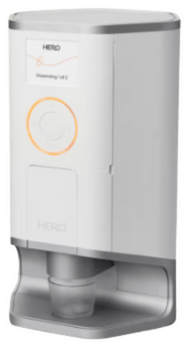 Hero★ Best overall Hero★ Best overall | Subscription $29.99 to $59.99/mo + $99.99 fee | ✓ PIN | App push, SMS, email | WiFi |
| 02 | 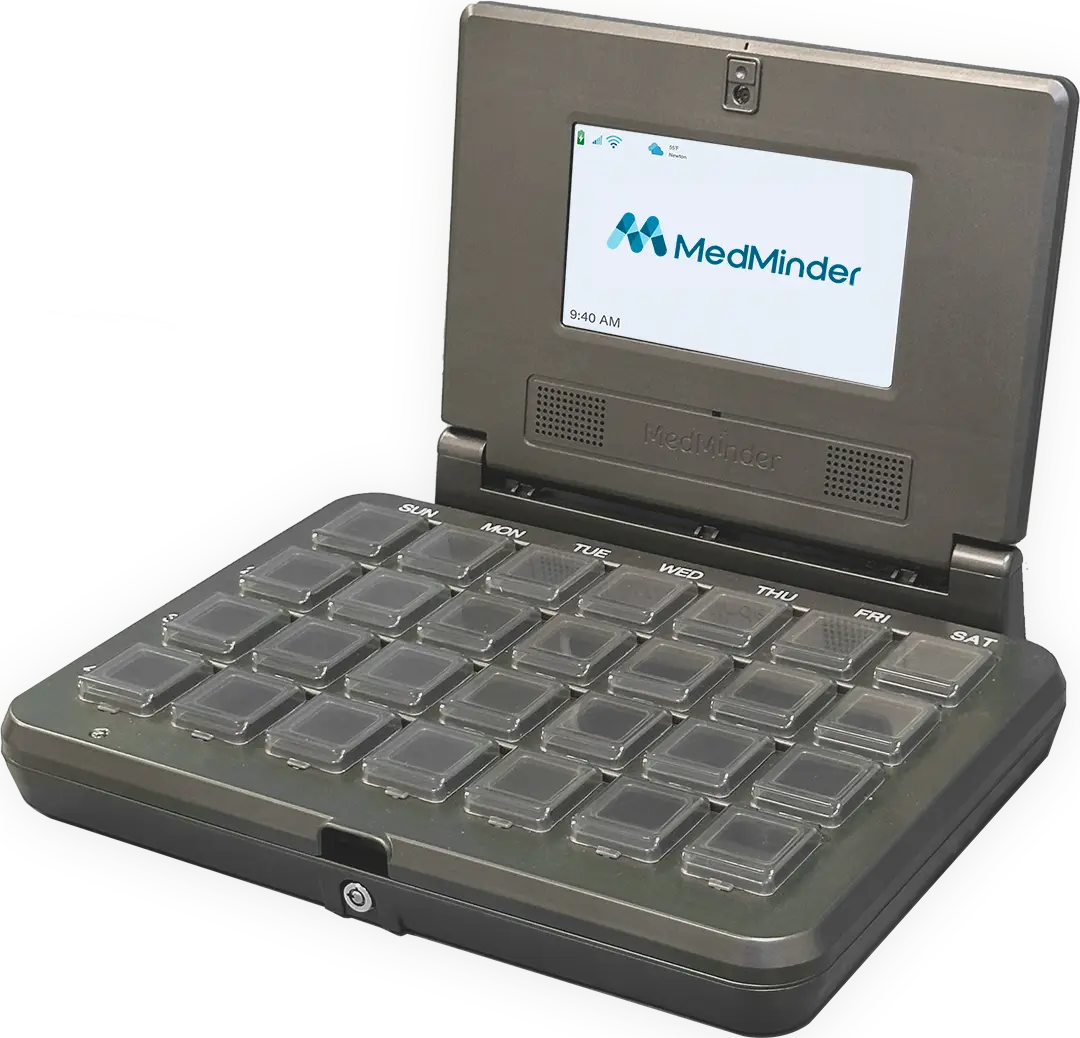 MedMinder Maya / JonBest for no-WiFi homes MedMinder Maya / JonBest for no-WiFi homes | Subscription $125/mo + ~$100 fee | Jon only (Maya open-box) | SMS, email, robocall | Built-in cellular |
| 03 | 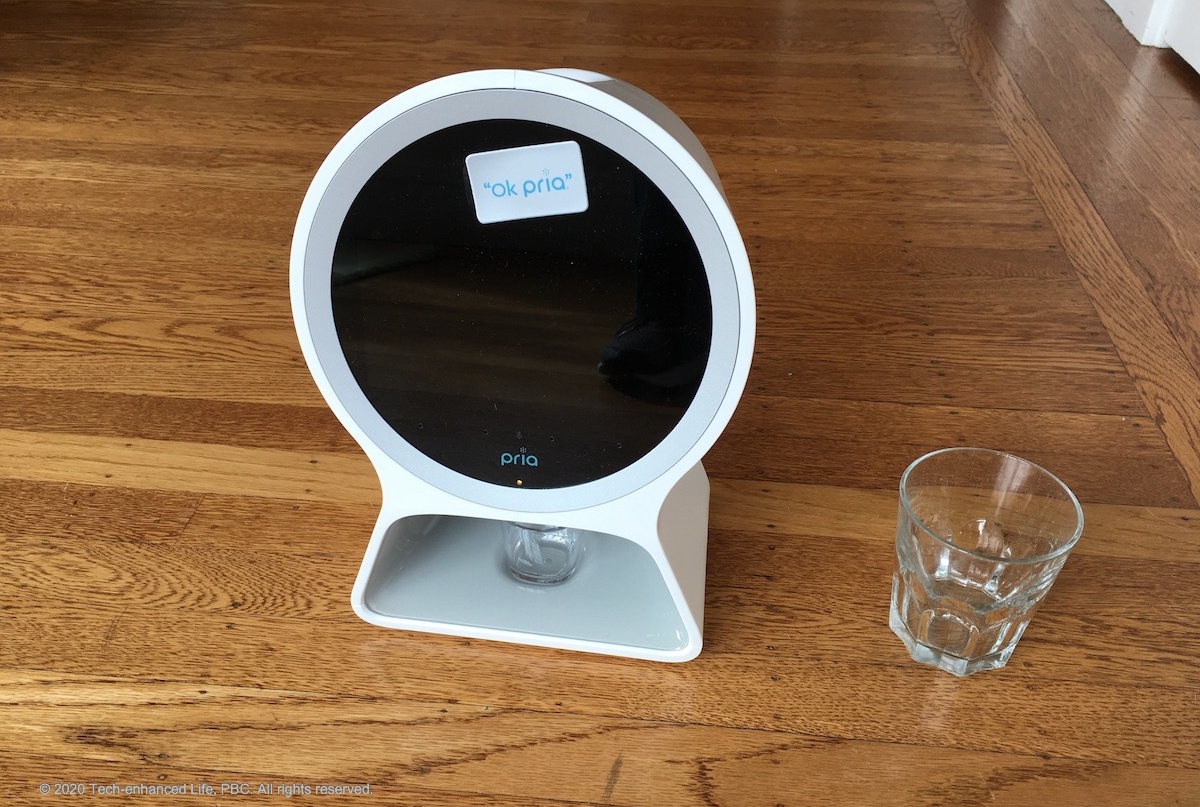 Pria by BLACK+DECKERBest companion robot Pria by BLACK+DECKERBest companion robot | Hybrid $700 to $900 + $9.99/mo | Facial / PIN | App push | WiFi |
| 04 | 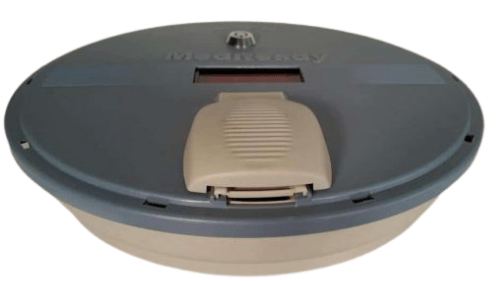 MedReady MR-357FLBest for dementia (one-time + monitoring) MedReady MR-357FLBest for dementia (one-time + monitoring) | Hybrid $307 to $359 + $16/mo | ✓ Keyed | SMS, email, phone | Built-in cellular |
| 05 | 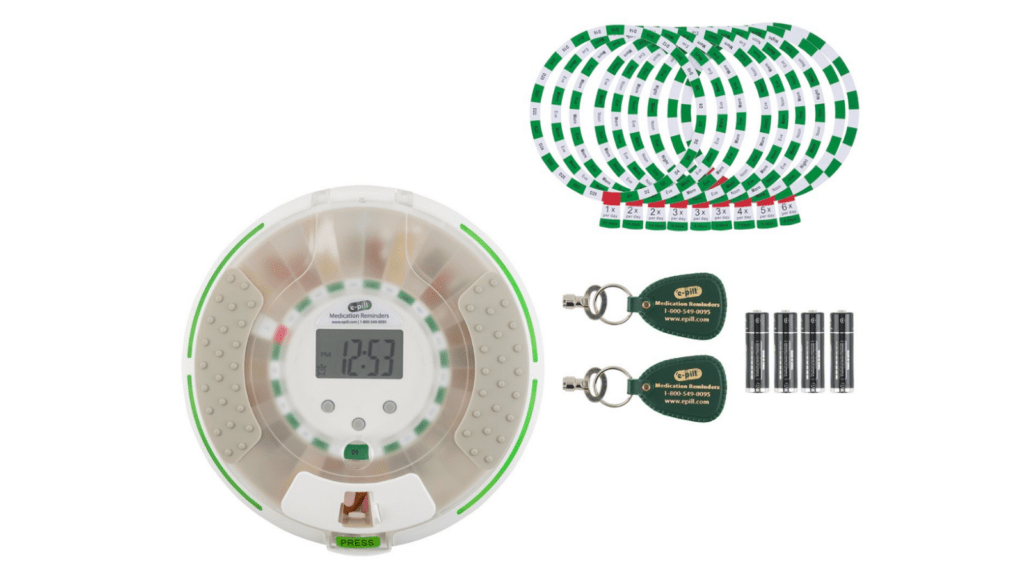 e-pill MedSmart Plus / Voice ProBest fully-offline locked e-pill MedSmart Plus / Voice ProBest fully-offline locked | One-time $294.95 to $324.95 | ✓ Keyed | Bluetooth log only | Bluetooth |
| 06 | 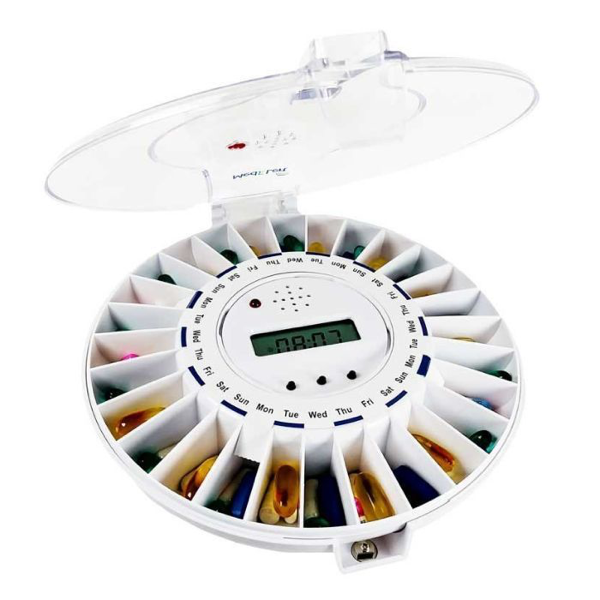 Med-E-LertBest budget locked Med-E-LertBest budget locked | One-time $75 to $100 | ✓ Keyed | None | Offline |
| 07 |  LiveFine 28-DayBest budget WiFi-optional LiveFine 28-DayBest budget WiFi-optional | One-time $89.99 to $209.99 | ✓ Keyed | App (on WiFi version) | WiFi optional |
| 08 | 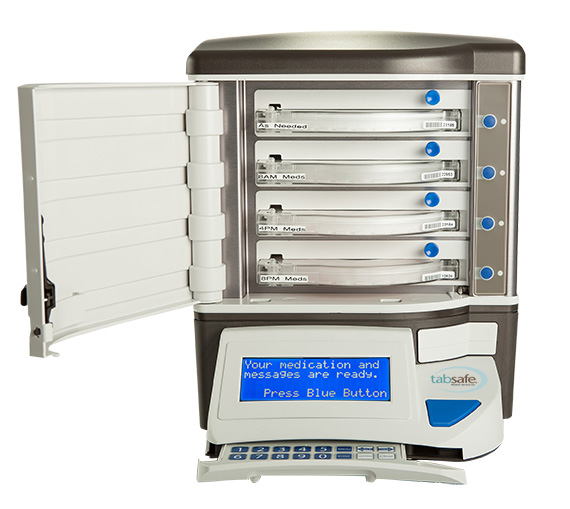 TabSafeBest multi-pill-per-doseRent-or-buy TabSafeBest multi-pill-per-doseRent-or-buy | Rent $225/qtr OR buy $899 + $120/yr | ✓ PIN/Keyed | SMS, email, phone call | Landline or Cellular |
| 09 | 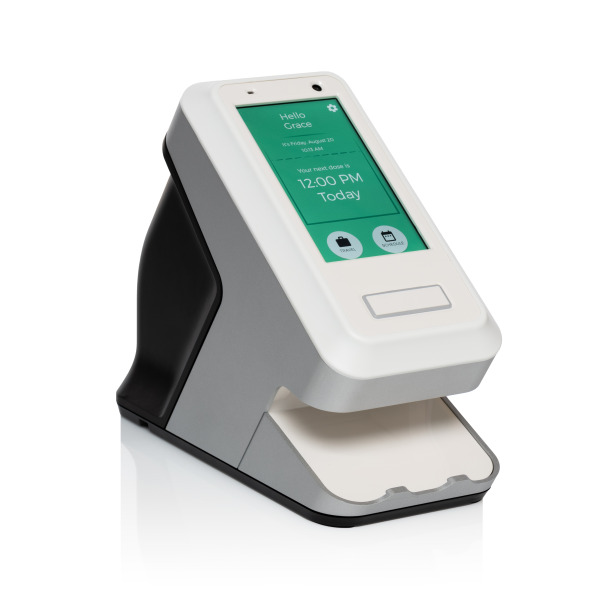 Karie HealthBest for complex regimens with pharmacist supportService / pharmacy-network Karie HealthBest for complex regimens with pharmacist supportService / pharmacy-network | Quote only (pharmacy-set) | ✓ Biometric/PIN | Push, SMS, email, pharmacist | Cellular / WiFi |
All pricing verified as of July 2026. Subject to change.
The Top Picks, Reviewed
Nine automatic pill dispensers, evaluated and ranked for real caregiving situations.
Hero
★ Best overall
- Price range$29.99 to $59.99 per month based on commitment level, plus a $99.99 upfront fee
- CapacityHolds up to a 90-day supply of 10 different medications
- Connectivity2.4 GHz Wi-Fi connection
- SecurityOptional 4-digit PIN lock
- FinancialsHSA/FSA eligible; membership pricing varies by commitment level
Verified July 2026
This appliance-sized medication manager sits on a standard kitchen counter to replace manual pillbox sorting. It features a built-in digital screen that guides the user with custom instructions during dosing windows. The device combines automated physical sorting with an encrypted digital log to track real-time adherence.
Hero is the dispenser we recommend by default for a cognitively intact-to-mildly-impaired user with home WiFi and a family that wants caregiver oversight.
The hardware is well-designed (about the size of a coffee maker), the app is the most polished in the category, and the support is genuinely 24/7. The limited lifetime warranty during membership means a malfunctioning device is replaced rather than repaired.
What we like
- Premium app interface provides instant missed-dose alerts and multi-caregiver syncing.
- Lifetime hardware warranty with free device replacement during your membership.
- Integrated mail-order pharmacy service that ships pre-sorted refills to your home.
What to consider
- Permanent rental model where the machine locks down if the subscription ends.
- No emergency battery power for dispensing, requiring physical key access during blackouts.
- Cannot process liquid medications, soft gels, or oversized supplements.
MedMinder Maya / Jon
Best for no-WiFi homes
- Price range$125 per month for device access and monitoring, plus a roughly $100 initiation fee that is often waived
- Capacity28 compartments configurable for single or multiple daily doses
- ConnectivityBuilt-in cellular hardware, no home internet network needed
- SecurityJon variant has individually locking doors; Maya variant uses an open-box format
Verified July 2026
This dispenser resembles a traditional 28-slot flat pillbox to support immediate familiarity for users who might reject unfamiliar technology. It runs on a plugged-in power source with an integrated 48-hour battery backup for power emergencies.
The system manages complex schedules silently behind the scenes, lighting up individual pods and playing audio instructions when a dose becomes due.
What we like
- Works without Wi-Fi thanks to independent cellular connectivity.
- Automated phone call escalations to family members alongside standard text and email alerts.
- Optional pre-sorted medication trays sent directly from a dedicated mail-order pharmacy.
- Recordable caregiver voice prompts and multi-language support for alarms.
What to consider
- Highest ongoing subscription fees among major automatic dispensers.
- No on-device digital screen or scheduling buttons, requiring a computer for portal configuration.
- Full prescription transfer to the proprietary vendor pharmacy is needed to use the pre-filled tray service.
Pria by BLACK+DECKER
Best companion robot
- Price range$700 to $900 upfront, plus a $9.99 monthly subscription
- Capacity28 slots holding up to 10 pills per dose
- ConnectivityWi-Fi connection
- SecurityFacial recognition and PIN verification
- FinancialsFSA and HSA eligible
Verified July 2026
This tabletop companion robot features an interactive digital screen with an animated face and built-in voice assistant capabilities. It automates dispensing using an internal 28-slot pill wheel while providing interactive wellness check-ins.
Security is managed electronically through facial recognition and PIN validation rather than a physical key lock.
What we like
- Built-in voice assistant and two-way video calling.
- Biometric facial recognition verifies the identity of the user.
- Automated companion wellness check-ins directly on the screen.
What to consider
- Ongoing monthly subscription required despite the high upfront hardware cost.
- No physical mechanical lock on the device chassis.
- Incompatible with liquids, soft gels, or sticky medications.
MedReady MR-357FL
Best for dementia (one-time + monitoring)
- Price range$307 to $359 upfront, plus optional cellular monitoring from $16 per month
- Capacity28 compartments holding up to 9 standard pills each
- ConnectivityBuilt-in 4G cellular network
- SecurityKey-locked solid lid with two keys included
Verified July 2026
This tamper-resistant dispenser incorporates a loud lower-frequency buzzer and a bright flashing red light to signal dosage windows. It utilizes a mechanical key lock to protect the internal carousel from unauthorized access.
Caregivers can adjust schedules and update settings remotely via a web-based portal.
What we like
- Automated phone call, text, and email notifications for missed doses.
- Integrated 48-hour rechargeable backup battery pack.
- Built-in slot on the base to hold physical medication schedule cards.
What to consider
- Cellular data transmission and remote scheduling changes require an active paid plan.
- Compact compartment sizes cannot accommodate oversized supplements or large multi-pill routines.
- Basic text display rather than a modern interactive touchscreen interface.
e-pill MedSmart Plus / Voice Pro
Best fully-offline locked
- Price range$294.95 to $324.95 upfront with zero ongoing monthly subscription fees
- Capacity28 slots holding up to 24 aspirin-sized pills each, supporting up to 9 daily alarms
- ConnectivityLocal Bluetooth connection within a 33-foot range for device programming
- SecurityKey-locked solid lid with two physical access keys included
Verified July 2026
This circular automatic dispenser uses spoken audio alerts to prompt users during dosing windows. It operates fully offline with an integrated mechanical key lock that secures the internal 28-compartment medication tray.
Caregivers can program schedules manually on the device interface or configure them via a local Bluetooth smartphone application.
What we like
- Spoken voice announcements alongside blinking lights to cue the user.
- Long-term battery operation using 4 AA batteries for standalone or backup power.
- No contract commitments, monthly data plans, or recurring maintenance fees.
What to consider
- No remote caregiver notifications due to the complete absence of Wi-Fi.
- Physical device reset required if a caregiver refills the tray before the exact dosing cycle finishes.
- Manual tip-and-pour action needed to retrieve medications from the active slot.
Med-E-Lert
Best budget locked
- Price range$75 to $100 upfront with no ongoing monthly subscription fees
- Capacity28 compartments holding up to 18 aspirin-sized tablets each
- ConnectivityFully offline with no Wi-Fi, cellular, or Bluetooth capabilities
- SecurityTamper-resistant keyed casing with a mechanical lock
Verified July 2026
This standalone, circular automated pill organizer provides physical key-locked security without complex digital configurations. The device rotates its internal carousel based on a localized timer, activating audio and visual alarms until the user physically tilts the unit to pour out the dose.
What we like
- Affordable security with zero ongoing data contracts or monthly upkeep fees.
- Auto-silencing alarm via an integrated motion sensor once the user tilts the device to dispense.
- Long battery life, operating up to 18 months on 4 AA batteries without needing a wall outlet.
What to consider
- No remote tracking or caregiver notifications due to the complete absence of internet networks.
- Limited scheduling flexibility, capped at a maximum of 6 daily alarms.
- Manual configuration using buttons on a small on-device digital screen.
LiveFine 28-Day
Best budget WiFi-optional
- Price range$89.99 to $209.99 upfront with zero ongoing monthly subscription fees
- Capacity28 slots holding multiple tablets, supporting up to 9 daily alerts
- ConnectivityOffline base setup or 2.4 GHz Wi-Fi app tracking depending on the model
- SecurityCover lock with a physical key included
Verified July 2026
This electronic carousel organizer automatically rotates a fresh dosage slot into view when a scheduled timer expires. It includes a locking lid to keep future medication days inaccessible and features an integrated sliding panel for easy dispensing.
What we like
- Smartphone app monitoring with a flat hardware purchase and no monthly contracts.
- Multiple alarm patterns and adjustable volume steps for hearing challenges.
- Wall-plug power with an internal battery backup for power failures.
What to consider
- Occasional app delays, where companion push notifications can suffer transmission or sync lag.
- No remote wireless tracking on the standard baseline model, with no out-of-home alerts.
- Tray can stick with bulkier pills or highly filled compartments.
TabSafe
Best multi-pill-per-dose
- Price range$225 every 3 months to rent, or $899 for a refurbished unit, plus a $120 annual web-hosting fee
- Capacity4 cartridges per module with up to 32 slots each, managing 13 daily doses
- ConnectivityPlugs into a standard landline or a cellular base station
- SecuritySolid key-locked chassis with optional user PIN validation
Verified July 2026
A specialist pick for users whose regimens require multiple pills at the same scheduled time (common with cardiovascular regimens, post-transplant, or chronic-disease management with 4 to 6 concurrent medications). Most dispensers handle one pill per compartment per dose; TabSafe is designed around multi-pill-per-dose holders.
What we like
- Isolates and safely manages multi-pill regimens and separate as-needed medications.
- Up to three sequential phone call alerts to caregivers if a dose is skipped.
- 24-hour internal backup battery to maintain schedules during power failures.
What to consider
- Substantial upfront purchase or a rigid quarterly rental contract.
- Legacy landline or dedicated base connectivity instead of standard home Wi-Fi.
- Complex cartridge-loading configuration with a steeper learning curve for family members.
Karie Health
Best for complex regimens with pharmacist support
- Price rangeNo public pricing; custom quote via partner pharmacy
- CapacityRoll-loaded cartridges holding a 30 to 60-day supply of pre-sorted pouches
- ConnectivityBuilt-in cellular data with backup Wi-Fi
- SecurityKey-locked internal chamber, optional PIN, and facial recognition
Verified July 2026
Karie Health pairs a connected pill dispenser with a pharmacist-monitored service. Missed doses trigger not just a caregiver alert but, depending on the patient's care plan, a pharmacist follow-up call.
For families managing a relative with a complex regimen and limited family caregiver bandwidth, this clinical layer is meaningful, and it can take real pressure off a primary caregiver who is already stretched toward caregiver burnout.
What we like
- Cuts and dispenses easy-to-open, pre-sorted medication pouches automatically.
- Biometric facial recognition verifies the correct user before dispensing.
- Real-time missed-dose warnings to family members via a companion app.
What to consider
- Restricts operation to specific partner pharmacies, requiring a full prescription transfer.
- No public consumer pricing, requiring custom quotes from healthcare partners.
- No manual, on-device scheduling changes without backend pharmacy authorization.
Other Notable Mentions
Three more dispensers worth knowing, each suited to a narrower situation.
EllieGrid / Ellie
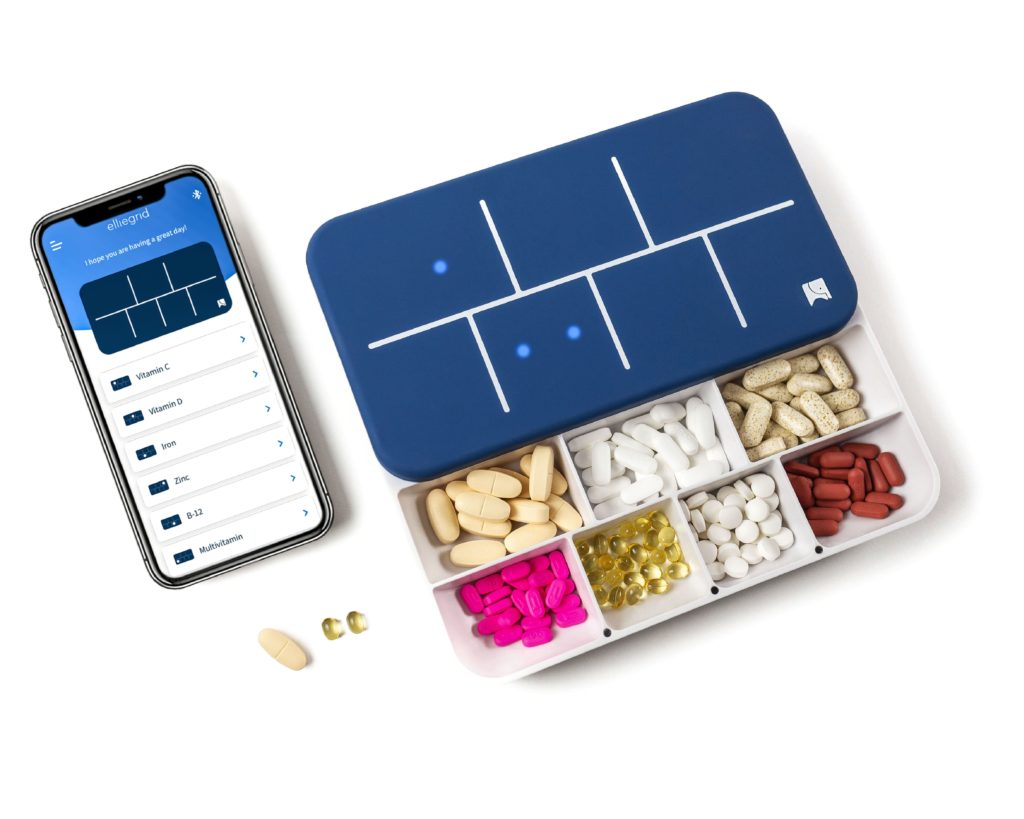
- Price range$149 upfront with no ongoing subscription fees
- Capacity7 compartments holding up to a one-month supply of smaller pills
- ConnectivityLocal Bluetooth connection
- SecurityOpen-case construction with no physical lock
Verified July 2026
This pocket-sized pillbox organizes tablets by pill type rather than scheduled time, using an integrated grid system. When a dose is due, it highlights matching compartment LEDs and triggers smartphone app alarms.
What we like
- Fast open-bin loading lets you pour full pill bottles straight into individual slots.
- Sleek, compact design resembles a premium consumer accessory instead of medical equipment.
What to consider
- No physical locks or software safety guards to prevent accidental overmedication.
- Local Bluetooth pairing only, which cuts off remote out-of-home caregiver warnings.
Mobi Smart Pill Dispenser
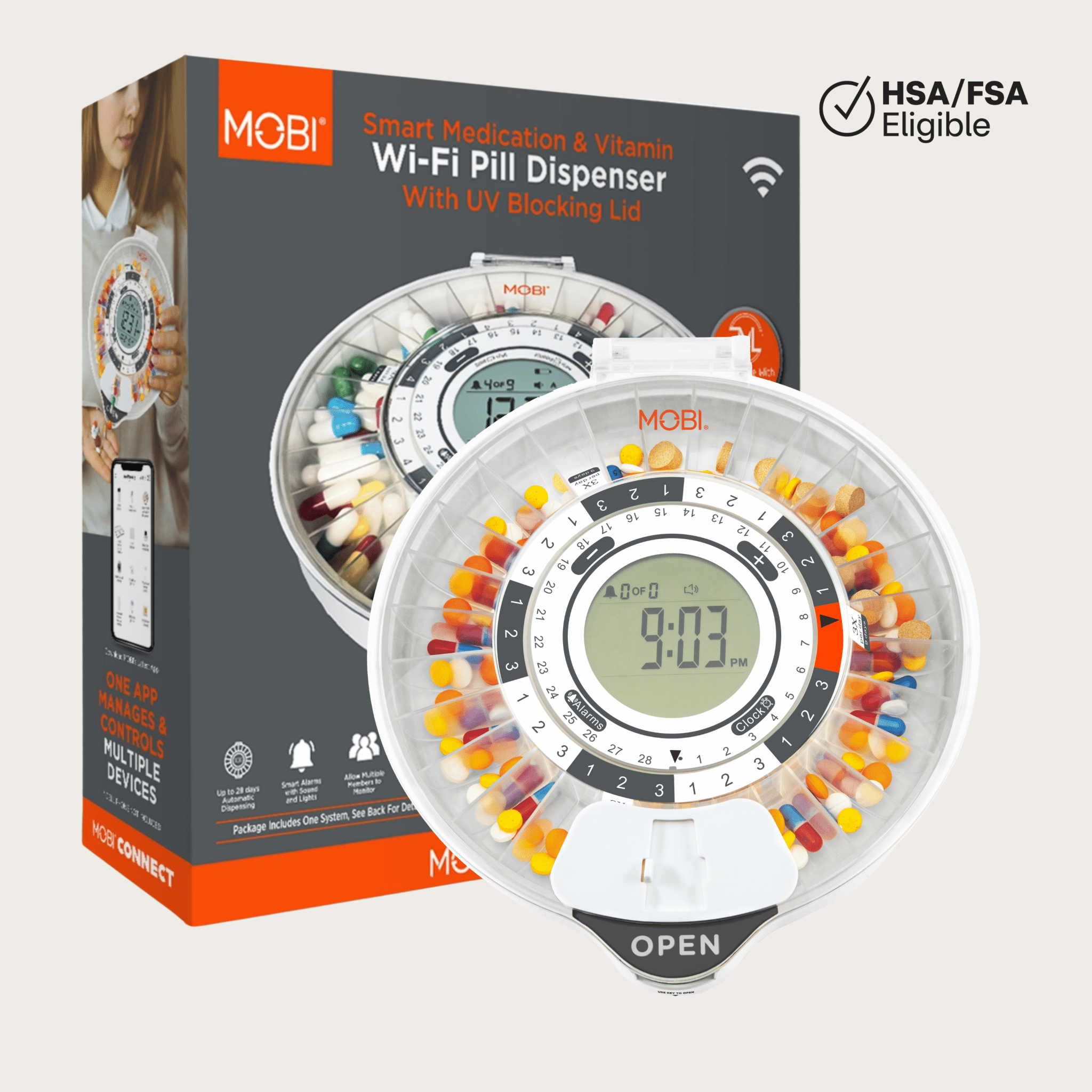
- Price range$129.99 to $159.99 upfront with zero mandatory subscription fees
- Capacity28 internal slots holding up to 35 individual tablets each
- Connectivity2.4 GHz Wi-Fi connectivity
- SecurityDual physical safety locks with a dedicated manual key
Verified July 2026
This automatic carousel organizer features a protective tinted cover to shield sensitive pills from ambient light damage. The internal hub turns automatically based on pre-set schedules, triggering flashing LED signals and audio alarms.
What we like
- Specialized transparent cover filters ultraviolet rays to preserve light-sensitive medication.
- Single hardware investment with zero recurring contract fees.
What to consider
- Manual device rotation and button programming if configured without a smartphone.
- Limited daily schedule flexibility, capped at a maximum of 6 separate automated dosing periods.
MedaCube
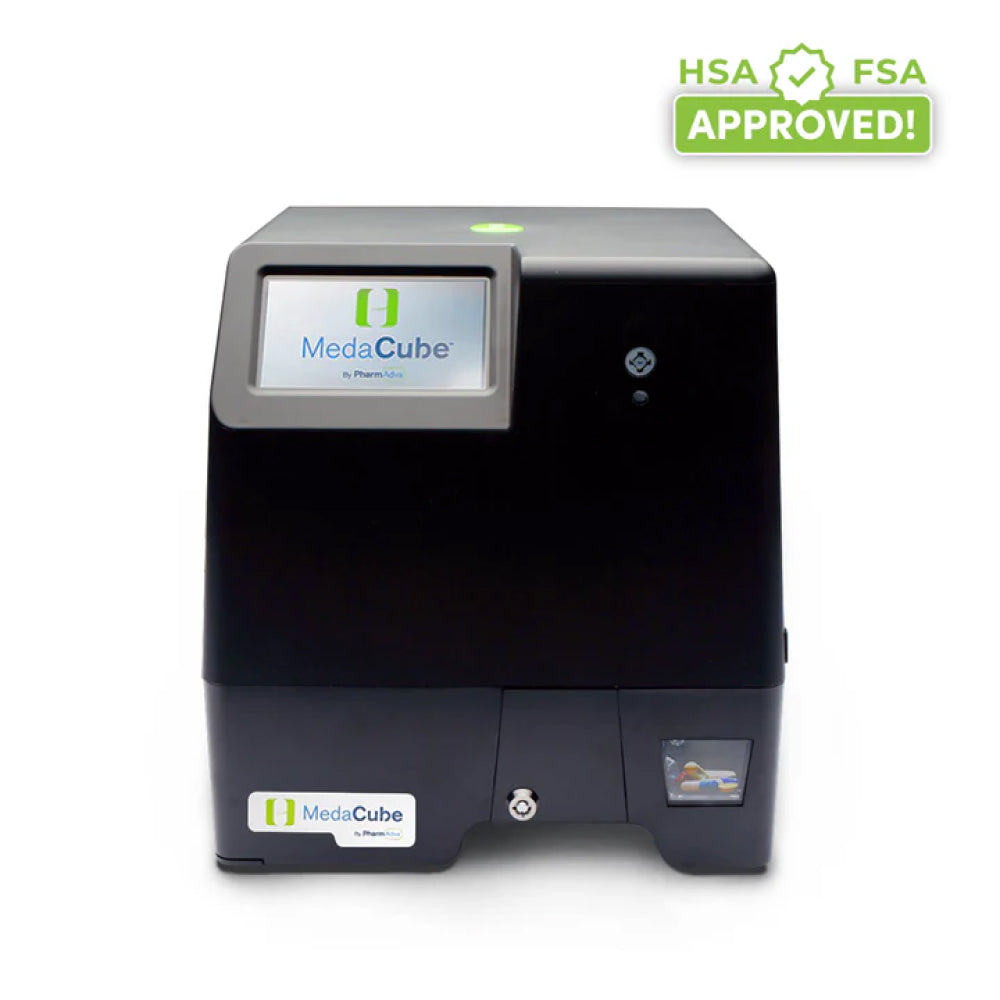
- Price range$1,999 to $2,199 upfront with zero mandatory monthly subscription fees
- CapacityBulk-loads up to 16 different medications for up to a 90-day supply
- ConnectivityBuilt-in Wi-Fi network connection
- SecurityMetal key-locked tamper-resistant chassis
Verified July 2026
This premium, high-capacity countertop appliance utilizes an internal bulk-loading bin system to dispense complex medicine routines automatically. It sorts and counts individual pills internally while managing schedules on a color touchscreen.
What we like
- Eliminates manual weekly sorting by letting caregivers pour loose pills directly into bulk bins.
- Captures and uploads digital photos of every dispensed dose to a remote caregiver portal.
What to consider
- Substantial initial financial investment compared to standard carousel models.
- Takes up considerable kitchen counter space due to its massive heavy-duty chassis.
Device-Failure Backup Plan
Automatic pill dispensers can fail due to power outages, lost signals, or battery drain. Every caregiver needs a simple, written backup plan.
- Paper med list. Keep an updated list of all medications, doses, and schedules on the refrigerator door for quick access.
- Backup sorter. Keep a standard, manual 7-day pillbox filled with a one-week supply in a secure place (hidden from patients with dementia).
- Power and support. Keep fresh backup batteries on hand and post your pharmacy's phone number right next to the device.
- Monthly test. Set a calendar reminder to skip a scheduled dose once a month to verify that caregiver phone or text alerts still work.
For dementia care specifically, the backup plan must not depend on the patient. The manual organizer must be in a place a caregiver can access, not the patient (who may not understand why the device is offline).
Frequently Asked Questions
Does Medicare cover automatic pill dispensers?
Traditional Medicare (Part B) does not cover the purchase of automatic pill dispensers. However, monthly subscription costs for connected devices may be eligible for coverage under Medicare's Remote Therapeutic Monitoring (RTM) program if prescribed and billed by a participating clinician. Most devices are fully HSA/FSA eligible.
Can a pill dispenser work without Wi-Fi?
Yes. MedMinder features built-in cellular connectivity that runs independently of home internet, and MedReady offers a cell-connected monitoring plan. If you need a completely offline device with zero connectivity, round carousel models like the e-pill MedSmart or Med-E-Lert rely purely on local internal timers and local alarms.
What happens if my parent misses a dose?
All automatic dispensers sound a local audio or visual alarm for roughly 30 minutes when a dosing window opens. Remote caregiver alerts (via app push notifications, SMS, or automated phone calls) require a cellular or Wi-Fi connected model and will only trigger if the specific device's alert settings are configured in the app.
Are automatic pill dispensers safe?
When used correctly, yes. They are excellent tools for tracking compliance and preventing timing mistakes, but they are not a substitute for clinical oversight. Risks include internal battery drain, connectivity drops, or human errors during the manual refilling process. Caregivers should always maintain a physical device-failure backup plan.
Do automatic pill dispensers handle liquid medications?
No. Standard automatic dispensers are strictly designed for solid oral medications like tablets and capsules. Liquid medications, inhalers, insulin pens, and injections must be managed outside the device. Some connected apps, like Hero's, allow you to schedule digital smartphone reminders for these external medications.
Can these devices be used for travel?
Large countertop appliance models are not portable. However, smaller battery-powered carousel models (like Med-E-Lert or e-pill) can operate on AA batteries for travel. If traveling without the device, the most practical approach is using a standard 7-day manual pill organizer for the trip while leaving the main unit at home.
What if my parent has arthritis or limited hand strength?
Avoid heavy keyed locks or tight press-and-twist lids. Carousel models that dispense by simply flipping the device upside down (like Med-E-Lert) or connected appliances with a single large physical button (like Hero) are the easiest options for users with limited manual dexterity.
About the experts

Dan Fogarty, M.A., FACHE has more than 12 years of experience in healthcare management and strategic communication. He earned his Master's in Health Communication from Johns Hopkins University and served as Chief Administrative Officer of the NIH Clinical Center and Chief Intramural AO for the National Heart, Lung and Blood Institute for 12 years. He is currently Senior Advisor for Strategic Operations, Management and Technology for SAMHSA, a Fellow of the American College of Healthcare Executives (FACHE, 2021), and Adjunct Faculty at Massachusetts College of Pharmacy and Health Sciences (MCPHS).
Connect on LinkedIn
Brooke Lounsbury, RN has over 26 years of nursing experience with a primary focus on Home Health and Hospice. Her work with patients and families across that period, particularly the strain she observed in caregivers, prompted her to start a support group for caregivers in her area. Brooke creates continuing education courses for nurses at PedagogyEducation.com on digestive health, sleep hygiene, and the effects of technology on health.
Sources
- Kaiser Family Foundation. Medicare Beneficiaries' Use of Prescription Drugs. More than half of adults 65+ take four or more prescription medications.
- Centers for Disease Control and Prevention. Therapeutic Drug Use tables; National Center for Health Statistics data on prescription medication use in older adults.
- Agency for Healthcare Research and Quality (AHRQ). Medication Errors and Adverse Drug Events, patient safety priority area.
- EllieGrid / Ellie Smart Pill Organizer product documentation (Amazon listing, manufacturer FAQ): manufacturer states the product is not recommended for individuals with cognitive impairments.
- FDA Manufacturer and User Facility Device Experience (MAUDE) database. Adverse-event report on EllieGrid pill box: dosing indication error.
- Centers for Medicare & Medicaid Services. Remote Therapeutic Monitoring (RTM) coverage framework.
- FDA registration status verified at product publication: Hero Smart Dispenser is FDA-registered.
All featured products were checked against the CPSC recall database and FDA MAUDE adverse-event database within 30 days of publication. None of the products in the 2026 top-9 lineup are subject to an active recall as of the verification date. Subscription pricing and product availability verified at the manufacturer's site within 30 days of publication.
A reminder. Automatic pill dispensers are devices that support medication adherence, they do not diagnose, treat, or cure any disease. Always consult the prescribing clinician about any change to a medication regimen. If you experience a device malfunction that affects dosing, report it to the manufacturer and to the FDA MedWatch program.