

Home Care for Elderly in Their Own Homes: Key Takeaways
- Working together, family and professional caregivers ensure consistent home care for elderly loved ones with less stress for everyone
- Understanding each caregiver’s role creates clear expectations and strengthens support for seniors aging at home
- Checklists and digital tools can help create efficient shared care plans
- Consistent communication and respectful coordination help family and professional caregivers work as one unified team to provide optimum care for elderly people in their homes
Nearly one-third of adults aged 65 and older live alone, which means they might need reliable care from both family members and professional caregivers as their needs change over time.
In this guide, you’ll learn:
- The key benefits of families and professional caregivers working side-by-side
- What each caregiver’s role typically includes
- How to build shared care plans that keep everyone aligned
- Communication strategies that strengthen trust and reduce missteps
Why Collaboration Between Family and Professional Caregivers Matters
Caring for an aging loved one can be overwhelming and often requires more than one person’s attention.
More Aging Seniors Choose to Stay at Home
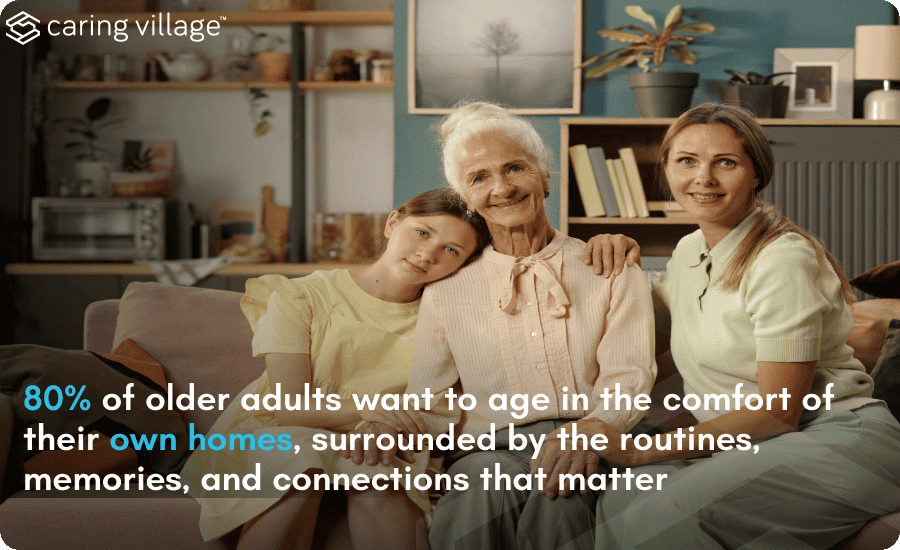
Nearly 80% of older adults hope to remain in their homes as they age for as long as possible because of the familiarity and emotional closeness associated with the place.
But as care needs grow, families often realize they can’t provide safe and comfortable home care for their elderly parent or relative alone. That’s when bringing in professional support can make all the difference.
Family caregivers know their loved one’s routines, habits, and preferences, while professional caregivers bring in training and caregiving services to keep them safe.
For family caregivers, collaboration means they’re not alone in executing the care plan. For professionals, it means they can deliver home care that genuinely meets the senior’s daily rhythm and long-standing preferences.
Miscommunication Creates Risks for Seniors
Caring for someone together with other people means you can easily miss or forget something important, assuming the other person already did it. Think about missing meds or meals when information isn’t shared.
Clear, documented communication reduces the risk of errors and ensures everyone is on the same page.
Role Confusion Leads to Burnout
When families and professional caregivers are not aligned with their responsibilities, stress rises on both sides.
Family members may feel pressured to provide around-the-clock support, even when they’ve hired a caregiver for assistance.
Professional caregivers may take on tasks outside their scope or feel they’re expected to make decisions that belong to the family.
The result? More time and energy spent, strained relationships between caregivers, and eventually caregiver burnout.
When everyone knows their role, caregiving runs more smoothly. There’s less second-guessing and a lot less stress.
Understanding the Roles in Home Care
When families use professional assistance, care becomes more efficient. But for collaboration to truly work, everyone needs to understand their role in the process.
What a Family Caregiver Typically Handles
Knowing the senior’s history, routines, preferences, and personality, family caregivers are the emotional anchor and the primary decision-makers in a loved one’s daily life.
When it comes to home care, their responsibilities typically cover hands-on support such as meals, light housekeeping, transportation, medication reminders, coordinating with doctors, tracking health changes, and managing appointments.
They keep all records, instructions, and medications organized, protecting their loved one’s independence, while knowing when to step in.
As health needs change, this role becomes more complex.
Professional Caregiver or Home Care Aide Responsibilities
Bringing specialized knowledge and skills, professional caregivers support safety, mobility, and health in ways that add to the family’s efforts.
They help with personal care tasks, such as bathing, dressing, grooming, and toileting. They also watch out for health changes, including mobility, appetite, skin condition, or cognitive shifts, and follow the established care plan, which may cover exercises and medication reminders.
As an extra service, they can assist with light cleaning, meal prep, and organizational issues.
Professional caregiving services help fill the gaps that families cannot handle alone. This is key when the aged person needs physically demanding or clinically specific care.
Where Responsibilities Overlap
If a loved one is taken care of in a home environment, family and professional caregivers may share certain responsibilities like:
- Observing changes in health or behavior
- Supporting mobility, hydration, and good nutrition
- Reinforcing daily routines and safety practices
- Providing companionship and emotional support
Overlapping ensures that early warning signs are caught on time and there’s an adequate reaction.
It provides a fuller picture of the senior’s needs and makes them benefit from consistent support and stability, which are crucial elements of quality home care.
When a Care Coordinator or Agency Steps In
As care becomes more complex, the family may need a care coordinator, care manager, or home care agency to act as organizers and communicators who keep everyone on the same page.
They can:
- Develop and update the care plan.
- Assign or schedule professional caregivers.
- Communicate with family members after shifts or major changes.
- Handle billing, insurance coordination, and documentation.
- Interfere during emergencies or sudden changes in health.
A care coordinator or agency can be an invaluable support when seniors have challenging medical conditions or mobility challenges, or when their needs change.
How To Build Efficient Shared Care Plans for Elderly at Home
Having multiple people taking care of an older adult at home can be confusing if you don’t have a clear, shared plan that outlines tasks and gives seniors the support they need.
Use a Caregiving App
Family members and professional caregivers often need to juggle messages, notebooks, emails, and mental reminders.
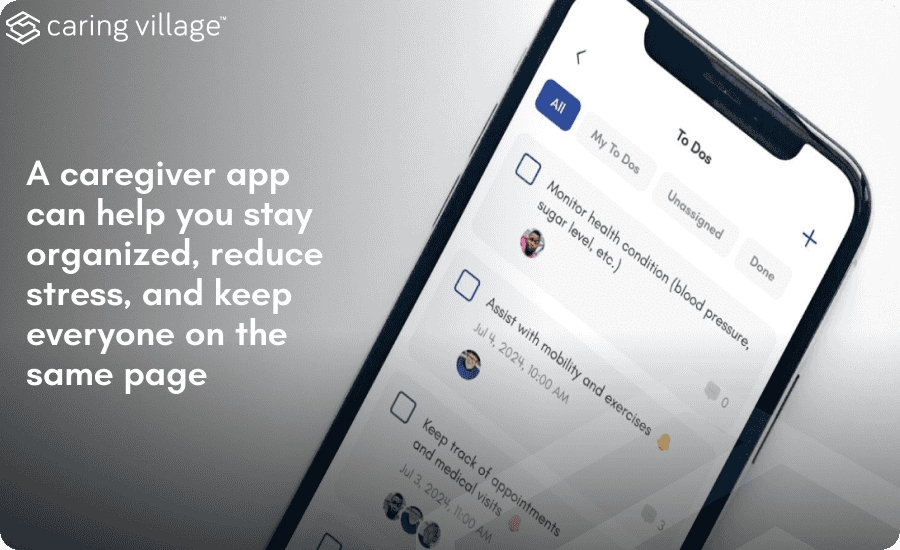
A caregiving app can help keep everyone on the same page, allowing you to share real-time updates after each visit or shift; track changes in mood, appetite, sleep; upload medication lists and care instructions; coordinate appointments and daily routines.
When everyone has the same information, it’s easier to stay coordinated. No more guessing who gave medication or wondering if dad ate lunch. It also takes pressure off family members who live far away.
Create Safety, Medication, and Daily Task Checklists
An efficient care plan is based on daily, weekly, and monthly tasks that can be followed by anyone stepping into the home.
A good safety checklist helps prevent accidents by removing trip hazards, double-checking that mobility aids are working, and keeping emergency info like contacts and medication lists front and center.
A medication checklist:
- Verifies medication times and dosages.
- Logs side effects, changes in appetite, dizziness, or mood changes.
- Notes the need for refills.
- Ensures new instructions after medical appointments are reflected.
A daily task checklist focuses on:
- Meal preparation and logging, plus hydration
- Personal care, including bathing, grooming, and dressing
- Mobility or exercise routine
- Housekeeping basics such as dishes, trash, and laundry
- Companionship or engagement activities
Communication Strategies for Joint Caregiving
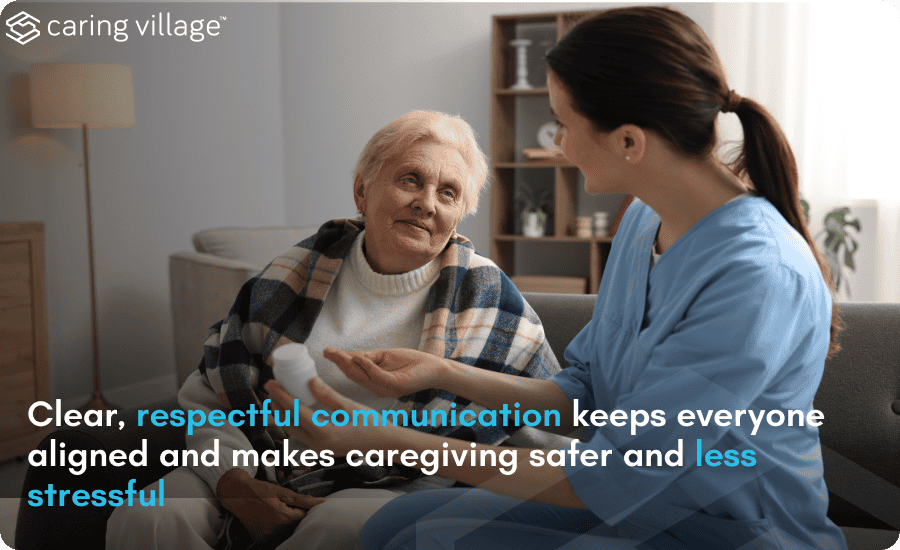
To keep family and pros aligned and help seniors feel safe and supported at home, make sure your communication is clear and steady.
Establish Weekly Routines and Check-ins
Touch base for a 10–15 minute check-in in person or virtually to review changes in health, medications, or behavior.
Share upcoming appointments or tasks to prevent double-booking and ensure everyone knows the plan for the week ahead.
Agree on focus areas for the week, whether mobility, nutrition, safety checks, or social engagement.
Set Boundaries and Expectations
Define each person’s role early, clarifying who’s in charge of medications, meals, transportation, or documentation.
Discuss work schedules or limitations as well as the scope of professional caregivers and agency policies.
Establish who makes final calls on care changes, emergencies, or medical instructions.
Use Technology To Reduce Miscommunication
Keep appointments, routines, and caregiver schedules in a shared calendar, so they are visible to everyone.
Take brief notes about appetite, mood, mobility, or safety concerns so you can easily pass them to the family, professional caregiver, or between shifts.
Use care apps that allow updates, alerts, and reminders in one place, ensuring you don’t miss any important detail.
Show Respect and Trust
Address issues in a supportive language, looking for a solution.
Acknowledge each caregiver’s contribution, whether it’s the personality and routine knowledge by families or the care techniques professionals use.
Address conflicts early and calmly, before small misunderstandings escalate into serious issues.
Ensure Quality Care for Your Loved One With Caring Village
When caring for an aging loved one involves multiple people and needs, a caregiving app can bring the whole team together into a one-for-all digital care hub.
Caring Village is built for busy, yet devoted families like yours who’re looking to provide the right care for those they love.
Acting as a “Command Center” that connects family members, professional caregivers, friends and neighbors into one caregiving team, our app helps you deliver consistent, compassionate care with less stress.
Using Caring Village, you can:
- Create personalized to-do lists and care plans, so that everyone knows their responsibilities.
- Keep a centralized calendar, where all involved see the same schedule, and no medical appointment or social visit falls through the cracks.
- Maintain a medication list & wellness journal, storing and updating medication records and tracking health trends.
- Store documents securely, whether medical records, emergency contacts, or legal papers, and access them any time from any place.
- Exchange real-time updates, communicating changes or flagging urgent concerns quickly with everyone involved.
- Get support from Julia, our smart AI assistant, who offers reminders, guidance, and insights to help you stay organized every step of your care plan.
Even if family members live far apart or rely on professional caregivers for specific shifts, Caring Village app provides updated information in real time, reducing mental load and adapting to your loved one’s care when they need more medications or physical therapy.
Home Care for Elderly in Their Own Homes: FAQs
What’s the best way to keep professional caregivers informed about changes in my loved one’s routine or health?
Use one centralized place for updates. For example, instead of sending texts or leaving handwritten notes, log changes in a shared calendar or care app. This ensures professionals have accurate, up-to-date information at the start of every shift.
How can we make sure everyone follows the same care routine?
Create simple daily checklists for meals, medications, mobility, personal care, and safety. Share these through an app with the people who help you with caregiving services. They can mark tasks when completed, so you always keep consistent routines.
How do caregiving apps help family and professional caregivers?
Apps centralize everything, from tasks and schedules to medication and appointments, so no one must rely on memory or scattered messages. This reduces miscommunication, speeds up decisions, and keeps the whole care team working smoothly together.